


Author: Sally Morgan
Cover Price: $29.95
Publication Date: September 9, 2021
Publisher: Chelsea Green Publishing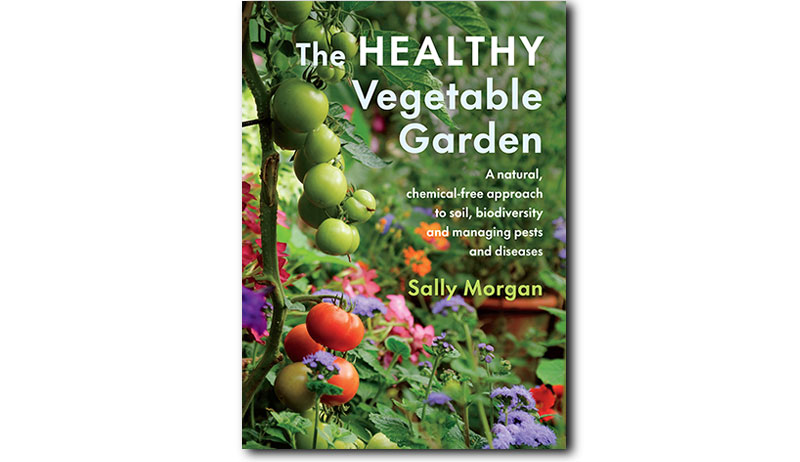
There are few gardeners (or farmers) I know who wouldn’t benefit from reading Sally Morgan’s new book, The Healthy Vegetable Garden. For the novice grower, the book is a great introduction to the principles and methods of ecological gardening.

And for the veteran grower, there is sure to be plenty of new information, including incredibly detailed sections on pest and disease control.
A Wealth of Experience
Color me cynical, but I’m always a bit cautious about whom I go to for gardening advice. Let’s just say that over the years I’ve paid the consequences of being too trusting a few times.
It’s hard to read much about Sally Morgan without having the word “expert” come to mind, though. Beyond being a long-time gardener herself, Morgan currently edits Organic Farming magazine and is the author of Living on One Acre or Less and The Climate Change Garden with Kim Stoddart.
All of which is to say, I’d take advice from her any day.
Read more: Keep your garden growing with succession planting! Here’s how.
A Vision of Health
Before diving into the details of garden management, Morgan spends some time outlining what a “healthy” garden looks like. As she describes it, a healthy garden is much like a natural ecosystem in its diversity and resilience. And, in many ways, a garden’s diversity is a large part of what endows it with resilience to pests, disease and numerous other pressures.
After establishing this vision of health, the rest of the book functions as a kind of guide to realizing it. In terms of content, this translates into a focus on soil health as a well as strategies for preventing (and managing) a variety of pests and diseases.
Overall, the book is not a comprehensive gardening manual. Rather, Morgan’s limited focus allows her to go into greater detail on the topics she does cover, making The Healthy Vegetable Garden a detailed and indispensable resource.
Soil Health
The book begins in earnest with a detailed explanation of soil health. After explaining some basic soil structure and biological processes, Morgan explores a variety of strategies for improving soil health including composting, mulching and minimizing tillage.
This section is sure to contain valuable ideas for both new and experienced growers.
Read more: Here’s what you need to know about healthy soil.
Pests & Disease
This is where the book really shines. The chapters on pests, disease and bio-controls are intuitive and easy to read, which is itself unique. As a farmer myself, I have several bug and insect guide books, but I tend to treat them as references that I consult only here and there.
With Morgan’s book, though, I found myself reading (and enjoying) these sections the whole way through.
A quick note to U.S. readers: Morgan is based in the U.K. As a result, the pest and disease sections of the book contain some information that’s only relevant to gardeners overseas.
However unfortunate it may be, it turns out that potato beetles, cabbage looper moths and innumerable other pests and diseases thrive on both sides of the Atlantic. So the vast majority of the information applies to North American growers as well.
Overall, Sally Morgan’s The Healthy Vegetable Garden promises to be a valuable resource for new and experienced growers.


