Miniature cattle breeds are sized right for small farms. The International Miniature Cattle Breeder’s Society and Registry maintains herd books for 26 breeds, and the Animal Research Foundation registers minis of every breed.
Key Takeaways
- Miniature cattle are compact versions of standard breeds, typically under 48 inches tall at maturity.
- They require less space, feed and maintenance, making them ideal for small farms and homesteads.
- Popular miniature cattle breeds include Dexter, Lowline Angus, Miniature Hereford, Zebu and Miniature Jersey.
- Miniature cattle can be raised for meat, milk, breeding or as pets.
- They eat the same feed as full-size cattle but generally consume about one-third as much.
- Proper fencing, shelter and handling are still essential despite their smaller size.
- Demand for miniature cattle and their products continues to grow among small-scale and hobby farmers.
What Are Miniature Cattle?
Miniature cattle are smaller versions of standard cattle breeds, typically standing under 48 inches tall at maturity. Well-suited for small farms and homesteads, they require less space and feed while still producing meat, milk or both. Popular miniature cattle breeds include Dexter, Lowline Angus and Miniature Hereford.
But are today’s miniature cattle simply scaled-down versions of the small utility cows our ancestors kept? Yes … and no. Miniatures with standard-size counterparts such as Jerseys, Lowline Angus and Herefords usually are. But other mini breeds (such as Miniature Highlands, Longhorns and some International Miniature Cattle Breeders Society and Registry lines) are modern creations developed by crossing smaller standard cattle with established small breeds, usually Dexters.
And the Dexter stands alone. Because of its elfin stature, most folks consider the Dexter a miniature. However, it’s a diminutive ancient breed rather than a scaled-down modern one.
So, how tall are miniature cattle? That depends.
There are three different categories of miniature cattle. Measurements are taken at 3 years of age, which is considered maturity. The common measuring point is from the ground to the top of the base of the tailbone.
- Micro: 36 inches or under
- Miniature: 36 1⁄4 to 42 inches
- Mid-size: 42 1⁄4 to 48 inches
For comparison, full-size or “standard” cattle breeds stand well over 48 inches.
International Miniature Zebu Association cattle, however, are measured behind their Brahma-type humps and mustn’t exceed 42 inches at 3 years of age. The American Hereford Association stipulates that Miniature Herefords must tape 43 inches or smaller; “classic miniatures” can be up to 48 inches tall. Lowlines (Miniature Angus) may be 42 inches high, as can Dexter cows; Dexter bulls can be two inches taller.
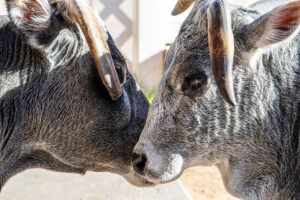
Miniature Zebu Cattle
Don/Adobe Stock
Popular Miniature Cattle Breeds
A handful of minis are more popular than the rest. You can consider them the big five of the miniature cattle world — Dexters, Lowlines, Miniature Herefords, Zebus and Jerseys.
You can register all five with both organizations, but each also supports a herd book of its own. Let’s take a closer look at these popular miniature bovine breeds.
1. Dexter Miniature Cattle
Dexters are tri-purpose cattle (beef, milk and draft). Today’s Dexter cattle descend from a herd of hardy Irish mountain cattle assembled by Mr. Dexter, agent to Lord Hawarden, around 1750. Dexter roots trace to the tiny Celtic cattle of ancient Eire. By 1845, when author David Low described and referred to them by name, they already resembled today’s Dexter cattle.
Irish fanciers established a Dexter registry in 1887 and an American version followed in 1911. Yet North American Dexters were ever scarce; today they’re included on the American Livestock Breed Conservancy’s Conservation Priority List, classified as rare. (If you’d like to help preserve an endangered heritage livestock breed, consider raising Dexters. They need your helping hand.)
Dexters are strikingly small cattle. Most Dexters are colored in shades of deepest ebony to sun-tinged, reddish-black. Reds and duns are far less common and grade from palest red to darkest mahogany; reds have pink noses, while duns have brown noses. Black-tipped white horns usually accent their small, neat heads, although a line of polled (hornless) Dexters now exists. There are two types: a longer-legged version (Kerry type) and a Dexter with shorter legs.
Dexters are dual-purpose cattle. Thanks to the breed’s foraging ability, and its high feed conversion and meat-to-bone ratios, a grass-fed Dexter steer will finish in 18 to 24 months, dressing out at 50 to 60 percent live weight. Dexter beef is fine-textured, tender and delicious. And Dexter cows give 1.5 to 3 gallons of roughly 4% butterfat milk daily, at a rate of up to one quart of cream per gallon.
Dexters are famous for their strong maternal instinct, easy calving, sweet dispositions and longevity. They do, however, occasionally throw dwarf “bulldog” calves.
2. Lowline (Miniature Angus)
Lowlines are Miniature Angus cattle developed by the Trangie Agricultural Research Centre in Australia. No “outside” blood was used in its creation—they are purebred Angus bred 30 to 60 percent smaller than their standard (Highline) kin.
Angus beef is treasured for its tenderness and quality, and pound-for-pound Lowlines produce a lot of it. Enthusiasts claim Lowlines require one-third as much feed to produce 70 percent of the rib-eye of animals twice their size, making Lowlines a logical choice for organic and gourmet market beef producers.
Sleek Black Angus are traditionally more docile than other beef breeds. They’re naturally polled and prolific and are attentive mothers. Lowlines are a red-hot commodity as pets and for purebred programs, and for crossing with standard-size cattle to improve meat quality. When crossed with Jerseys they produce the ideal dual-purpose family cow.
3. Miniature Hereford Cattle
Mini Herefords are another scaled-down purebred breed. Miniatures are registered in the American Hereford Association herd book; their pedigrees are traceable back more than 100 years.
Miniature Herefords were further developed during the 1970s at the Point of Rocks Ranch in Fort Davis, Texas. By utilizing certified dwarf-free, old-fashioned Hereford genetics, owners developed a deeper-bodied, shorter-legged version of today’s market Hereford.
Miniature Herefords are said to mature 20 percent faster than standards. They’re gentle, they adapt to all climates, they’re highly efficient foragers, and veterinarians familiar with beef breeds know how to treat them. Miniature Herefords are a first-rate, easy-care choice for gourmet and organic beef producers.
4. Miniature Zebu Cattle
“Zebu” is another name for Bos indicus, all breeds of Asian humped cattle. Most folks recognize the brawny Brahman, a full-size Zebu developed in North America. The mini size resembles Brahmans with two notable twists:
1. Mini Zebus’ upright ears don’t match the Brahman’s trademark floppy ones.
2. Mini Zebu cows have a lot less hump.
Both breeds, however, sport short, sleek coats and have tough, loose skin. They also have fully functional sweat glands.
Highly developed panniculus muscles make it easy for Zebus to twitch away flies. They’re heat-, disease- and insect-resistant, and they thrive on marginal pasture. And rodeo-bull image notwithstanding, they are easy-going and remarkably intelligent.
Descended from South Indian Nadudana cattle, Miniature Zebus were imported for zoo display in the 1920s. Today the International Miniature Zebu Association (formed in 1991) lists breeders in 38 states, Canada and Puerto Rico. They are among the teeniest of miniature cattle, sometimes standing less than 30 inches measured behind the hump.
5. Miniature Jersey Cattle
Jerseys were barely more than today’s miniature size until recently, historically speaking.
The “bigger is better” boom ultimately impacted this ancient dairy breed. But enough bantam Jerseys remained to make selectively breeding them back to a miniature frame a relatively easy task.
For today’s smaller households seeking a pocket-sized family cow, Miniature Jerseys make good sense. They are gentle, prolific and a delight for the eyes. And their delicious, high-butterfat milk is hard to beat.
While Miniature Jersey steers don’t produce a freezer full of meat, what they do yield is mighty fine eating indeed. Therefore, Jerseys have been and are still being used to create new miniature beef and dairy breeds. Belfairs are Jersey and Dexter derivatives, as are IMCBSR trademarked Belmonts (both are sometimes called Irish Jerseys). Wherever they’re used, wee Jerseys sweeten the mix.
More Miniature Cattle Breeds to Know
Although there are now 30 or more recognized breeds of miniature cattle in the United States, among the most popular are the following breeds.
- American Beltie (similar to Belted Galloway; also referred to as a “Cookie”)
- Black Baldie (mini Hereford-American Aberdeen Angus cross)
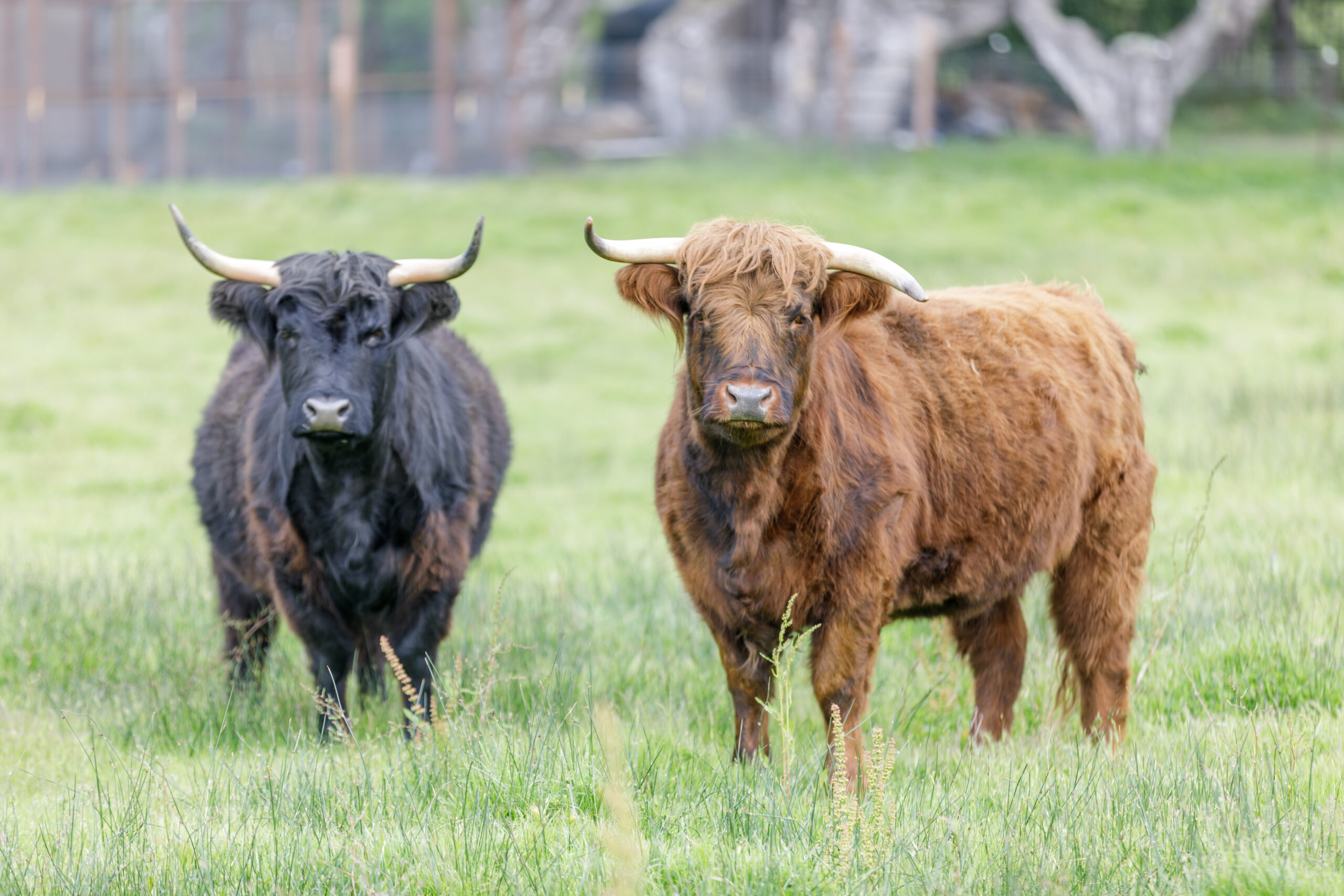
- Miniature Scottish Highland
- Panda
- White Park (aka British Park)
How to Start Raising Miniature Cattle
Miniature cattle are generally in short supply. They’re available—but expect to conduct a search before you buy.
Registries happily supply breeder lists, and e-mail groups are excellent places to scout for leads. Expect prices to vary widely depending on breed and bloodlines, quality, age and sex, and in which part of the country you do your shopping.
A few progressive miniature cattle raisers market full-blood embryos. The implant success rate runs 50 to 60 percent, but it’s a start for those with access to a good reproductive vet and a sense of adventure.
Sometimes you can start with the cattle you have and breed toward purebred miniatures.
While mechanics vary from registry to registry, the basics are much the same. For example: You own a full-size Jersey cow. Breed her to your choice of miniature bulls. Her calf will be recorded (not registered) as a half-blood miniature. If the calf is a heifer that eventually gets bred to another miniature of the same breed, her calf will be recorded as three-quarters miniature. And on and on until your calf is 15¼-16 target breed, at which time it’s considered purebred.
However, not all organizations allow “up-breeding” (the Lowline and Hereford registries do not) and most don’t record upgrade-produced purebreds in the same herd book as bona fide full-bloods.
When to Buy Miniature Cattle
Some breeders sell mini cows as very young calves. Other breeders only sell weaned calves, believing babies get a better start in life being nursed by their dams (mothers), those first months.
There’s no doubt that young calves are adorable. Just realize that their care will be more intensive than if you buy an older, already-weaned calf. These “bottle babies” must be fed milk replacer twice a day until the calf is at least 2 1/2 to 3 months old.
Young babies may also be more vulnerable to illness, although reputable breeders only sell healthy calves.
Miniature Cattle Bloodlines
Reputable breeders are careful to use bloodlines that avoid negative influences the dwarfism gene can cause.
“Chondrodysplasia (‘chondro’) is a dwarfism gene that can be found in certain breeds of cattle,” says Ben Yoder, whose Cyrus Ridge Farm raises micro and miniature Scottish Highland Cattle.
“Some of the world’s leading experts in the production of miniature cattle have successfully used this gene, in combination with genetically small cows, to produce some of the smallest micro cows in existence,” he says. “Breeders need to do extensive research and education before properly introducing this gene to their herd. Irresponsible use of the gene can cause health issues.”
Feeding Miniature Cattle
There’s no such thing as “miniature cattle” food. These small cows eat the same hay and feed as full-size cattle, just less of it—typically 1⁄3 as much. Mini cows eat approximately 2 percent of their body weight in grass hay per day.
Depending on the breed, mature cattle may not need any grain in addition to hay.
Calves, however, should be fed a 16 to 20 percent protein “starter feed” from weaning until about 6 to 8 months of age. This helps ensure they receive adequate nutrition for proper growth. If you’re raising an animal for slaughter, you may opt to feed grain during the “finishing” phase.

ellenm1/Flickr
Fencing and Shelter for Miniature Cattle
Before bringing cattle home, ask what type of fencing they’ve been in. For example, some may be accustomed to single-strand, electric-rope fencing and respect that.
For safety’s sake, you can’t go wrong with 48- to 60-inch-tall woven-wire or field fence for perimeter fencing. Then use single-strand electric fencing to portion off interior sections so you can do rotational grazing and keep your pastures in good condition. You’ll want at least one small corral with sturdy wood or pipe fencing where you can gather cattle when needed, such as for veterinary work.
All livestock need some form of shelter so they can get out of direct sun, wind, rain and snow. Depending on your location and the breed of cattle you buy, trees and a wooded area may be enough shelter. Or you may need a run-in shed.
For example, if you live in the northeast and plan to have Zebus, they’ll definitely need a good shelter for protection from extreme weather. Whereas the Scottish Highlands are extremely hardy and rarely choose to use a manmade shelter unless they can’t find other shade.
Do Miniature Cattle Make Good Pets?
Mini cattle fans unanimously agree: These little bovines make marvelous pets. “I started with a trio of Miniature Jerseys,” says K.C. Cowen of Emmett, Idaho, “but I have disabilities and couldn’t milk more than one. So now I have just Margie. She’s the light of my life and the sweetest cow I’ve ever owned. Margie is like a big dog, except she gives the best milk.”
“My most recent purchase was a 5-year-old Lowline bull from Centenary Ranch in Mission, Texas,” adds Linda McKay. “Although I’m his third owner, he’s quiet-natured and friendly.” She chuckles, “Our Lowlines ‘helped’ us with our pen construction by carrying tools. They’re so intelligent and a delight to have around.”
Petting zoo proprietors and animal therapy workers adore miniature cattle; 4-Hers tend to love them too. Their modest stature, winsome looks and engaging personalities render them less intimidating than their full-size cousins, and they are far less bulky to load and pack around.
Miniature Cattle for Beef Production
Minis do equate with fine beef. Gourmet markets and upscale restaurants clamor for lean and luscious, grass-fed mini steaks and roasts.
Demand for organic edibles increases 20 percent per year, claims the Organic Products Association. The good news for organic beef growers: Miniatures convert pricey organic feed into choice cuts more efficiently than standard cattle do.
Texas A&M confirms a 20 to 25 percent higher feed conversion rate for miniature cows. And a single miniature steer neatly packs the average home freezer, so there’s no need to find someone to buy the other half of the beef, making the meat popular with home consumers.
And dairy breed and dual-purpose minis give plenty of sumptuous, high-protein milk—enough for today’s smaller household and then some. Mini Jerseys, Belfairs and Dexters all serve well as gentle family milk cows, exactly like their ancestors did not so very long ago.
Benefits of Raising Miniature Cattle
1. If you want to have a cow, you’ll need less pasture and far less space to house a mini version.
2. If you must pen her and feed cut-and-carry forage, it’s doable.
3. Her wee hooves and bantam-weight equate with far less pasture damage and she’s designed to eat grass, not concentrates.
4. She’ll neatly thrive on one-third the feed of her full-size kin and use it to produce much less waste for you to cart away.
5. Come autumn, you’ll haul less hay. And you’ll tote fewer buckets of water to quench her thirst during the deep, hard winter freeze.
However, minis are like potato chips; you won’t settle for just one. And for the small-scale farmer hoping to qualify for land for ag-tax breaks or to turn a profit, this is a very good thing indeed.
Beth Diaz of Seffner, Fla., concurs. “We live outside of Tampa Bay in a small agricultural area,” she says. “We wanted to take advantage of tax cuts and also have cattle to help keep our pastures clean. Essentially, we wanted to become gentleman farmers. We weren’t looking for meat sales, so we decided to stick to one breed and raise babies to sell for 4-H or to others interested in our breed. One day my search led me to a Miniature Zebu website and I was hooked.”
Can Miniature Cattle Live with Horses?
For the safety of your mini cattle, don’t assume they can be pastured with full-size horses.
“When mixing bovine and equine families, there will be a hierarchy system, and they’ll fight for dominance,” Yoder says. “There’s a large size difference when a horse and mini cow fight. This can lead to injury or turn deadly.
“Cows butt and kick. Horses bite and kick. I’ve seen a horse grab a mini cow by the neck and kill it.”
Keep in mind that even though miniature cattle are smaller than full-size, they’re still livestock and more powerful than a human. “There needs to be a healthy respect between cow and human,” Yoder says. “If this is missing on either side, someone can get hurt.”
Frequently Asked Questions
What is considered miniature cattle?
Miniature cattle are cattle that measure under 48 inches tall at maturity, with specific categories ranging from micro (under 36 inches) to mid-size minis up to 48 inches.
How much land do miniature cattle need?
Miniature cattle typically require significantly less pasture than full-size cattle, often thriving on smaller acreage depending on grazing management and forage quality.
Are miniature cattle good for beginners?
Yes, many miniature cattle breeds are known for their docile temperament and manageable size, making them a good option for first-time livestock owners.
How much do miniature cattle eat?
Miniature cattle usually eat about 2 percent of their body weight in hay per day—roughly one-third the amount of full-size cattle.
Can miniature cattle be kept as pets?
Yes, miniature cattle are often kept as pets due to their friendly personalities, smaller size and ease of handling compared to standard cattle.
Do miniature cattle produce enough milk or meat?
While smaller than standard cattle, miniature breeds can still produce ample milk for a household and high-quality beef, making them practical for small-scale production.
How much do miniature cattle cost?
Prices vary widely depending on breed, bloodline, age and quality, but miniature cattle are often more expensive than standard cattle due to demand and limited supply.
Cute and productive, miniature cattle will mow your lawn, pull a cart, or simply pretty up your pastures. Let your kids show them in 4-H. Drink their milk, pack your freezer with miniature steaks. They’ll earn you tax breaks and turn a profit when sold as breeding stock, pets or beef. What more could you ask for?
This story about miniature cattle by Sue Weaver and Cynthia McFarland was written for Hobby Farms magazine. Click here to subscribe.