Fall beekeeping tasks are critical for helping your honeybees survive the cold months ahead. Autumn is a time for change, when the natural world shifts gears seemingly overnight and begins preparing for harsher days. For your colony, the changes you make in the fall can mean the difference between life and death come winter. Throughout the summer, bees have worked tirelessly to build stores of honey and pollen. If they’re strong, they’ve done their part. Now, your role in autumn gives them the leg up they need to thrive until spring.
1. Final Fall Beekeeping Task: Hive Inspection
Just before the weather turns, seemingly for good, is the time for a final inspection. The date for this varies widely based on your region, but a good rule of thumb is that your final window to inspect is right before days are consistently below 55°F.
This is the time to lay your eyes on the queen and replace her if necessary. It’s also the time to assess the colony’s honey stores and make sure they have an adequate amount for the coming winter—roughly 40 to 60 pounds, depending on how long and harsh winters are in your area. If they don’t, see No. 2 below.
Also, as part of your fall beekeeping tasks, assess if the colony is strong: Are there mites? Wax moths? Hive beetles? Do they need to be treated, and if so, how and how aggressively? Conventional mite treatments are often applied in the fall.
If the colony seems strong but small, you may opt to combine it with another, larger colony. This means you’ll need to sacrifice one of the queens, but beekeepers would often rather lose one queen than entire colony. You can always re-split again come spring.
2. Fall Beekeeping Task: Feeding Bees if Necesary
Feeding can be a touchy subject in the beekeeping community. The general consensus seems to be that since we choose to keep our bees in boxes of our creation and a bit domesticated, as it were, it’s our duty to feed them if they need it. Traditionally, beekeepers feed a 1:1 sugar-water syrup to bees, who then convert the sugar to honey—though this wouldn’t ever be “honey” you’d want to harvest. In the fall, because they need to put it away quickly, that ratio jumps up to 2:1. With all that said, real honey (made by bees gathering nectar) is the best, healthiest food for bees. I always keep a bit of honey on hand if my bees need feeding: either a few capped frames in the deep freezer or a few jars of honey harvested from the year before. True honey has nutrients that sugar syrup simply does not. If you can, feed them the good stuff.
3. Fall Task: Securing and Wrapping Hives
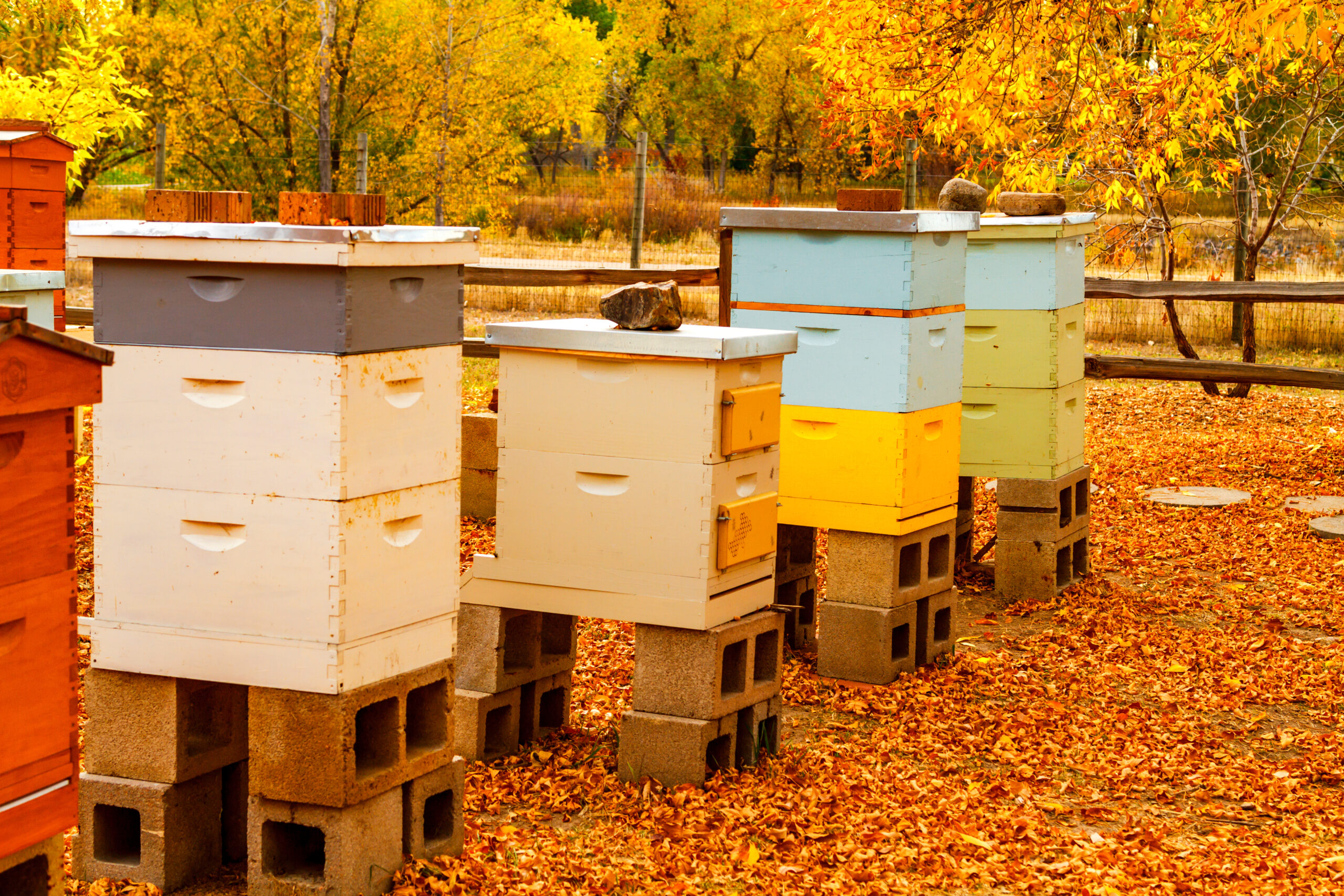
Winter winds can be strong, and strapping hives helps to keep all the supers together in the event the hive tips over. I also find strapping hives to be very helpful if you have roaming bears where you live. A strap may be enough to deter a young, small bear to move on, though larger bears may take a more persistent approach.
Wrapping hives for winter protection is another controversial topic. The idea is that wrapping a hive keeps the colony warmer in cold weather. However, some beekeepers feel that a tightly wrapped hive holds more moisture inside the boxes, creating more opportunities for cold, wet bees—a combination that is most certainly deadly. Because the severity of winter weather varies so much in North America, I’d recommend speaking to your local county extension service and getting in touch with beekeepers in your area to broach the subject with those who may have tried it already.
4. Fall Beekeeping Task: Mouse Guard Installation
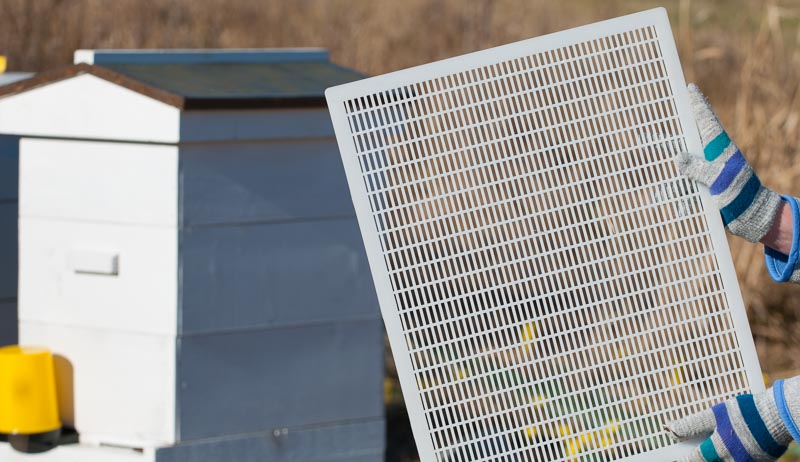
It’s such a simple thing, and yet if missed when completing fall beekeeping tasks, a single mouse seeking warm refuge from the coming winter can wreak havoc on a slumbering hive of bees. A mouse guard is a metal strip that is fitted to the entrance of the hive. It has holes to allow bees to come and go, but mice won’t be able to chew through it as they would a typical wood entrance reducer. Two quick screws, and it’s on. Without it, mice will chew their way in, urinate to mark their territory, leave feces everywhere, make a nest and eat comb. At best, it’s a huge mess to clean; at worst, the bees abscond and leave the safety of their hive in the worst time of year.
Autumn prep is pretty easy in the beeyard. Just as you do throughout the rest of the year, keep a close eye on the entrance and check your hives for damage throughout the fall and winter seasons. Conduct inspections when the weather breaks and warms up throughout the winter (if it does) to re-feed and tackle any issues as they come.
This article about fall beekeeping tasks was written for Hobby Farms magazine. Click here to subscribe.