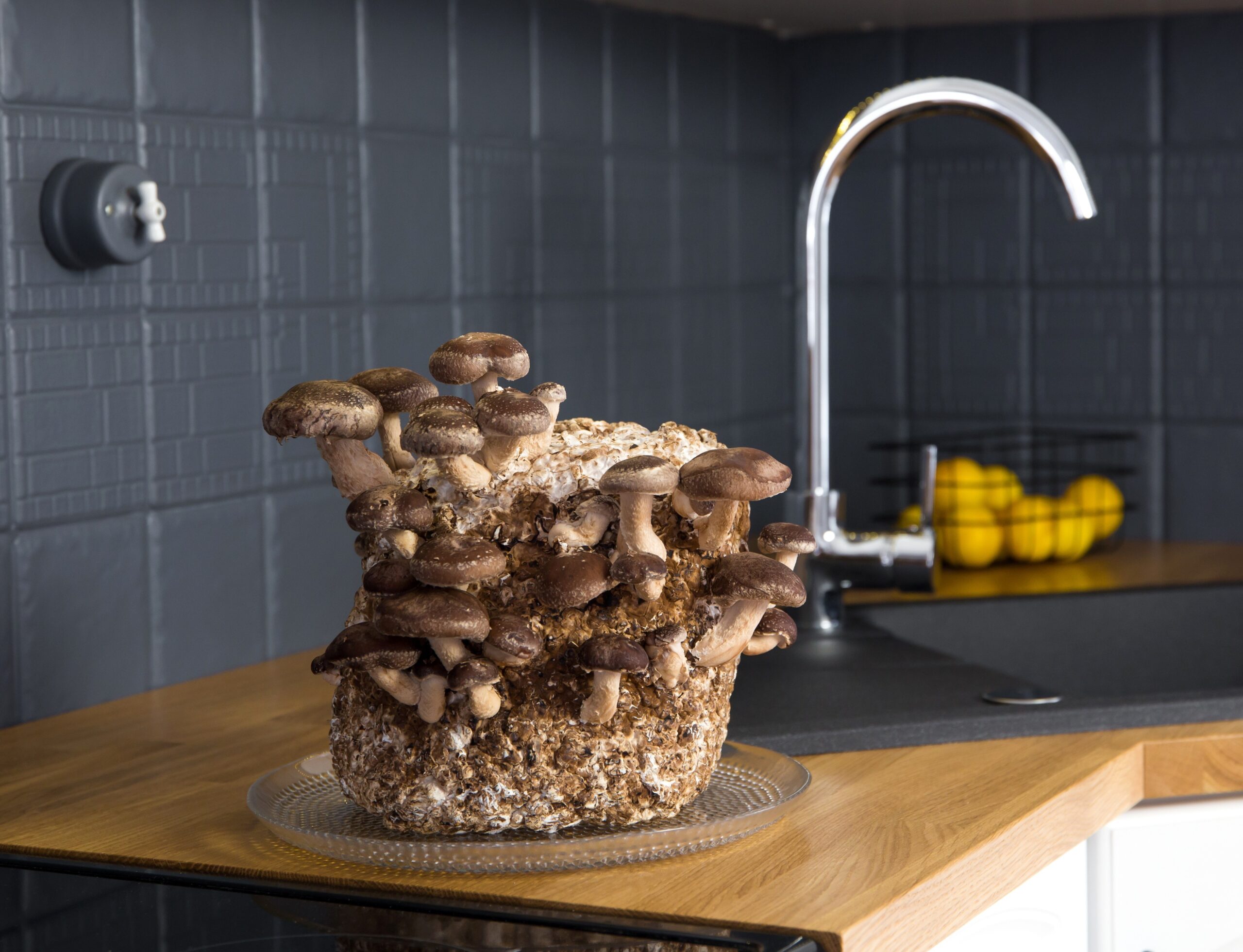
Growing mushrooms at home is easier—and more fun—than you might think. With just a little space, some humidity, and the right starter kit, you can cultivate gourmet varieties like shiitake, oyster, lion’s mane and even portabella right on your kitchen counter.
Key Takeaways
- Growing mushrooms at home is an accessible project for beginners, especially when starting with a ready-to-fruit mushroom kit.
- Shiitake, oyster, lion’s mane and portabella mushrooms are among the varieties that can be grown indoors on prepared substrates.
- Most mushroom kits need the right balance of temperature, humidity, fresh air and indirect light to produce mushrooms.
- Growing kits allow you to watch the full fruiting process, from tiny pins and buttons to harvestable mushrooms.
- Many mushroom kits can produce more than one flush, giving you multiple harvests before the substrate is spent.
- Homegrown mushrooms can be enjoyed fresh or preserved by drying or freezing.
How I Started Growing Mushrooms at Home
Years ago, I received a box in the mail as a birthday gift from my kids. It contained a big lump of white, popcorn-looking stuff in a plastic bag (so attractive!). How sweet of them to remember me with this … whatever it was! Well, it turned out to be mushrooms.
Of course, my kids knew that I loved mushrooms and would get a kick out of watching them grow. And yes, they grew. With a little coaxing and misting, we enjoyed delicious and, ultimately, fresh shiitake mushrooms for a few weeks.
I tried fruiting it again after the allotted resting period and got a few; then, I lost interest or got busy or didn’t maintain the schedule of misting and soaking … you know how it goes. But now, it’s time again. I’m determined to have mushrooms, as fresh as can be, plucked from my own mushroom farm, right in my own kitchen.
I did a little research of companies that offer kits, whipped out the old credit card, and ordered oysters, portabellas and shiitakes; lion’s mane in a bag; and a shiitake-impregnated log. This time, I read everything I could find to learn the how and why of these mysterious little plants. (Are they plants? Or are they animals?)
What Are Mushrooms, Really?
Mushrooms are certainly not animals, but they do consume decaying animal matter and plants. They aren’t exactly plants either, without real roots, leaves or chlorophyll. Fungi, in a class all their own, include mushrooms, molds and yeasts. They live everywhere: underground, in the air, on our walls and sometimes in our bodies. The mushrooms we eat are the fruiting bodies of certain mycelium (vegetative part of a fungus) strains that carry spores for reproduction.
Choosing the Right Mushrooms to Grow Indoors
Mushrooms can be found growing all around the world. While mushroom hunting is an option, it’s not something that I care to do. Identifying safe, edible mushrooms should be left to the experts. People can become quite ill, and sometimes die, from eating certain poisonous mushrooms.
There are more than 2,000 species of mushrooms that have been classified, with only about 200 being edible. Of those, only a handful are cultivated through mushroom farming or wild-crafted, like morel mushrooms, for sale. Consumed for thousands of years, these mushrooms have been used medicinally and as dyes for fibers, and they also have ceremonial applications. However, it’s the culinary aspects that interest me. Besides tasting so darn good, they are low in calories and high in protein, iron, zinc, fiber, amino acids, vitamins and minerals. What could be better?
Indoor Growing Conditions for Mushrooms
Because I’m attempting to grow mushrooms in my house, not a climate-controlled room, I’m a bit more limited in the varieties I can grow. There are two basic types of mushrooms. One requires a living organism — typically a tree — to survive. This type includes morels, truffles and porcinis that are all wild-crafted and need to grow outdoors. Other mushrooms, such as the portabella, shiitake, oyster and lion’s mane, that I chose, flourish on dead or dying materials, such as composting grains, straw, coffee grounds, wood chips and the like. These will grow indoors.
Another basic requirement is temperature. While the underground portion of the mushroom can survive freezing temperatures, the fruiting portion requires 50 to 75 degrees Fahrenheit, which is obtainable in most households. Each species has its own temperature range and may require a bit of creativity in placement.
Humidity is also a factor. Providing a tent made from a plastic bag will generally do the trick. Mushrooms do need oxygen. There are holes punched in the bags provided by the companies selling the mushrooms. Low, indirect light is the best, so they need a spot away from the windows.
Choosing a Mushroom Growing Kit for Beginners
As a beginner, I chose small, inexpensive kits to learn the method and get the fastest results. Kids love to watch the process, and the incubation time is relatively short. These kits were all populated with mycelium and ready to fruit. Growing the mycelium from spores can take months, if not years, to develop. Your kids may lose a little patience with this. (I may lose a little patience with this!)
Mycelium can grow undisturbed for years underground. One of the largest colonies ever discovered is in Oregon.
It’s more than 2,000 acres (more than 3 square miles) in size and believed to be older than 2,400 years. All five of my little colonies fit on my kitchen counter and fruit within a few weeks. This is doable for my busy life.
How to Grow Mushrooms on a Shiitake Log
You can purchase oak logs inoculated with shiitake spawn in several sizes. I chose a 10-inch size. It should produce mushrooms off and on for three to four years with the mycelium it contains, and that which will grow as it consumes the nutrients in the log.
It needs to be soaked for 12 to 16 hours every two weeks for maintenance and can be shocked (soaked in ice water for 24 hours or treated to a day in the freezer) every eight weeks to induce fruiting. It lives quite happily surrounded by houseplants that require high humidity and indirect light.
Using a Shiitake Mushroom Block Kit
When my shiitake patch arrived, I took it out of the plastic bag and checked it over for any fruiting mushrooms. There were none, so it went back in the bag and into the refrigerator for three days. Water was added to cover the patch, and it soaked for three hours. Drained and resting on a tray, I placed a plastic bag over the block of mushroom substrate to keep in the humidity.
After misting two to three times a day for a week, three little brown buttons appeared. One took off and grew into a giant shiitake mushroom weighing 31⁄2 ounces and was 41⁄2 inches in diameter. The others did not develop.
After harvest, I let the patch dry out for 10 days. Then, with a chopstick, I poked three holes into the block and soaked it in water for four hours. The misting schedule resumed. In a week, I harvested 19 medium-sized mushrooms. The process can be repeated three to four times before the mycelium has consumed all the nutrients in the substrate.
Lion’s Mane: A Unique Mushroom to Grow Indoors
The lion’s mane looked very similar to the shiitake patch but was treated differently. There were already small mushrooms growing on top that I removed (supposedly bitter). It stayed in the bag, and the mushrooms grew out of the slits that I cut into it. It also got misted two to three times a day and was tented with a plastic bag. I put some wooden skewers into the top to hold the bag away from the developing mushrooms. In 10 to 12 days, one mushroom had taken the lead and grown into an 8-ounce shaggy lion’s mane measuring about 6-by-4-by-2 inches.
I was very curious to taste this mushroom. It is likened to lobster or crab in taste and texture. I tore half the mushroom into pieces and sautéed it in butter with salt and pepper and just a squeeze of lemon. It had the texture and a slight scent of seafood, but it was not as sweet as I had expected. With the addition of heavy cream and some fresh thyme, it tasted much better, and served over toast, it became our lunch. With the other half, I tried a not-lobster salad recipe that created a great vegetarian version.
Growing Oyster Mushrooms at Home
Back to the Roots is a company that has grown almost as fast as their mushrooms. It was conceived in an apartment kitchen by two college guys. They took spent grounds from the local coffee shop, inoculated them with oyster mushroom spawn, and grew their first bucket of mushrooms.
Now in national distribution in grocery stores and coffee shops across the country, the kits make it easy to grow food in a sustainable manner. The block of mycelium-impregnated coffee grounds came in a plastic bag encased in a cardboard box. I removed it from the box, cut a slit in the bag and soaked it in water for 12 hours. Drained, and back in the box, it got misted three to four times a day. Two weeks later, the mushrooms sprouted and grew into a 4-ounce cluster within the span of five days. After harvest, I cut a slit in the other side of the bag and soaked it; now it’s back in the box for a second flush.
While the oysters looked delicate, they were quite thick and very meaty in texture. I cooked them simply by tearing them into pieces and slicing the stems. They were fried in a bit of olive oil, a small clove of sliced garlic, salt and pepper. I finished with a touch of butter and squeeze of lemon juice, and sprinkled with fresh chives from the garden — delicious!
Growing Portabella Mushrooms at Home
The portabella kit I chose had a different method of cultivation, using composted horse manure. While it seemed like the most boring selection, since I buy portabellas at my local market, it was really the most interesting to watch and the most prolific.
The substrate came in a plastic bag in a large cardboard box. A separate bag of material was included. This casing layer needed to be soaked in warm water and scattered on top of the white substrate. The plastic bag was folded up and the box lid closed. I put it near the heat mat to keep warm (70 to 75 degrees) for a week. In that time, the mycelium crept up the sides and grew into the casing. Then I opened up the box lid, cut the plastic even with the substrate, and another plastic bag was placed over it to hold in the humidity. I also moved it to the garage for a cooler temperature (55 to 65 degrees) required for fruiting.
In 10 days, it started forming tiny brown mushrooms. I harvested 2 pounds, 4 ounces five days after that. After harvest, I continued to mist every day or so, and the pinning began again. The second flush yielded more than a pound, and it’s now starting up again with tiny brown buttons.
Tips for Cooking and Preserving Fresh Mushrooms
Because all mushrooms contain a small amount of toxins, and the cell structure is difficult for our bodies to digest, it’s always recommended to thoroughly cook them. To really taste the flavor of the mushrooms, I like to simply sauté them in a little butter or olive oil. Cream is always a nice addition that readily picks up the earthy flavors.
Always store mushrooms in the refrigerator in a paper bag or wrapped in a paper towel. They should keep for a week or two.
Mushrooms can be preserved by drying in the sun in arid climates or in a dehydrator. Simply cut into uniform pieces, and place on racks. The time required will vary with the amount and thickness of the mushrooms. Dried mushrooms can be rehydrated by soaking in boiling water for 20 to 30 minutes. Powders can also be made from the dried mushrooms by grinding in a small spice or coffee grinder.
Mushrooms need to be cooked before freezing. Sauté them in a little oil, or simmer in water for 5 to 8 minutes. Drain and transfer to zip-lock freezer bags. Use in soups and sauces within six to eight months.
Pickling is a good way to preserve mushrooms if you have a bumper crop. They can be stored in the refrigerator for 2 to 3 weeks or canned by the water-bath method to keep on the shelf for a year. (See “Oh, You Know I Can!” on page 40 of this issue to can using the water-bath method.)
What Makes Mushrooms So Delicious?
According to the Mushroom Council, mushrooms are a rich source of umami (pronounced oo-MAH-mee). The darker the mushroom, the more umami it contains. “Umami is the fifth basic taste after sweet, salty, bitter and sour. Derived from the Japanese word umai, meaning delicious, umami is described as a savory, brothy, rich or meaty taste sensation.
It’s a satisfying sense of deep, complete flavor, balancing savory flavors and full-bodied taste with distinctive qualities of aroma and mouthfeel.” For recipes, nutritional information and more, check out the Mushroom Council’s website: www.mushroominfo.com.
Popular Mushroom Varieties to Try Growing
Try your hand at growing one of these mushroom varieties.
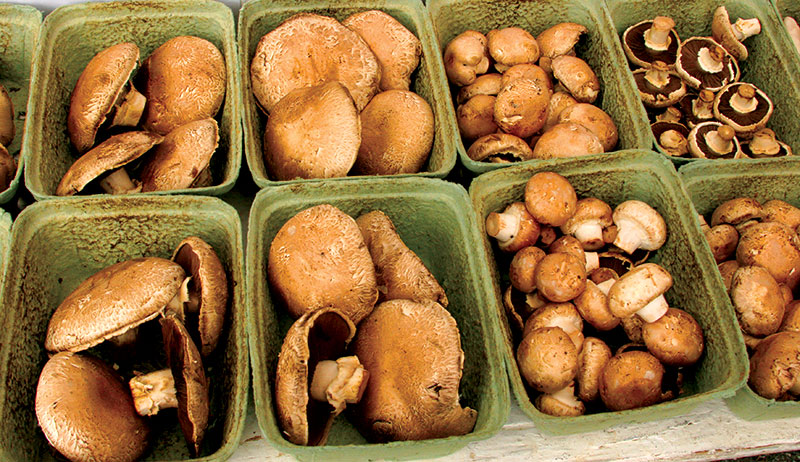
CRIMINI: These are basically baby portabellas, similar in appearance to whites but with a light-tan to rich-brown cap and a firmer texture. They have a deeper, earthier flavor than whites. Sauté, broil, microwave or cook almost any way. Their hearty, full-bodied taste makes them an excellent addition to beef, wild game and vegetable dishes.
ENOKI: Enoki have tiny, button-shaped caps and long, spindly stems, and are mild-tasting and crunchy. Before using, trim roots at cluster base. Separate stems before serving. Try them raw in salads and sandwiches, or use them as an ingredient in soups, such as a stock made with soy sauce and tofu.
MAITAKE: These appear rippling and fan-shaped, without caps, and have a distinctive aroma and a rich, woodsy taste. Sauté lightly in butter or oil. For a richer taste in any recipe calling for mushrooms, use maitake. They can be a main-dish ingredient or used in side dishes and soups. Maitake mushrooms are also called “Hen of the Woods.”
OYSTER: These can be gray, pale-yellow or even blue, with a velvety texture. They have a very delicate flavor. Sauté with butter and onions to bring out their flavor, try over linguine with sliced steak and red peppers, sprinkled with grated Parmesan cheese, or pan-fry in olive oil/butter with garlic.
PORTABELLA: This is the larger relative of crimini. Portabella have tan or brown caps that measure up to 6 inches in diameter, and have a deep, meat-like texture and flavor. They can be grilled, broiled or roasted and served as appetizers, entrées or side dishes. Their hearty taste and texture make them a flavorful vegetarian alternative; grill and serve them as “burgers.”
SHIITAKE: Shiitake are tan to dark-brown and have broad, umbrella-shaped caps, wide-open veils, tan gills and curved stems that should be removed. They have a meaty texture and are rich and woodsy when cooked. Taste best when cooked. They add a meaty flavor and texture to stir-fry, pastas, soups, entrées and sides.
WHITE: White mushrooms represent about 90% of the mushrooms consumed in the United States. They have a fairly mild taste and blend well with almost anything. Their flavor intensifies when cooked. They can be sautéed or cooked any way or enjoyed raw in salads. Try them sliced and sautéed on pizza or in pasta, quesadillas or cheeseburgers.
Common Mushroom Growing Terms Explained
Here are some common terms used when discussing mushrooms:
Buttons: tiny mushrooms, next step after pins, starting to take the shape of the full-grown mushroom
Flush: Mushrooms tend to sprout all at once, go into dormancy for a few days or weeks, and then flush again.
Fungus (plural: fungi): A separate class of organisms that feed on organic matter. They include yeasts, molds and mushrooms.
Fruiting Bodies: the mushrooms that we eat or use
Mycelium: the vegetative system of tiny filaments growing underground, in trees or composting matter, comparable to the root system in the plant world
Pins: the first points of the fruiting body showing through the substrate
Spawn: mycelium-impregnated material (plant or animal compost)
Spores: comparable to seeds to spread and colonize new habitats; formed on the underside of the cap in the gills. Once the spores are released the mushroom disintegrates quickly, usually within a week.
Substrate: the growing medium that supports the mycelium (wood, grains, compost)
Frequently Asked Questions
Is growing mushrooms at home difficult?
Growing mushrooms at home can be relatively easy when you start with a ready-to-fruit kit. The mycelium is already established in the growing medium, so your main job is to provide the conditions the mushroom needs, including appropriate temperature, humidity, fresh air and moisture.
What are the easiest mushrooms to grow at home?
Oyster mushrooms are often a good choice for beginners because they grow quickly and are widely available in ready-to-fruit kits. Shiitake and lion’s mane kits can also be suitable for home growers.
How long does it take to grow mushrooms at home?
The growing time depends on the mushroom species and the type of kit or growing method. Some ready-to-fruit kits can begin producing mushrooms within a week or two, while others may take longer. Many kits can also produce multiple flushes after the first harvest.
Do mushrooms need sunlight to grow?
Mushrooms do not need direct sunlight. Most indoor mushroom kits do best in low or indirect light. More important than sunlight are the proper temperature, humidity, moisture and fresh-air conditions for the particular species.
Can you grow mushrooms indoors without a special growing room?
Yes. Many mushroom kits are designed to grow on a kitchen counter, shelf or another suitable indoor location. A climate-controlled growing room is not necessary for many beginner-friendly varieties, although each type of mushroom has its own preferred growing conditions.
Growing Mushrooms at Home: Final Thoughts
While it might not be as cost-effective to grow mushrooms from kits, I certainly enjoyed eating the mushrooms, and freshness was a big plus. Would I do it again? You bet — to try unusual mushrooms I can’t get at the market or to educate kids about mushroom culture.
What started as a grand science experiment and a way to have the freshest mushrooms to eat has revealed a whole new world. I discovered there is a thriving organism growing right below our feet. Besides giving us delicious, healthy gourmet foods with a variety of earthy flavors, medicines and dyes, the mycelium is connecting the plant world, nourishing trees, composting decayed materials and helping to balance our environment.
Nurturing a kit is a wonderful way to start. It is fascinating as well as sometimes frustrating. I’ve been known to shout “Grow!” a few times, and I was then, with patience and lots of misting, rewarded with delicious mushrooms. The next step is to experiment with creating the substrate inoculated with spawn, and eventually growing spawn from spores. The adventure is only beginning.
This article about growing mushrooms at home was written for Hobby Farms magazine. Click here to subscribe.