The Dutch Rabbit, with its signature markings and sweet personalities, is easy to recognize and fall in love with. From history and temperament to breeding and color varieties, learn why the Dutch rabbit has become one of the most popular rabbit breeds.
Dutch Rabbit Origins
The Dutch rabbit was traditionally believed to have first been developed in the Netherlands or Holland, but despite their name, breed history suggests that the Dutch actually didn’t hail from these two countries.
In the 1830s, Petit Brabancons were imported from England to Belgium for the meat markets. Found in fifteenth-century paintings, the Petit Brabancon often had similar markings to the Dutch and possessed the same genetic roots.
While the rest of the breed’s history remains a mystery, its unknown origin has not impacted the breed’s continued success.
Even though they were initially raised for meat, today, Dutch rabbits are most commonly kept as pets and for show.
Recognizing a Dutch Rabbit
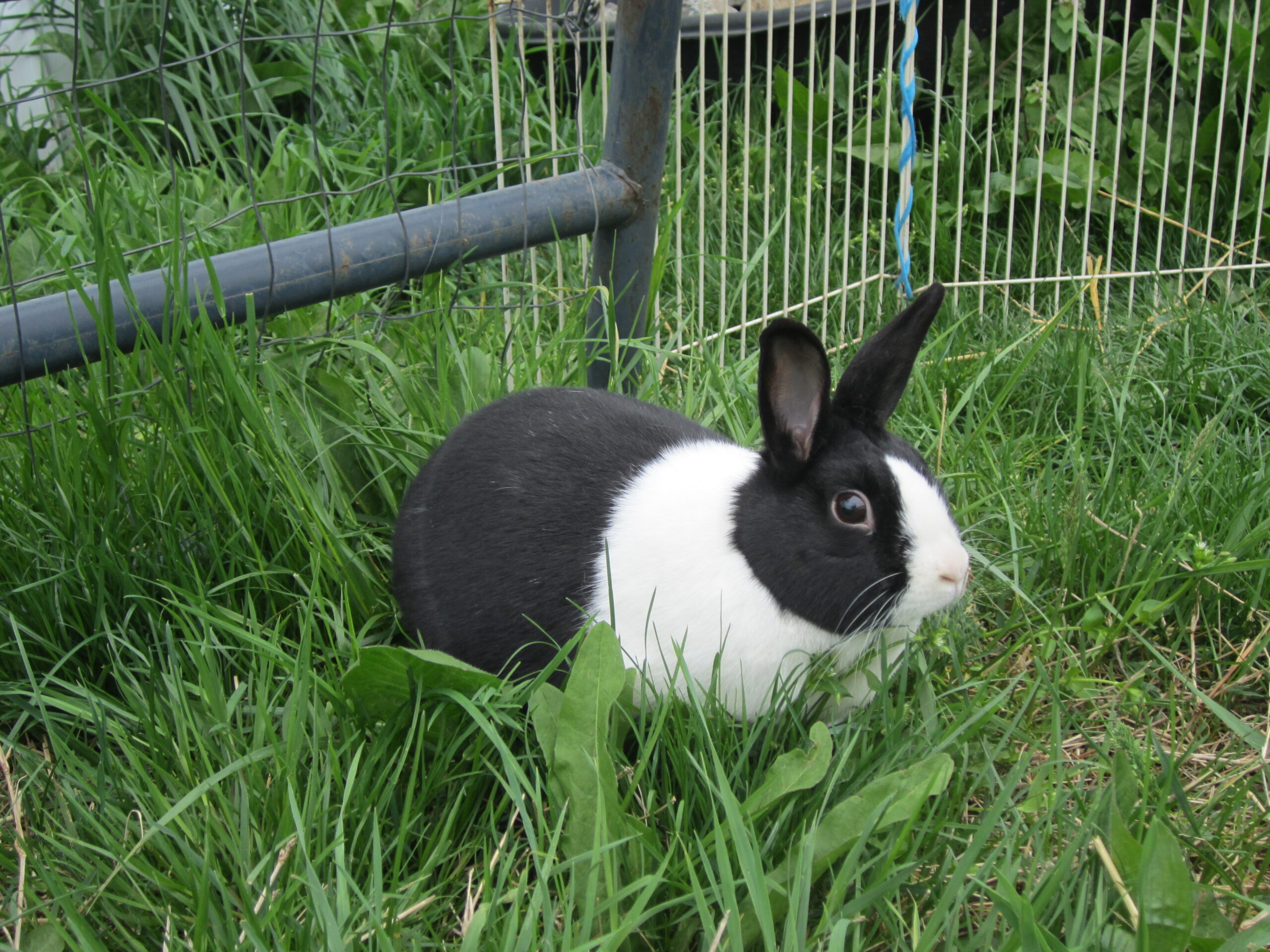
Dutch rabbits are easy to recognize with their distinctive markings. The head of the Dutch rabbit is a solid color sporting a white blaze down the face, which covers the nose, and grows thinner as it works up to the ears.
Behind the ears and neck area should be white, as well as the saddle (the upper body from the shoulders all the way up to the head and neck. The underside of the front half of the body (called the undercut) will also be white, and should form a complete, uniform circle around the body. The lower body and tail should be a solid color, i.e., blue, black, etc.
The front feet on a perfectly marked Dutch rabbit will be completely white, while the first third of a Dutch rabbit’s hind foot is also white; the rest of the foot remains a solid color.
Dutch Rabbit Color Varieties
Dutch rabbits come in a variety of colors, including black, blue, chinchilla, chocolate, gray, steel, and tortoise.
Even though the Dutch rabbit comes in multiple colors, the black Dutch continues to be the most popular and iconic of the varieties.
Size and Weight of the Dutch Rabbit
Dutch rabbits fall into the category of small to medium, and weigh in at four to five and a half pounds. However, it isn’t uncommon for Dutch rabbits to get a little bigger than their ideal weight.
Health and Common Issues
The Dutch rabbit is generally healthy and is not prone to many diseases. Like all rabbits, the Dutch can have gastrointestinal problems, such as bloat, furballs, and other intestinal issues. However, eating a healthy diet should help to prevent digestive tract problems.
Dutch rabbits are also prone to external parasites, dental issues, and respiratory conditions. While these conditions aren’t usually a big concern, be sure to check your rabbits regularly for parasites, behavior changes, or other signs of illness. If your Dutch rabbit appears sick, take them to a qualified veterinarian for treatment.
Female Dutch rabbits are more prone to uterine cancer than other breeds. If kept as pets, spaying your females is advised. Clinical symptoms of uterine cancer include.
- Blood in the urine
- Difficulty breathing (Only seen in advanced cases where the cancer has spread to the lungs)
- Fertility problems
- Loss of appetite
- Stillborn births
Many of these symptoms can be caused by other, less serious conditions, so be sure to take your rabbit to see a veterinarian to avoid a misdiagnosis.
How Long Do Dutch Rabbits Live?
The average lifespan of the Dutch rabbit is five to nine years. With some individuals living up to fifteen years of age.
Personality and Temperament
Dutch rabbits rank number three in the most popular of domestic rabbit breeds. With their endearing personality, it’s easy to see how the Dutch rabbit has continued to grow in popularity.
Easy-going, calm, curious, affectionate, and gentle, the Dutch rabbit is a good choice for families with small children. This friendly breed has never met a stranger and is not shy when interacting with humans, family pets, or livestock.
Dutch rabbits are very intelligent and can be trained to come when called, do tricks, and even run an agility course. With their active and fun-loving personalities, the Dutch is an interactive breed that loves nothing more than human attention.
Both male and female Dutch rabbits make ideal family pets and enjoy interacting with people. (However, potential owners should be aware that the males can be more smelly and messy than the females.)
Breeding Dutch Rabbits
Dutch rabbits are very fertile and are easier to breed than other rabbit breeds. This puts them at an advantage for novice rabbit breeders who are looking for an easy rabbit to raise a decent-sized litter.
Female Dutch rabbits’ gestation period lasts twenty-eight to thirty-two days. Each female should produce an average of six to seven babies (called kits) per litter. Unlike some other breeds, Dutch females make attentive and loving mothers. Dutch rabbits are such great mothers; some have even become foster moms to motherless kits.
When breeding for profit or show, female Dutch should be bred biannually, ideally giving birth in the spring and fall when temperatures are more moderate to avoid weather-related deaths in kits.
Why the Dutch Rabbit Makes a Great Pet
Dutch rabbits are not the best choice for those looking to raise their own rabbit meat or fur, or for those looking for a steady profit. However, if you are seeking a fun-loving, interactive pet for your backyard or hobby farm, the Dutch rabbit just might be the right breed for you.
This article was written for Hobby Farms magazine. Click here to subscribe.