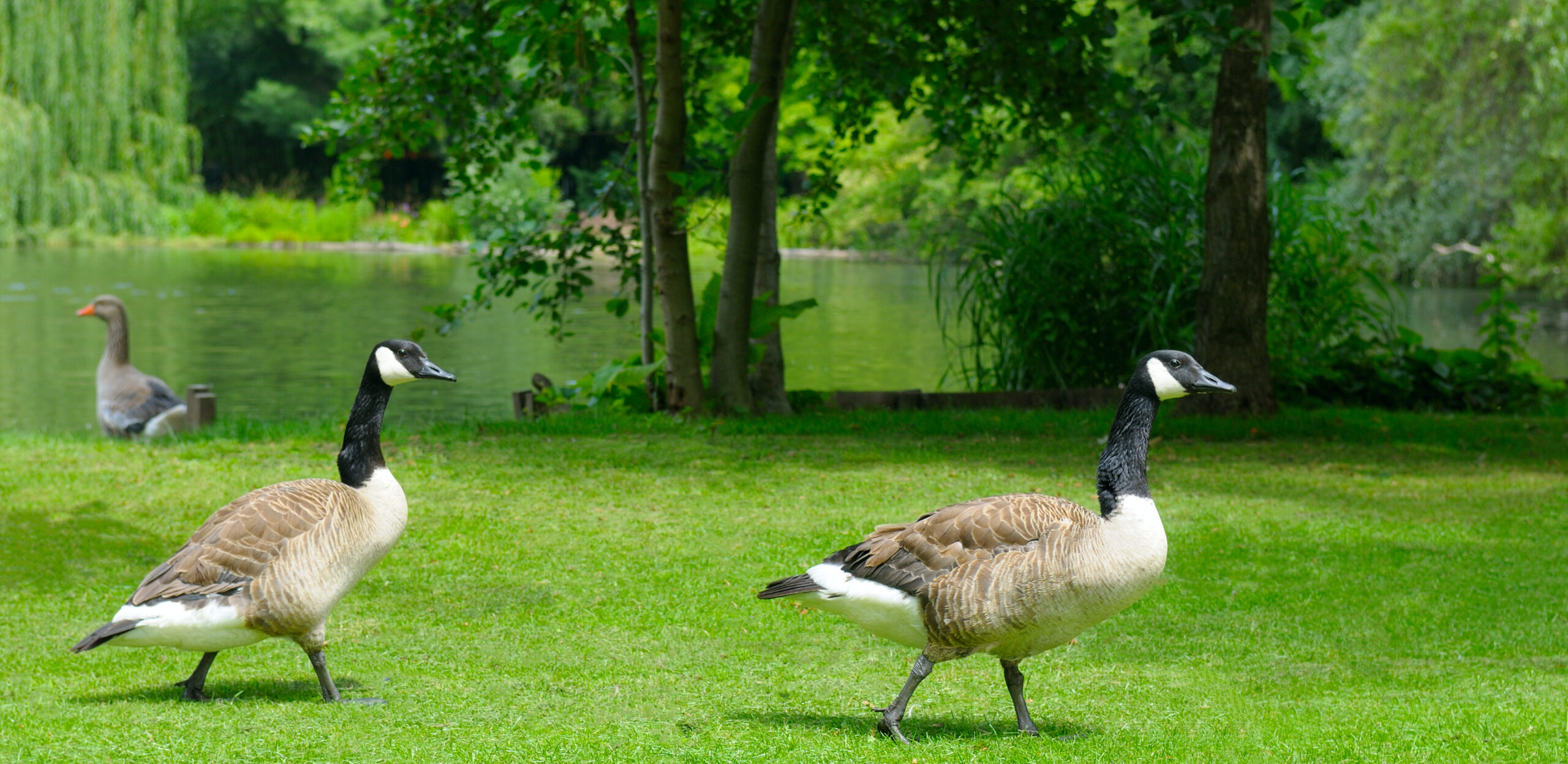
How to keep geese out of your yard is a challenge many property owners face, especially if they live near ponds, fields, or other open grassy areas. While raising domestic geese can be enjoyable for homesteaders, wild Canada Geese are another matter entirely. These birds can be quite the mess makers on your property, especially during spring and fall migration. In addition, Canada Geese can be highly territorial, so they might move in and then start honking and defending “their” land whenever you, your family, or your livestock get too close.
How to Keep Geese Out of Your Yard: Key Takeaways
- Canada Geese prefer short grass near ponds and water sources.
- Geese can become noisy, territorial, and messy once established.
- Early deterrents work best before geese begin nesting.
- Simple landscape changes can make your property less attractive to Canada Geese.
- Humane deterrents are usually the safest and most effective control method.
Why Canada Geese Are Hard to Remove
However, it’s important to note that no matter how much of a nuisance Canada Geese may be, they are federally protected by the Migratory Bird Treaty Act. While there may be localized hunting seasons or exceptions made through a permit process, generally, shooting, relocating, or disturbing Canada Geese is not an option in the U.S. So control methods for property owners are more limited, and you may have to be a little smarter than the geese themselves (not always easy!). Here are a few simple methods to consider.
1. Let Grass Grow Taller to Discourage Geese
Canada Geese are rather fussy and particular about where they will land and spend time. They greatly prefer short, manicured grass, preferably near a water source—which is why they tend to be such a nuisance for parks. Naturally, Canada Geese will be attracted to your farm’s mowed areas—particularly around any ponds you have. A partial solution is to not keep your farmyards and open mowed areas so short. If you let the grass grow longer than about 6 inches, the Canada Geese find it increasingly unattractive and may very well migrate on to a new location. The flaw with this idea is, of course, that you lose the nice manicured look of your property. But still, letting the grass grow can be a highly effective solution to a goose problem. It’s not always a practical option, and there are times when it fails, but it’s a good one when it works.
2. Use Decoys to Keep Canada Geese Away
Certain artificial animal decoys can successfully discourage Canada Geese from congregating on your property. The best decoys are those that mimic the look of the birds’ natural predators—so coyote decoys (some have very believable-looking tails!) are usually a good choice. Surprisingly, another possible option is swan decoys. Swans seek out the same environments that geese do—but since swans are even more territorial and will defend their turf against other birds aggressively, Canada Geese may see the swan decoys floating in your ponds and not even stop to land.
3. Install Fencing Around Ponds and Water
If you observe Canada Goose behavior for a while, you’ll begin to notice that these birds have a bit of a lazy streak in them. Canada Geese prefer to be able to swim about in the water, and then stroll up the bank and into the short grass nearby. They don’t really want to expend the effort to fly a short distance to hop over an obstacle. You can use this preference to your advantage by installing a short barrier fence along the shore of your pond. It doesn’t have to be very tall—two feet or so—and can be made of something very inexpensive, like poultry netting. Just enough of a barrier to make the geese want to leave of their own accord.
Note: In all of these cases, it’s best to install the deterrents quickly when you begin to notice geese, before they have fully established themselves. This way, you won’t disturb geese that are already nesting.
Frequently Asked Questions about Keeping Geese Out of Your Yard
What is the best way to keep geese out of your yard naturally?
The most effective natural methods include letting grass grow taller, using shoreline barriers, and placing predator decoys such as coyotes or swans. These changes make your property less appealing without harming the birds.
What smells or deterrents keep Canada Geese away?
Some property owners report limited success with scent-based repellents, but results vary. Geese are primarily driven by habitat preference, so physical changes like taller grass and blocked access to water are usually more reliable.
Can I legally remove or relocate Canada Geese?
In most cases, no. Canada Geese are protected under the Migratory Bird Treaty Act, which means they cannot be harmed or relocated without proper permits. Control methods generally focus on deterrence rather than removal.
Do decoys really work to deter geese?
Yes, decoys can help discourage geese, especially when used early. Predator decoys (like coyotes) or territorial birds (like swans) may make an area feel unsafe or already occupied, causing geese to move elsewhere.
Why do Canada Geese keep coming back to my yard?
Geese return to areas that provide short grass, open sightlines, and nearby water. Once they identify a location as safe and food-rich, they tend to revisit it unless conditions change.
Learning how to keep geese out of your yard often comes down to making your property less appealing to them in the first place. Because Canada Geese are protected migratory birds, humane deterrents such as taller grass, shoreline barriers, and predator decoys are usually the best options. Acting quickly before geese begin nesting can help prevent long-term problems and encourage the birds to move on naturally.
This story about how to keep geese out of your yard was written for Hobby Farms and Chickens magazines. Click here to subscribe.