Can chickens eat cantaloupe seeds? Yes, chickens can safely eat cantaloupe seeds along with the flesh and rind of the fruit. In fact, cantaloupe is one of the best summertime treats for backyard flocks because it is hydrating, nutritious, and easy for chickens to peck apart. Many chicken keepers also wonder whether other seeds, including watermelon seeds, are safe for chickens. Fortunately, many fruit and garden seeds can be healthy treats when fed properly and in moderation. Understanding which seeds are safe and how to serve them can help keep your flock healthy, enriched, and well hydrated during warm weather.
Key Takeaways
- Chickens can safely eat cantaloupe seeds, watermelon seeds, and many other seeds in moderation.
- Cantaloupe is hydrating and rich in vitamins, minerals, and antioxidants that support flock health.
- Watermelon seeds provide protein and healthy fats, but should only be offered as an occasional treat.
- Whole seeds should not be fed to baby chicks because they can create choking or digestive hazards.
- Treats, including fruits and seeds, should make up no more than 10 percent of a chicken’s daily diet.
- Always remove uneaten fruits or rinds from the coop to help prevent pests and spoilage.
Can Chickens Eat Cantaloupe?
One of the most popular of the summertime squashes, cantaloupes are safe for chickens to eat and are full of health benefits for your flock. Cantaloupe contains high levels of water, making it an ideal treat choice during the hot summer months.
An excellent source of several vitamins and minerals, cantaloupe contains folate, vitamins C and K, manganese, magnesium, and fiber. An interesting thing about cantaloupe is that consuming this beneficial summertime treat can even help clear up soft-shelled eggs.
Limit the amount of cantaloupe in your flock’s diet to no more than ten percent, as the high levels of sugar can lead to blood sugar problems in your hens’ diet.
Can Chickens Eat Cantaloupe Seeds Safely?
Yes, the entire cantaloupe, including the seeds and rind, is edible for chickens to consume. Cantaloupe seeds contain beneficial fats, magnesium, and antioxidants to boost overall health.
Can Baby Chicks Eat Cantaloupe Seeds?
Yes, baby chicks can safely consume cantaloupe; however, cantaloupe seeds should never be offered to young chickens, as they can be a choking hazard and also cause crop impactions. This delicious fruit supports a growing, healthy muscular system, heart, and reproductive tract in both chicks and adult hens.
When feeding cantaloupe to both chicks and adult chickens, be sure to allow your flock to peck the fruit off the rind themselves or cut the cantaloupe into tiny pieces to avoid choking hazards.
Can Chickens Eat Watermelon Seeds?
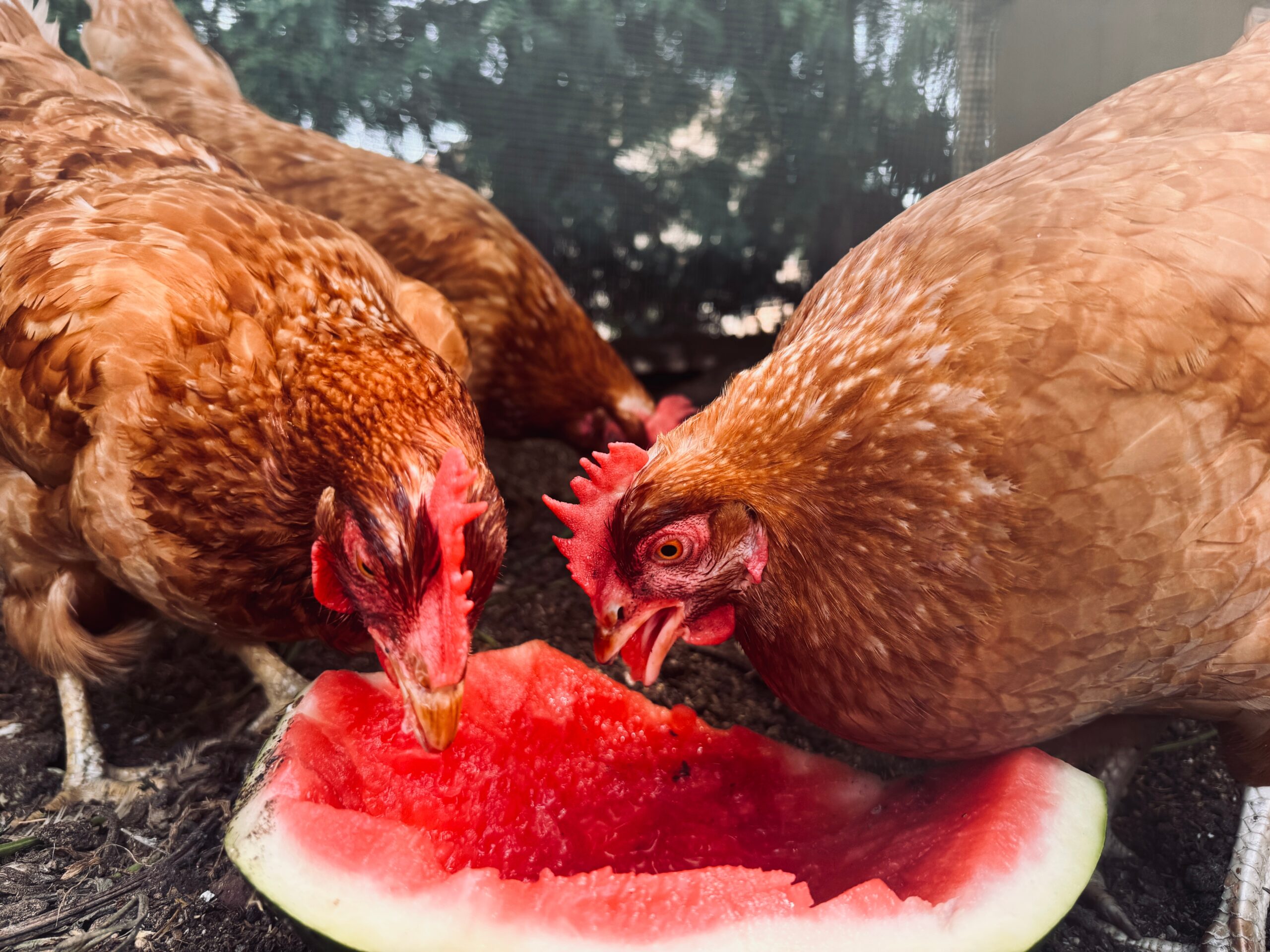
We all know chickens can safely eat watermelon. In fact, this hydrating fruit is one of a chicken’s all-time favorite treats. But can chickens eat watermelon seeds?
Yes, chickens can safely eat black and white watermelon seeds. However, they should be fed in moderation to prevent digestive upset. As a general rule of thumb, the amount of seeds found in a seeded watermelon is a good amount for your flock to consume.
High in protein, black watermelon seeds are also a good source of magnesium, iron, potassium, folate, and zinc. Considered a “healthy” fat, watermelon seeds can help replace the fat loss from egg laying. Never feed watermelon seeds to baby chicks, as they can pose a choking hazard for young chickens.
Watermelon seeds are also thought to be a natural dewormer. Note: Although they are considered to be a natural dewormer, watermelon seeds should only be fed in limited quantities and should not be used to treat internal parasites in the flock. If you suspect your flock is suffering from internal parasites, contact a poultry vet immediately and follow through on the recommended treatment plan to eliminate these harmful parasites.
Can Chickens Eat Millet?
Yes, chickens can eat millet. Easy to digest, this beneficial grain is highly nutritious for growing chicks and laying hens. High in minerals including calcium, manganese, and magnesium, millet supports a healthy reproductive tract.
Millet is a rich source of protein and antioxidants, making it one of the best grains for growing chicks and laying or molting adult chickens.
Another benefit to feeding laying hens millet is that this grain helps laying hens produce eggs higher in omega-3 fatty acids and lower in omega-6 fatty acids than hens fed corn-based diets.
Can Chickens Eat Pomegranate Seeds?
An uncommonly discussed treat choice for backyard flocks, many chicken owners are questioning, “Can chickens eat pomegranate seeds?” A superhouse of nutrition, these tasty seeds are safe for chickens and also offer many health benefits.
Pomegranate seeds contain several vitamins, including vitamins A, B9, C, E, and K. Also a good source of potassium and fatty acids, pomegranates are one of the best prebiotics for backyard chickens.
Can Chickens Eat Sesame Seeds?
A good source of calcium for laying hens, sesame seeds are safe for adult chickens to consume. The high protein levels found in sesame seeds are beneficial in aiding in energy support for both active and laying hens.
Rich in antioxidants, sesame seeds help support healthy immune and digestive systems and also support bone and heart health in chickens.
Can Chickens Eat Lettuce Seeds?
Packed full of water, vitamins, and minerals, garden-fresh lettuce is an excellent treat choice for backyard flocks. But did you know? Lettuce seeds are also a good treat option for your hens.
Allowing your flock to forage through the garden looking for lettuce seeds from spent plants doesn’t just lower stress levels and increase natural behaviors; it also provides chickens with extra nutrients.
Consuming lettuce seeds can help improve digestive health, boost immunity, and improve heart health. Lettuce seeds are also a good source of vitamins A, B1, B2, B3, B6, B9, C, E, and K.
Can Chickens Eat Tomato Seeds Safely?
Yes, despite containing the toxic solanine, many experts suggest that chickens can safely consume the seeds of overripe tomatoes in small quantities. However, care should be taken to avoid feeding unripe or green tomatoes to your flock, as underripe tomatoes contain high levels of solanine.
Can Chickens Eat Rice?
Rice is an excellent source of protein and niacin for laying hens. While chickens can safely consume rice, it should only be fed cooked.
Raw rice can be difficult for chickens to digest and, if fed in large quantities, can lead to a crop impaction. Another downside to raw rice is that it is much harder for a chicken’s body to absorb the nutrients found in this popular grain.
Never feed raw or cooked rice to chicks, as it is hard for them to digest.
FAQs About Chickens Eating Cantaloupe Seeds
Are cantaloupe seeds safe for chickens?
Yes, cantaloupe seeds are safe for chickens to eat in moderation. The seeds contain beneficial fats, magnesium, and antioxidants that can support overall flock health.
Can baby chicks eat cantaloupe seeds?
No, whole cantaloupe seeds should not be fed to baby chicks because they can become a choking hazard or cause crop impaction. Adult chickens can safely eat them.
Can chickens eat watermelon seeds, too?
Yes, chickens can safely eat both black and white watermelon seeds. Watermelon seeds provide protein, healthy fats, and minerals, but they should only be offered as an occasional treat.
How should I serve cantaloupe to chickens?
Cantaloupe can be served cut into small pieces or split open so chickens can peck at the flesh, rind, and seeds naturally. Remove leftovers before dusk to avoid attracting pests.
How much cantaloupe can chickens eat?
Cantaloupe and other treats should make up no more than 10 percent of a chicken’s daily diet. Too much fruit can add excess sugar to your flock’s diet and cause digestive upset.
Final Thoughts
Can chickens eat cantaloupe seeds? Yes, chickens can eat cantaloupe seeds. Providing your flock with these and other nutritious seeds can help boost health and encourage natural foraging abilities to help your flock live healthy, enriched lives.
This article about can chickens eat cantaloupe seeds was written for Hobby Farms and Chickens magazines. Click here to subscribe.