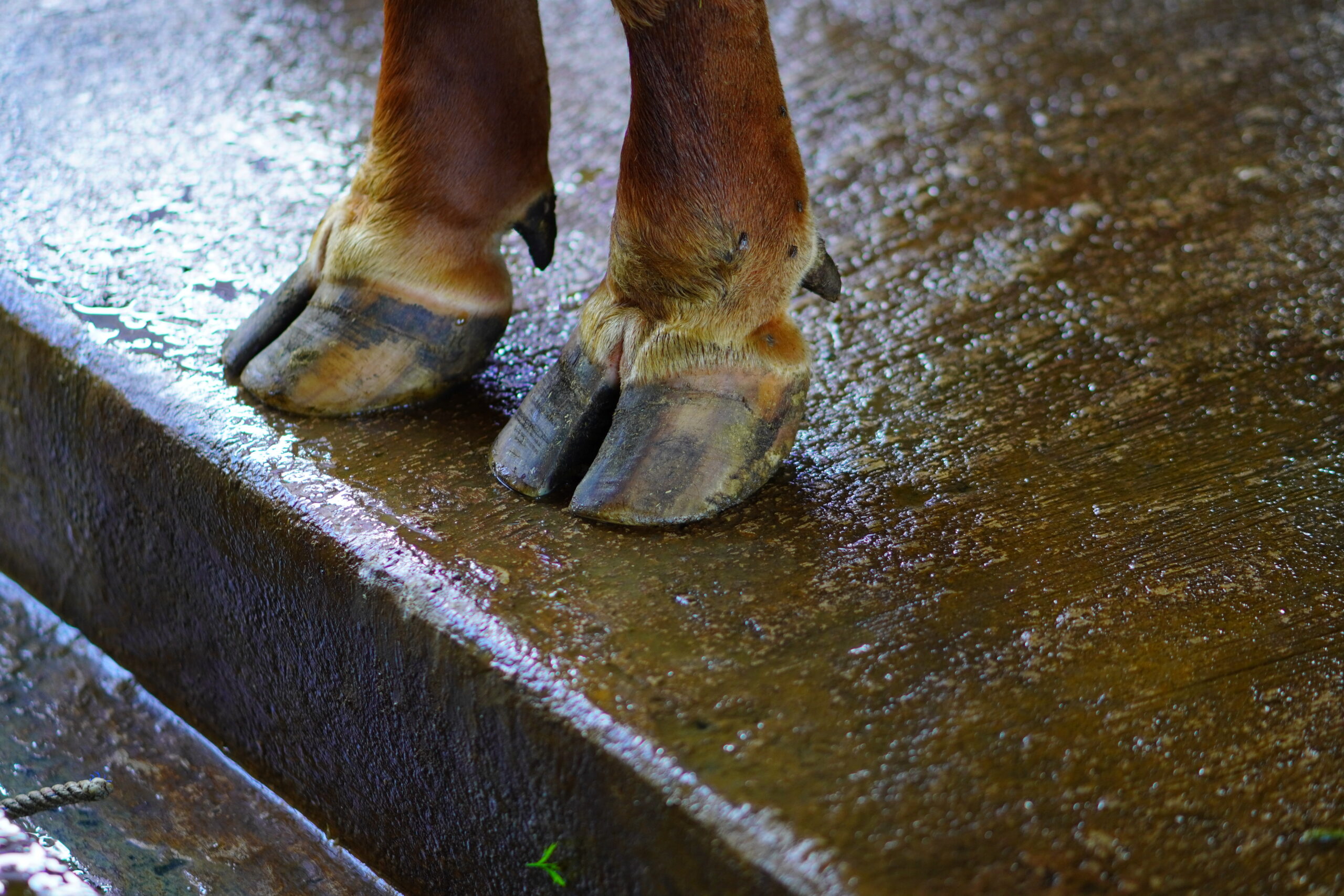
If you raise horses, goats, sheep, cattle, alpacas, or other livestock, you’ve probably wondered: what are hooves made of? While hooves may seem similar to human fingernails, they’re specially engineered to support an animal’s full weight, absorb shock, and withstand rough terrain and changing weather. Understanding what hooves are made of helps explain why regular hoof care is so important for the health of your livestock.
Key Takeaways
- Hooves are made primarily of keratin, the same protein found in hair and fingernails.
- New hoof material grows continuously from the coronet band.
- The outer hoof wall consists of dead, keratin-filled cells that provide strength and protection.
- Living tissues inside the hoof contain blood vessels and nerves, making proper hoof trimming essential.
- Healthy hooves support an animal’s weight, cushion movement, and help protect against rough terrain and cold weather.
What Are Hooves Made Of? A Special Protein Structure
If you recall some of the basics of biology, you know that living things are made of cells, and in a multicellular creature like your livestock, the cells are specialized to perform various tasks. A nerve cell, for instance, is different from a skin cell—similar in concept, but performing different functions. Living cells create proteins for various biological purposes, as well as for use in their own structures.
Hooves are made of cells, too. So don’t think of a hoof as a single, solid piece of material, but as one built of billions of tiny units. Hooves begin growth at the coronet band—right at the junction between the hoof and the animal’s leg. Specialized skin cells called corneocytes form there and begin working their way down, slowly and constantly growing and re-growing the hoof over the animal’s life. These corneocyte cells don’t remain as viable living cells—they become “dead” structures, which the animal’s body packs with solidified, water-resistant proteins called keratin, giving the hoof its distinct texture and strength. Keratins also make up your own fingernails—as well as hair—but the protein structures are dissimilar. The keratin proteins in hooves are structurally strong and durable—designed to withstand the tremendous pressure of the animal’s weight and movement.
How Hoof Structure Protects Your Livestock
The interior of your animals’ hooves contains living cellular structures of course—so there are regions of blood flow and nerve endings where the animal is sensitive to feel. This is why anyone trimming livestock hooves must be careful not to accidentally reach these living portions of the hoof. These tissues also help with thermal regulation to help keep the hoof from freezing. But the strong, tough outer hoof does not contain living tissues, has no nerves or blood vessels, so there is no direct feeling there. In this sense, the hooves are similar to your fingernails. So the animals are able to walk on rough ground, through water, and withstand cold temperatures without pain or discomfort, because while the hoof is a robust structure, it’s dead at the cellular level.
Frequently Asked Questions
What are hooves made of?
Hooves are made primarily of keratin, a tough structural protein that also forms hair and fingernails. Specialized cells produce keratin as the hoof grows from the coronet band.
Are hooves made of bone?
No. The outer hoof is made of keratin, not bone. However, bones, blood vessels, nerves, and other living tissues are protected inside the hoof capsule.
Do hooves have nerves?
The outer hoof wall has no nerves or blood vessels. The inner tissues do contain nerves and blood vessels, which is why trimming too deeply can cause pain and bleeding.
Do hooves keep growing?
Yes. Hooves grow continuously throughout an animal’s life and require regular trimming or natural wear to maintain proper shape and function.
Hooves are remarkable natural structures that allow livestock to move comfortably across a wide variety of terrain. While they resemble fingernails in that they’re made primarily of keratin, hoof tissue is specially organized to provide exceptional strength, durability, and protection. Understanding what hooves are made of can help livestock owners appreciate the importance of proper hoof care, trimming, and overall animal health.
Enjoy learning more about livestock health and farm management? Subscribe to Hobby Farms for trusted advice, practical how-to articles, and expert tips to help your farm animals thrive.