Turkey eggs are larger than chicken eggs, have distinctive speckled shells, and can be used in many of the same recipes. Although turkey meat is closely associated with Thanksgiving, turkey eggs are another useful product from these large poultry birds. They’re less common, but their size, flavor and culinary versatility make them worth exploring.
Key Takeaways
- Turkey eggs are about 50% larger than chicken eggs and considerably heavier.
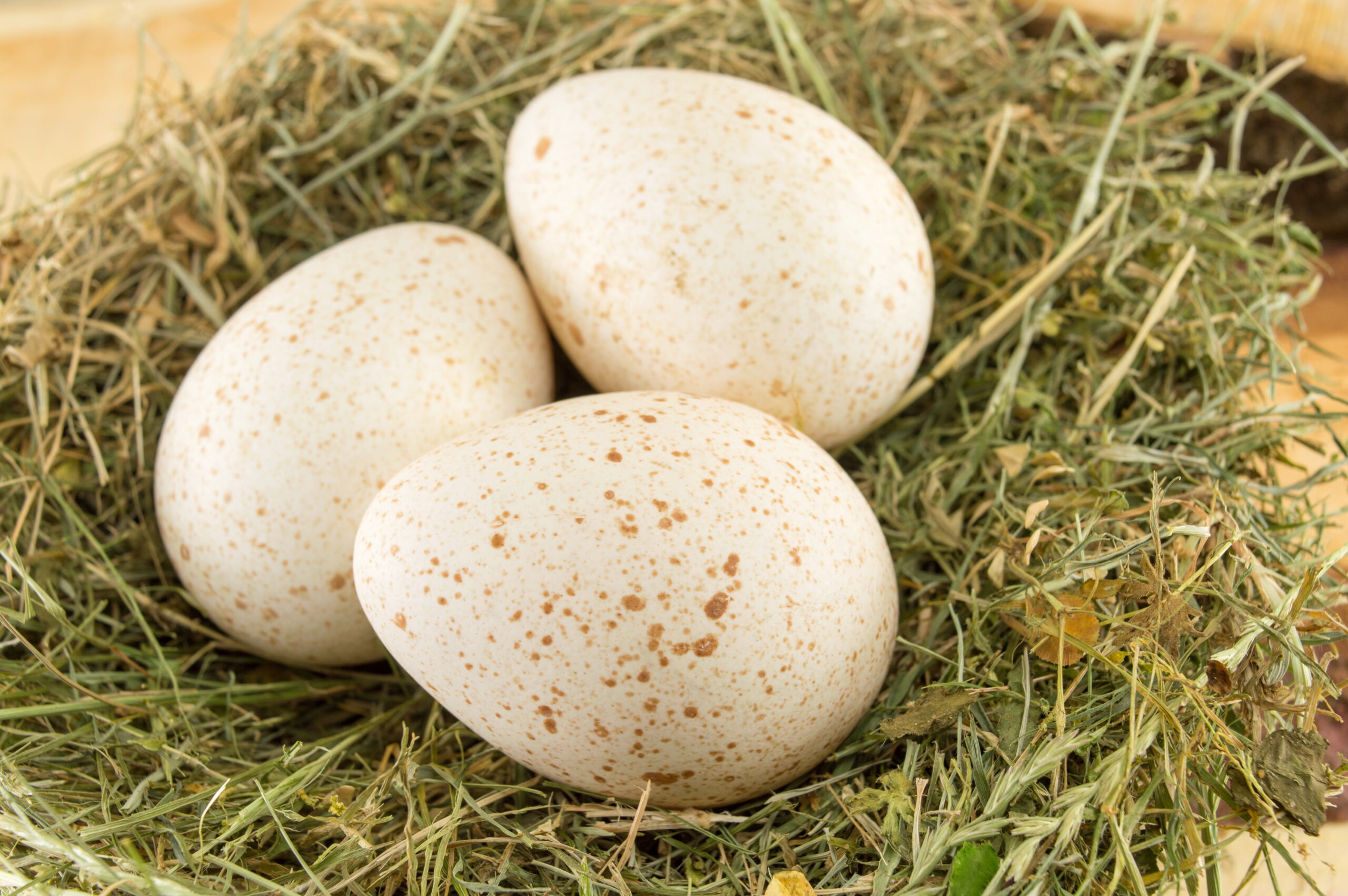
- Their shells are typically cream-colored or white with brown speckles.
- Turkey eggs can substitute for chicken eggs in many recipes, including baking.
- They’re not commonly sold in grocery stores because turkeys produce fewer eggs than laying chickens.
What Do Turkey Eggs Look Like?
Turkey eggs are interesting because their shells display a distinctive speckled pattern. The eggs typically have a cream or white base color, dappled with light brown speckles of varying intensity across the shell. If you’ve ever seen an Appaloosa horse, you’ll notice a similar spotted pattern.
Another physical difference is size. Since turkeys are quite a bit larger than chickens, it’s no surprise that their eggs are correspondingly larger. They are roughly 50% larger than chicken eggs, depending on the measurements used. They can be almost 3 inches long, compared to a chicken egg’s approximately 2 inches, with a correspondingly larger diameter.
Turkey eggs are also considerably heavier than chicken eggs. Their shells are thicker and tougher, too. You’ll need to work harder to crack a turkey egg, and you might even need to use a knife!
Can You Eat Turkey Eggs?
Yes! Turkey eggs are perfectly edible and can be used in many of the same ways as chicken eggs. Chicken eggs are so ubiquitous that some people never give much thought to the culinary value of other poultry eggs. However, turkey eggs can be an excellent alternative.
Turkey eggs contain more calories, fat and protein per egg than chicken eggs, largely because of their greater size. They’re often described as creamier or richer tasting than chicken eggs.
Turkey eggs work well in quiches and other egg dishes, as well as baking. Their rich texture makes them a useful ingredient in recipes that call for eggs.
When recipes list eggs, they generally assume chicken eggs. If you’d like to substitute turkey eggs, you’ll need to account for the difference in size. One possible rule of thumb is that a single turkey egg can replace approximately 1 1/3 to 1 1/2 chicken eggs.
For a recipe that calls for two chicken eggs, one large turkey egg may not be quite enough. If precision matters, crack the turkey egg into a measuring cup and adjust the amount to match the volume of chicken eggs called for in the recipe.
How to Store Turkey Eggs
Turkey eggs should be handled and stored much like chicken eggs. Refrigerate fresh, unwashed eggs promptly at 40°F or below. If collecting eggs from your own flock, keep them in a clean container and refrigerate them rather than leaving them at room temperature.
Store eggs in their original carton or a covered container on an interior refrigerator shelf rather than in the refrigerator door, where temperatures fluctuate more. Keep them away from foods with strong odors, and discard any with cracked or damaged shells.
For additional guidance on storage, refrigeration and safe handling, see the USDA Food Safety and Inspection Service’s Egg Products and Food Safety guidelines.
Where Can You Buy Turkey Eggs?
Turkey eggs aren’t nearly as easy to source as chicken eggs. Far from being available in every grocery store, they’re much more of a specialty item.
Part of the reason is that turkeys produce far fewer eggs per year than chickens. While a productive chicken-laying breed might produce 250 eggs annually, turkeys generally lay around 100 eggs per year, depending on breed and management.
While they aren’t impossible to find from retailers, they’re more easily obtained from farmers’ markets, neighbors who raise poultry, or your own flock of turkeys.
The bottom line is that turkeys can indeed be dual-purpose birds! Turkey meat may be commonplace at Thanksgiving, but their eggs can also be enjoyed throughout the year by anyone with access to them.
Frequently Asked Questions
Are turkey eggs safe to eat?
Yes. They are edible and can be prepared much like chicken eggs. As with other poultry eggs, handle them safely, refrigerate them promptly, and cook them thoroughly.
Why are turkey eggs speckled?
The speckles are a natural part of the eggshell’s pigmentation. They may also help camouflage eggs laid by wild turkeys in their natural nesting environments. However, the specific function of the speckling shouldn’t be assumed to be the same in domesticated birds.
Do turkey hens get broody like chicken hens?
Yes. Some turkey hens exhibit strong brooding and mothering instincts. Heritage turkey breeds, in particular, can make attentive mothers, although broodiness varies among individual birds and breeds.
How many eggs does a turkey lay in a year?
A turkey hen generally lays around 100 eggs annually, although production varies with breed, age, season and management. This is considerably fewer than the annual production of a productive laying chicken.
Do turkey eggs taste different from chicken eggs?
Turkey eggs have a flavor similar to chicken eggs, but they’re often described as richer and creamier. Their larger size also means they contain more nutrients per egg.
This article was written for Hobby Farms and Chickens magazines. Click here to subscribe.