Winter frost can damage garden plants, particularly when temperatures begin dropping in autumn. When that first forecast predicting a “frost warning” rolls around, gardeners know the drill: it’s time to cover sensitive plants, move containers indoors, and do what they can to protect plants and extend the growing season a few more weeks.
But what exactly is frost? Why is it a problem? How does it form, and how is it different from a freeze?
Winter Frost: Key Takeaways
- Frost forms when water vapor changes directly into ice on cold surfaces, a process called desublimation.
- Frost typically develops when surface temperatures reach 32°F or below, even when the surrounding air remains slightly warmer.
- The cold temperatures associated with frost, rather than the ice crystals themselves, are what damage plant cells.
- A freeze occurs when the actual air temperature drops below 32°F.
Water Vapor and Frost Formation
Recall that there’s more to Earth’s atmosphere than simply the gases like oxygen and nitrogen. There is also a great deal of water vapor—about 1% of the atmosphere at sea level is water vapor, though that number can vary greatly depending on region and climate.
Water vapor is simply the gaseous form of water. When water molecules (H2O) become energetic and sparse—like when you boil water in a pot—they can exist as a gas instead of the liquid that we normally experience in daily life. This water vapor stays in the air and provides us with beautiful clouds—or turns back into water to create gentle spring rains and summer thunderstorms. It’s this water vapor that plays a role in frost formation.
How Winter Frost Forms
When there’s a lot of water vapor in the air (that is, high humidity) and the temperature drops in the early morning hours, you might see dew all over the lawn. If the dew is heavy enough, it might even form on car windshields, plant leaves, bench seats, and garden fencing. What’s happening is the air is so saturated with water vapor that the molecules start to collect together on colder objects—like your car’s windshield—and turn back into liquid water. In a few hours, the dew has been absorbed into the ground or re-evaporated back into the air.
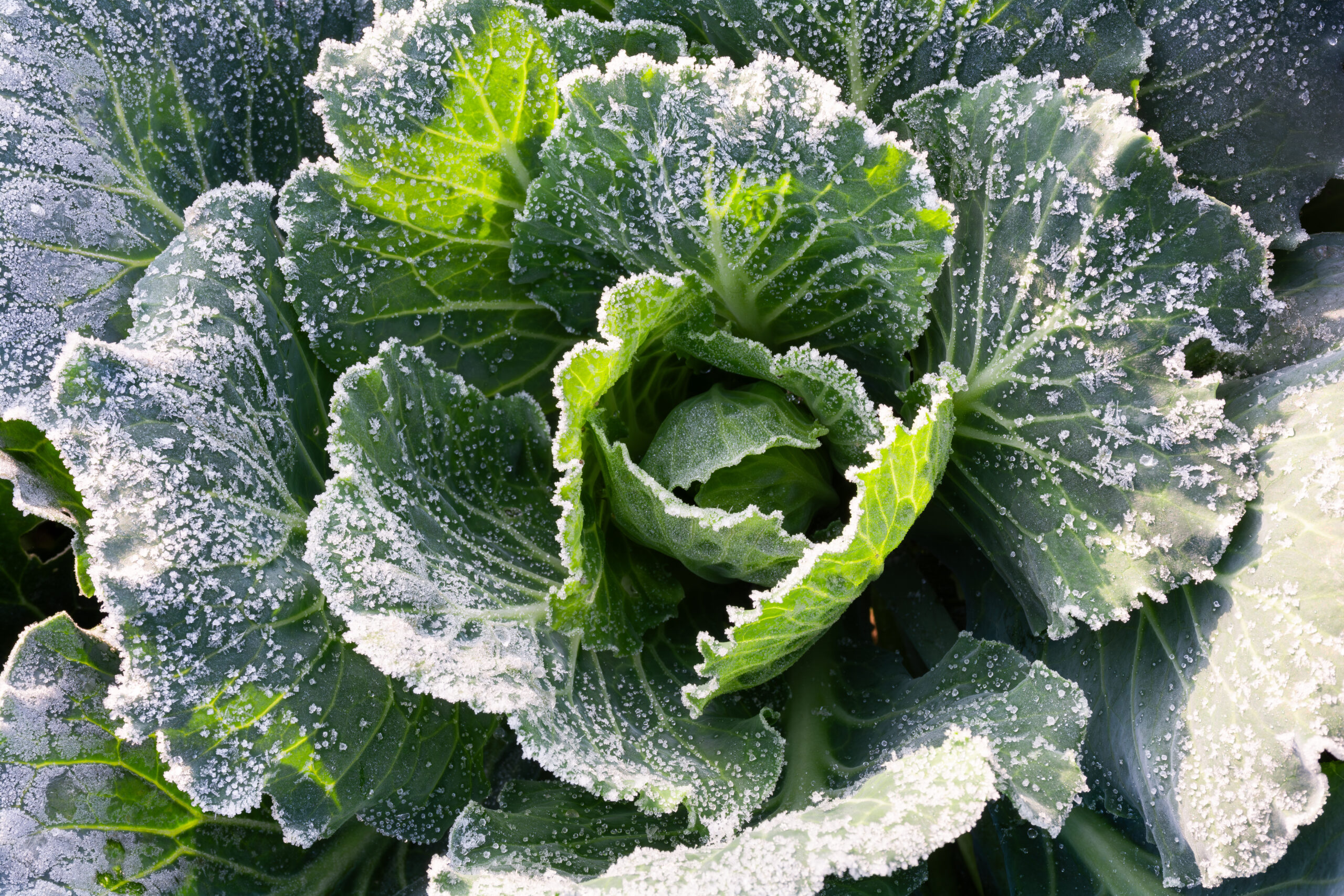
With frost, almost exactly the same process is occurring—but with a twist. Frost can form when surfaces cool below freezing even though the air temperature measured several feet above the ground remains above 32°F. As a result, instead of forming liquid dew drops, the water vapor skips that step and turns directly into ice—water’s solid form. This vapor-to-solid process is called desublimation. When this happens, you wake up to a garden with plant leaves covered in a coating of ice crystals. It makes for wonderful garden photos—especially at sunrise.
Why Frost Damages Plants
But it can also be damaging. But here’s the interesting part—it’s not so much the frosty ice crystals that are the problem for your garden. It’s simply the fact that the temperature got that cold. This is where you start having cell damage in leaves. And if the frost is bad enough or lasts long enough, it can kill sensitive garden plants. This is why gardeners cover plants—not so much to avoid the ice crystals, but to avoid the cold temperatures.
It can be hit or miss. Since the true air temperature is above 32°F, some parts of the garden might be okay, while others get damaged. Cold-hardy plants like spinach or kale might have enough natural anti-freeze properties to come through unscathed.
A freeze is when the actual air temperature drops below 32°F (not just objects). This can often become a growing-season-ending event unless plants are covered.
So while those frosty ice crystals might look like they are the real culprit, in most cases it’s the cold air itself that brings a close to another growing season.
Frequently Asked Questions About Winter Frost
Is it true that some plants are more cold-hardy than others?
Absolutely. Some plants accumulate natural sugars in their cells that act somewhat like antifreeze, lowering the temperature at which their cells freeze. This is one reason certain fruits, such as apples, and greens, such as kale, can taste sweeter after exposure to cold temperatures.
Are valleys or hills more likely to receive frost?
Often, valleys are more susceptible to frost because cold, dense air tends to flow downhill and collect in low-lying areas. This can make gardens in valleys colder than those on nearby slopes. Higher elevations can also experience frost because temperatures generally decrease with altitude.
What is the difference between frost and a freeze?
Frost forms when water vapor turns directly into ice on surfaces that have cooled to freezing temperatures or below. A freeze occurs when the air temperature itself drops below 32°F. A freeze can cause significant plant damage, even when visible frost doesn’t form.
Winter frost may leave a beautiful coating of ice crystals across the garden, but those crystals aren’t usually the biggest threat to plants. The cold temperatures that cause frost are what damage plant cells and can end the growing season for sensitive plants. Understanding how frost forms and how it differs from a freeze helps gardeners know when to protect their plants from the cold.