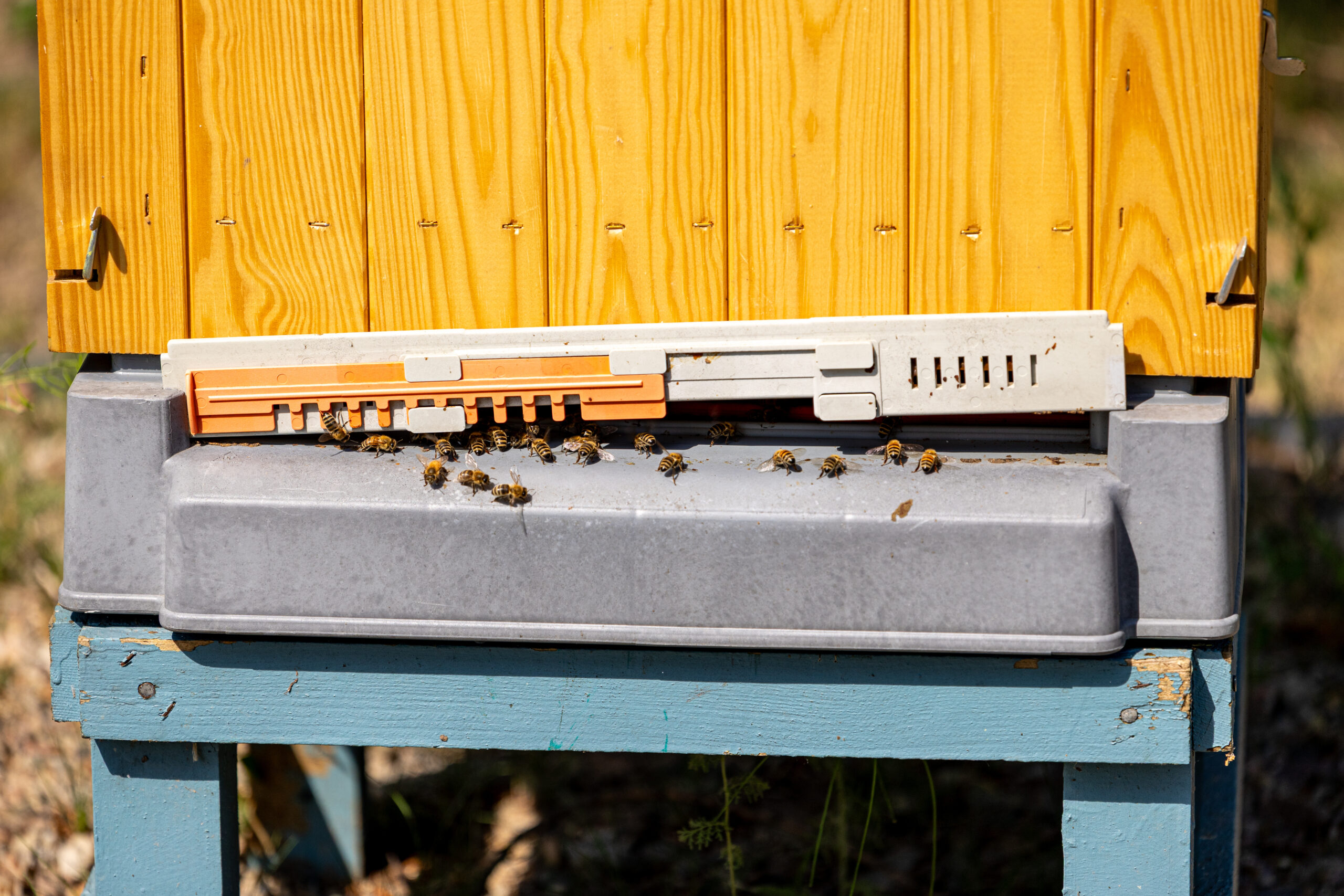
A beehive entrance reducer is a simple tool that can help protect a honey bee colony during the winter months. Winter winds, cold temperatures and humidity all present challenges for beekeepers trying to guide their colonies safely into spring. Although no single management technique guarantees winter survival, an entrance reducer can help limit drafts, discourage mice and control access to the hive. Whether and how to use one depends on the local climate and the condition of the colony.
What Is a Beehive Entrance Reducer?
Many entrance reducers are constructed from a thin piece of wood, about ¾” x ¾” x 14 ¾”. Two sides of the entrance reducer are notched, one with a small notch, the other with a larger version. These different-sized holes give the beekeeper more precise control as needed. There are also metal entrance reducers, with small honey bee-sized holes. In any case, the entrance reducer is placed at the front of the hive, near the base, covering the large entrance where the bees go in and out, and forcing them to enter and exit through one of the small notches.
Why Use an Entrance Reducer in Winter?
There are a few reasons why beekeepers use these tools. One is to make it easier for a young or weak colony to defend its hive—with a smaller entrance, it’s easier for fewer bees to prevent unwanted access from robber bees or other threats. But that’s typically in the spring or summer. In the winter, beekeepers use entrance reducers to:
- Keep mice away. In winter, beehives can become attractive shelters for mice. The warmth and available food make them tempting places to nest. Mice can chew comb, damage hive materials and contaminate the colony’s food stores. A properly sized entrance reducer or metal mouse guard can help prevent them from getting inside.
- Reduce drafts. A standard hive entrance leaves a relatively large opening at the bottom of the hive. An entrance reducer narrows that opening, limiting direct exposure to cold winds without completely closing off access.
- Protect the colony. Honey bees maintain a winter cluster, contracting their flight muscles to generate heat. Bees move within the cluster to help regulate its temperature. Although an entrance reducer doesn’t insulate the hive, it can reduce direct wind exposure at the entrance.
- Limit blowing snow. Strong winds can blow snow through an open hive entrance. An entrance reducer helps limit the amount that enters. Check hives after snowstorms to make sure the entrance hasn’t become blocked.
- Allow proper ventilation. Winter colonies produce moisture as bees consume stored honey. That moisture needs a way to escape to prevent condensation from collecting inside the hive and dripping onto the bees. Depending on the hive design and climate, beekeepers may use additional ventilation measures, such as an upper entrance. However, ventilation should be managed carefully to avoid excessive drafts.
A beehive entrance reducer is a small but useful tool in a beekeeper’s winter management routine. It can help keep mice out, limit exposure to wind and reduce the amount of blowing snow that enters the hive. The appropriate entrance size depends on the colony, hive setup and local winter conditions. Beekeepers should also make sure the entrance remains clear and that the colony has adequate ventilation throughout the winter.
This article about a beehive entrance reducer was written for Hobby Farms magazine. Click here to subscribe.