The Belgian d’Uccle chicken is one of the most popular ornamental bantam breeds thanks to its fluffy feathered feet, full beard and muff, and exceptionally friendly personality. Although these tiny chickens aren’t prolific egg layers, they make outstanding pets, dependable broody hens, and eye-catching additions to backyard flocks. Here’s everything you need to know about the d’Uccle chicken, including temperament, egg production, lifespan, and care requirements.
D’Uccle Chicken at a Glance
- Breed Type: True bantam
- Purpose: Ornamental, exhibition, pet
- Egg Production: 100–150 eggs annually
- Egg Color: Cream, white or tinted
- Mature Weight:
- Hen: 22 oz.
- Rooster: 26 oz.
- Temperament: Friendly, gentle, docile
- Broodiness: Excellent
- Cold Hardiness: Poor
- Lifespan: 7–8 years
Key Takeaways
- The Belgian d’Uccle chicken is a true bantam known for its beard, muff, feathered feet, and friendly personality.
- These ornamental chickens lay about 100–150 small eggs each year but excel as broody hens and attentive mothers.
- D’Uccles are gentle, easy to handle, and make outstanding pet chickens for families and beginners.
- Their feathered feet require extra care, especially during wet or muddy weather.
- Although they tolerate many climates, they need protection from extreme cold, damp conditions, and predators.
Is the D’Uccle Chicken a True Bantam?
What is the difference between a bantam and a true bantam? A bantam is a very small chicken, approximately one-quarter to one-half the size of a standard laying hen. Some bantam breeds have larger counterparts, such as a Cochin chicken, where the breed has both a standard and a bantam form. However, others, such as the Belgian d’Uccle, have no large counterparts to the breed and are considered to be true bantams.
D’Uccle Chicken History and Origin
The Belgian d’Uccle’s ancestry is a bit of a mystery, as some sources date the breed back to the seventeenth century, reporting that they originated in China. Other sources credit Michael Van Gelder for developing the d’Uccle in the early twentieth century in Uccle, Belgium.
Van Gelder crossed the Belgian d’Anvers with the Sablepoot (Dutch Booted Bantam) to create a beautiful, even-tempered breed. The results were a show-stopping chicken with a friendly, calm disposition.
From the Belgian d’Uccle very beginnings, it gained popularity in both the United States and England and was admitted into the American Poultry Association (APA) in 1914.
D’Uccle Chicken Appearance
The Belgian d’Uccle is a beautiful chicken with heavy feathering and full beards and muffs. This delightful breed is recognized by the APA in seven colors: Black, Blue, Golden Neck, Mille Fleur, Mottled, Porcelain, and White. The Mille Fleur (meaning “thousand flowers”) is the most popular color found in both backyard flocks and on the show table.
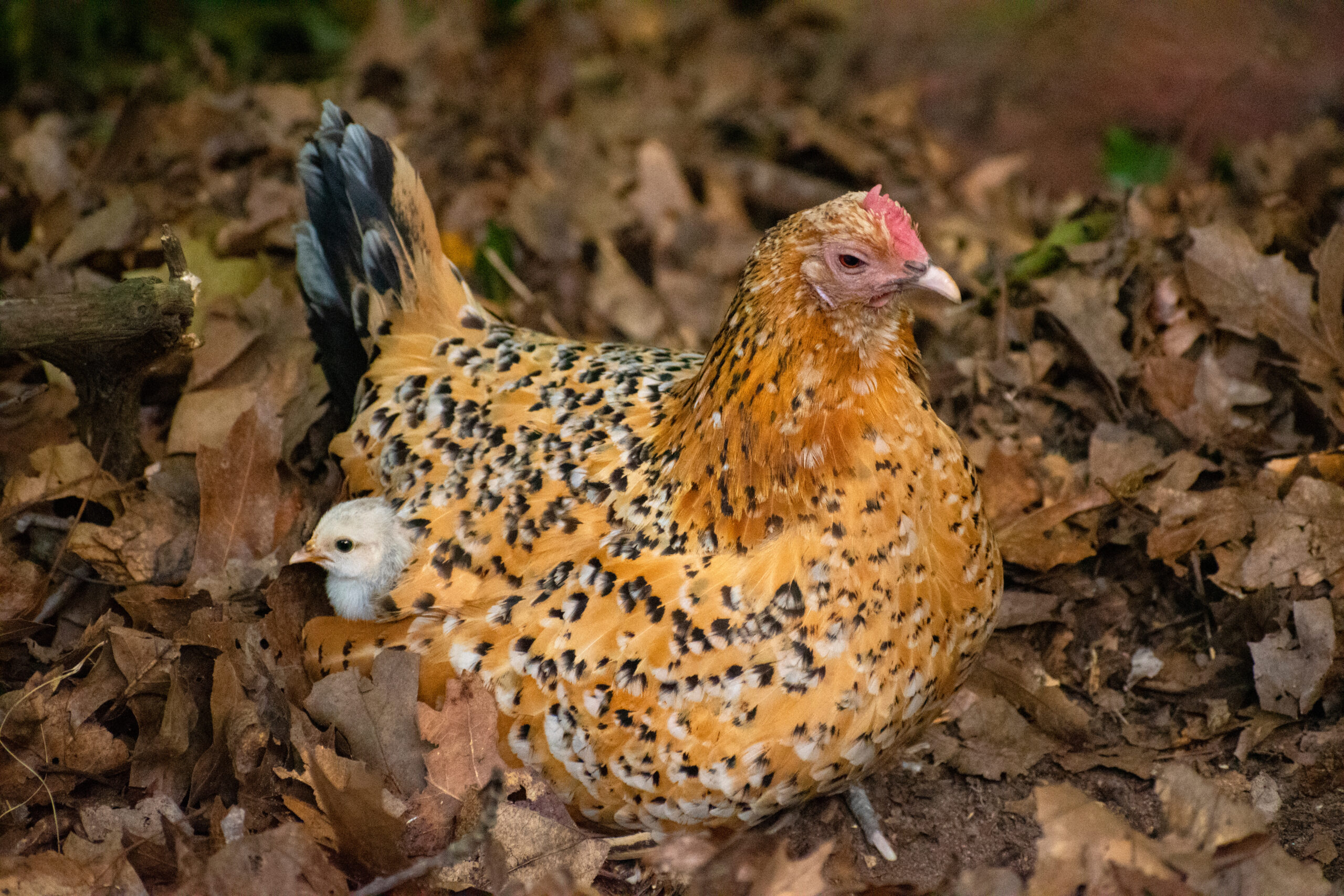
The Mille Fleur Belgian d’Uccle’s body, head, and neck are covered in rich reddish-brown feathering. Each feather has a black marking and a white speckle at the tip. These speckles give them the appearance of white flowers sprinkled all over their tiny bodies. An interesting fact about this color pattern is that most of the white feathers appear after their first annual molt.
Featuring a beard and muff, the d’Uccle has a distinguishable “owl look” that makes the breed easy to recognize. The legs and feet are also heavily feathered.
When viewed from above, these fluffy chickens should have a compact, chubby body, a short back, and an upright tail.
As true bantams, the breed tips the scales between one and two pounds.
Average Weight:
Roosters: 26 oz.
Hens: 22 oz.
D’Uccle Chicken Egg Production
An ornamental breed, the Belgian d’Uccle was created for exhibition purposes over serious egg production. Hens are fair layers, averaging one to three cream, white, or tinted eggs per week (about one hundred to one hundred and fifty eggs annually). Eggs are around half the size of a standard chicken egg and weigh about an ounce.
What they lack in egg production, these delightful hens make up for with their strong mothering abilities. Belgian d’Uccle hens are one of the most dependable bantams to hatch eggs and raise young.
Due to their small bodies, they can not hatch large broods (about four to six bantam eggs or two to three standard eggs) and are the ideal choice for those looking to only brood a small number of eggs.
D’Uccle Chicken Temperament
Bred to have sweet and docile personalities, the Belgian d’Uccle is a delight to own. Hens are calm and friendly and enjoy following their owners around the yard, chattering to them. This sweet, loveable breed is the perfect choice for individuals who want a pet chicken without a lot of surplus eggs. Lap chickens at heart, these affectionate hens enjoy nothing more than sitting on their owners’ laps for a snuggle.
Although chatty and loud, Belgian d’Uccle roosters are rarely aggressive and are considered one of the best choices for a friendly rooster. These sweet boys love human attention as much as the hens do and are content to sit with their owners or follow their favorite person around the coop and run.
Their gentle nature also makes Belgian d’Uccles excellent family chickens. They are known for becoming quite tame with regular handling and often seek out human interaction, making them one of the best chicken breeds for children and first-time flock owners.
D’Uccle Chicken Health and Lifespan
The Belgian d’Uccle is a relatively healthy breed, but like all chickens, it can be prone to some common health conditions. Due to their heavy feathering, the breed should be checked regularly for lice, mites, and scaly leg mites. Their feathered feet should also be inspected regularly for mud buildup during wet weather, as damp feathers can increase the risk of skin irritation and infections.
Other health concerns include respiratory problems and Marek’s disease. Vaccinating your day-old chicks against Marek’s is a must to keep your flock healthy.
Due to their fair egg production, however, Belgian d’Uccle hens are not prone to the many egg diseases that plague higher-production hens, making the breed a good choice for owners looking for a healthy pet chicken.
When kept safe from predators and fed a good-quality diet, Belgian d’Uccle owners can expect an average lifespan of seven to eight years.
D’Uccle Chicken Care Tips
Like all good looks, the Belgian d’Uccle’s fancy feathering comes at a cost. While not hard to manage, they do require some special accommodations to keep them looking and feeling their best.
- The Belgian d’Uccle should not be allowed to free-range, as their small bodies and heavy feathering put them at a disadvantage compared to other breeds in avoiding predation.
- This breed is extremely sensitive to cold and should not be allowed outside on cold days. In northern climates, consider heating the coop to keep these chickens comfortable.
- Belgian d’Uccle chickens should not be allowed outside when the run is damp or wet, as their feathered feet will quickly become soggy and muddy and can even make them sick.
- Dirt and manure can become entrapped in the feathering on the Belgian d’Uccle’s feet, causing infections and sores. Be sure to check their feet several times a week when handling them to ensure they are staying healthy.
- Due to their calm and friendly nature, the breed is often bullied by larger, more aggressive breeds.
Frequently Asked Questions
Are Belgian d’Uccle chickens good for beginners?
Yes. Belgian d’Uccle chickens are highly suitable for beginners. With their calm and friendly disposition, the breed is referred to as the “lapdog of the chicken world.”
How often do Belgian d’Uccles lay eggs?
On average, owners should expect one to three eggs per week (about one hundred to one hundred and fifty eggs annually). Eggs are about half the size of a standard-weight chicken and are cream, tinted, or white.
Are Belgian d’Uccle chickens good for cold climates?
Belgian d’Uccle chickens are not considered a cold-hardy breed. Although they do not handle the cold well, they can survive frigid winter temperatures if housed in a heated coop.
What is the difference between a Belgian d’Uccle and a Belgian d’Anver?
There isn’t a large difference between these two breeds, as they are closely related. The largest difference, however, is the feathers on their face. While d’Uccles have a showy beard and muff, d’Anvers do not.
Do Belgian d’Uccles hens go broody?
Yes. These hens are one of the most common bantam breeds to go broody. Not only do these hens hatch eggs successfully, but they are also devoted mothers.
Is the D’Uccle Chicken Right for You?
With their showy plumage and friendly personalities, the Belgian d’Uccle excels as family pets, show chickens, broodies, and mama hens. While they may be small, these true bantams have much to offer the fancy breed enthusiast.
How big do Belgian d’Uccle chickens get?
Adult Belgian d’Uccle hens weigh about 22 ounces, while roosters average around 26 ounces, making them true bantams with no standard-sized counterpart.
Are Belgian d’Uccle chickens noisy?
Belgian d’Uccle chickens are fairly talkative but not excessively loud. Hens chatter frequently, while roosters crow like any rooster, although their smaller size results in a less powerful crow than standard breeds.
Can Belgian d’Uccle chickens free-range?
Limited supervised free-ranging is best. Because of their tiny size, calm temperament, and feathered feet, Belgian d’Uccles are more vulnerable to predators than many larger chicken breeds.
Do Belgian d’Uccle chickens fly?
Yes. Despite their feathered feet, Belgian d’Uccles can fly surprisingly well. A covered run or secure fencing helps keep them safe.
Final Thoughts
The Belgian d’Uccle chicken combines beautiful ornamental plumage with one of the sweetest personalities found in any chicken breed. While these true bantams aren’t known for filling egg baskets, they excel as affectionate pets, reliable broody hens, and exhibition birds. If you’re looking for a friendly, low-production chicken that brings plenty of charm to your backyard flock, the Belgian d’Uccle is an excellent choice.
Enjoy learning about unique chicken breeds? Subscribe to Chickens magazine for expert flock care advice, breed profiles, health tips, and practical backyard poultry inspiration delivered year-round.