Violets are one of spring’s sweetest surprises, blooming in shady lawns, woodland edges and garden beds before fading quickly for the season. These cheerful flowers are more than pretty faces—they can be used in crafts, recipes and simple seasonal projects. If you spot violets in bloom, now is the perfect time to enjoy all the creative things to do with violets.
Key Takeaways
- Violets are short-lived spring blooms that can be used for crafts, recipes and seasonal decorating.
- Many true violets have edible flowers that can be added to salads, jellies and desserts.
- Pressed violets make beautiful bookmarks, greeting cards and keepsakes.
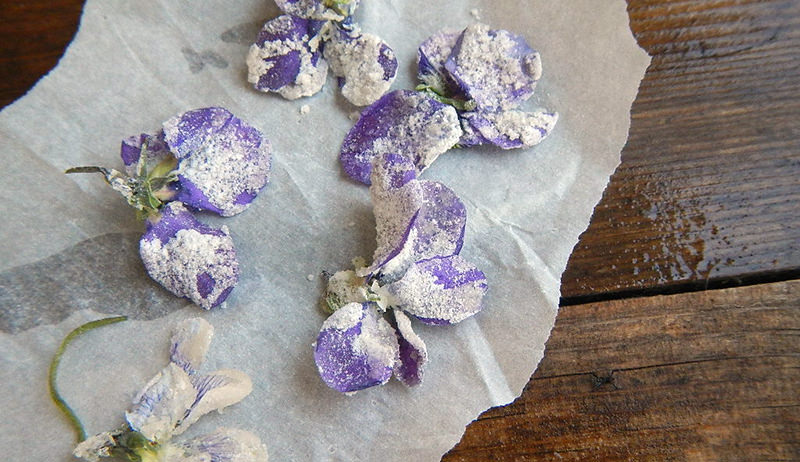
- Candied violets are an easy way to preserve blooms and decorate baked goods.
- Wild violets often grow in shady, moist lawns and garden edges.
- Always properly identify violets and avoid flowers exposed to pesticides or roadside contamination.
Why Violets Are Special in Spring
Before getting started, it’s important to know a bit about violets and why they’re special.
- Violets do best in rich, moist soil with a bit of shade from hot sun.
- Violets propagate themselves both by sending out runners and setting seed, though production can sometimes be spotty.
- The whole plant is edible, from flowers and leaves to roots, but only the flowers are sweet.
- Violet leaves are tastiest in the spring.
- Should you wish to use violet flowers for their dye, new flowers have a richer color than older blooms.
- Violet flowers are said to have mild laxative properties and may also be helpful for mild coughs and even insomnia. The leaves and roots are said to be helpful for bronchitis. The leaves can be used in a poultice for bruising, as well.
Violet Crafts to Try
Due to their distinctive shape and lovely color, violets make wonderful pressed flowers. Flower presses are not hard to construct, but you can also use a large book to press out blooms and leaves for future use. Remember to put your blossoms between two sheets of thick paper, so you don’t damage the pages of your book. Pressed violets can be affixed to cards, scrapbook paper or even made into bookmarks.
We took what are probably the last of the violet blooms from our yard this year and pounded them out to make cards for a cousin’s birthday. Using fresh blooms and a hammer, it’s a simple project to pound out botanical prints on either paper or fabric. We usually do paper because it’s so much simpler.
Edible Uses for Violets
Of all the flower jellies, violet jelly may just be my favorite. We love the dandelion and forsythia jelly we make each year and many other foraged preserves, but they don’t turn purple! Violets, like red cabbage, have a vibrant purple color when steeped, and with the addition of an acid, turn deep purple. (With an alkaline, or basic, addition, violets will turn greenish, just like red cabbage. This can make a great science experiment, FYI.)
A word on sugar: I don’t use white sugar anymore, preferring the flavors of raw sugars and honey, especially in jams and jellies. However, I sometimes splurge and use white sugar to keep that clear, violet color. Jars of violet jelly make very nice gifts and a lot of the appeal is in the color.
Violet flowers of all kinds are entirely edible, so you can add them fresh to salads. My kids love the novelty of eating flowers in salad so much that they forget they’re eating salad! You can also dry them to add to cookies and cakes.
Speaking of cakes, when we’re feeling fancy, we make candied violets to garnish homemade sweets. We really are super busy in spring, but we all enjoy it so much when we stop and take time for this kind of completely whimsical activity.
How to Make Candied Violets
Tessa Zundel
Step 1: Gather a handful of fresh violets, leaving the stems as long as you can for ease of use during this process. Gently rinse and shake dry. Do not pat dry as violet petals are rather delicate.
Step 2: Using small, clean paint brushes, brush the front and back of each violet petal with egg white. I recommend using farm-fresh egg white from a source you trust. My youngest children sometimes get impatient with the time-consuming nature of painting each petal and will simply dunk the whole bloom in and shake off the excess. This works, for the most part, but be sure to help them straighten out the petals with the brush, as they’ll likely stick together. Also be sure that excess white has been removed or all you get is a sticky blob of violet.
Step 3: Coat the petals, front and back, with a super-fine sugar*, shaking off the excess. You may need to apply several times, shaking in between applications, to cover the whole bloom. Again, my youngest will try to dunk the whole thing into the sugar bowl, but the result is less than … delicate. I’m not super fussy about this kind of thing and would rather my youngest kiddos have a good time than getting my knickers in a twist over having every candied violet turn out “just so.” They’ll taste yummy regardless of how they look. I do encourage my older children to create the best finished product they can, but this is meant to be a fun activity above all else.
Step 4: Place each blossom, face up, on a parchment paper-lined plate to dry, usually overnight (unless your climate is arid).
Step 5: Put candied violets an airtight container and use on your next batch of cupcakes. I bet your child will be the only one at the class party with edible flowers on their cupcakes!
*If you have regular granulated sugar, just pop it into your blender for a few seconds to grind it a bit smaller. I use an organic cane sugar for this sort of project. Super-fine sugar isn’t powdered—although that will work to preserve your blooms, it just won’t have that neat crystalline look. You can also purchase super-fine sugar online and in specialty baking stores.
Frequently Asked Questions About Violets
Are violets edible?
Many true violets have edible flowers and leaves. Flowers are often used in desserts, syrups and salads. Be sure to correctly identify plants before eating them.
What can you do with violets?
Violets can be pressed for crafts, turned into jelly or syrup, candied for desserts, added to salads or used in nature-inspired spring projects.
Where do violets grow?
Violets commonly grow in shady, moist areas such as lawns, woodland edges, under trees and garden borders.
Can you use wild violets from your yard?
Yes, if they have not been treated with herbicides, pesticides or other chemicals. Harvest only from clean areas you trust.
How do you preserve violets?
You can preserve violets by pressing them, drying them, candying them or using them in jellies and syrups.
Are violets good for crafts?
Yes. Their bright color and delicate shape make violets ideal for pressed-flower cards, bookmarks, botanical prints and seasonal decorations.
Conclusion
Violets may bloom for only a short time each spring, but they offer plenty of ways to celebrate the season. From simple crafts and pressed flowers to jelly, salads and candied treats, these cheerful blossoms can turn an ordinary afternoon into something memorable. When violets appear in your yard or garden, take a moment to enjoy them while they last.
This article was written for Hobby Farms magazine. Click here to subscribe.