Screws vs nails is a common consideration in construction and repair projects. Both fasteners are widely used in woodworking applications such as building horse stalls, constructing fences, and assembling sheds. In many situations, screws and nails are interchangeable, with either option providing acceptable performance depending on the job.
However, in certain applications, one fastener offers clear advantages over the other. While it isn’t possible to cover every scenario, there are general strengths and weaknesses that help guide the decision between screws and nails. The following overview outlines the key pros and cons of each to consider when selecting the best option for a project.
Screws vs Nails: Key Takeaways
- Screws and nails are both widely used fasteners in woodworking and construction, but each performs better in different situations.
- Screws provide stronger holding power and are easier to remove and reuse, making them ideal for projects that may need repairs or adjustments.
- Nails are faster to install and can be better for certain delicate materials or applications where flexibility is useful.
- Screws generally require power tools and multiple driver types, while nails can be driven with a simple hammer.
- Nails may loosen over time under stress, while screws are less likely to pull out but take longer to install and remove.
When to Use Screws
Advantages of Screws
Because of their threaded design, it’s nearly impossible to pull a screw straight out of its hole—you have to physically turn the screw to remove it. This is an advantage in any scenario where you need to hold something together under pressure: Whereas a nail might slip back out of its hole, a screw is much less likely to do so.
Screws are also easily removable and reusable, making them suitable for use whenever you need to frequently repair or replace a given item. For example, I use screws on fencing projects so that if one of the posts rots or suffers some other form of damage, I can easily separate the post from the other parts of the fence.
Disadvantages of Screws
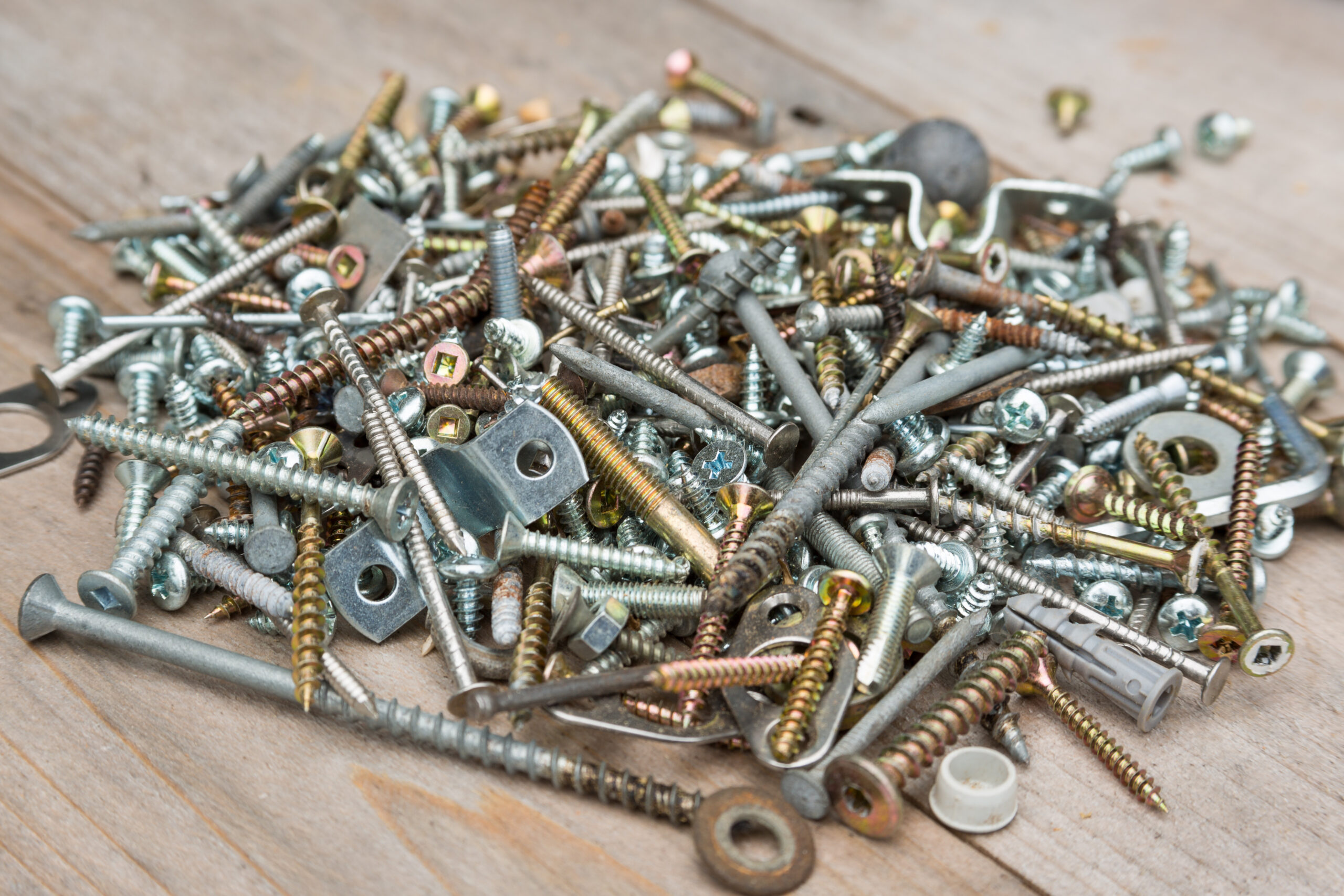
Screws have two main disadvantages. One disadvantage is the huge variety of screw types on the market—Phillips, slot, square, star, you name it. This means that in many cases, you need a large collection of screwdrivers and drill bits to handle any screw type you might encounter.
Another disadvantage: You’ll need an electric drill for installing and removing the screws for most construction projects, at least ones that use screws of any significant size. This isn’t a big deal, and it’s nice to let the drill do the work, but it does mean that you’ll need to have batteries charged and ready whenever you need to use the drill.
When to Use Nails
Advantages of Nails
Nails offer a number of subtle advantages over screws. For delicate work on small sections of wood that might be prone to splitting, nails can often do the job without damaging the wood. They’re also the perfect choice for use with cloth and similar materials; the rotating action required to install screws can cause the cloth to wrap around a screw (a definite nuisance), so nails—which are installed by pounding them straight into place—can be a better choice.
In addition, because nails require no rotation during installation, they are available in more unusual shapes than screws. For example, you can purchase nails that are shaped like staples, only much larger. This design—essentially two nails joined together by a curve of metal at one end—can be perfect for projects such as attaching wire to fence posts.
A smaller benefit: The only tool you need to install or remove nails is a claw hammer—the ultimate in portability, with no batteries or power source required. Even better, you know that a claw hammer will work just fine with the vast majority of nail types, making it a “one size fits all” type of tool.
Disadvantages of Nails
Perhaps the biggest con with nails is that they aren’t as easy to remove as screws. In fact, removing nails can frequently cause cosmetic damage to the item you’re removing them from. At the same time, nails are more likely than screws to pop out of place when under pressure; small nails in particular can work loose fairly easily and tend to have some trouble holding things together.
Screws vs Nails: Frequently Asked Questions
Are screws stronger than nails?
In most cases, screws provide stronger holding power because their threads grip the material more securely than smooth nails.
When should I use nails instead of screws?
Nails are often preferred for framing, trim work, and projects where speed and flexibility matter more than maximum holding strength.
Can screws replace nails in construction projects?
Sometimes, yes—but not always. While screws offer better grip, nails may perform better in applications where movement or shear force is involved.
Why do nails sometimes pop out over time?
Wood movement from moisture changes and structural stress can cause nails to loosen, especially if the load shifts or expands.
Do I need special tools for screws and nails?
Screws typically require a drill or driver with compatible bits, while nails only require a hammer for installation and removal.
Choosing between screws vs nails ultimately comes down to the demands of the project. Screws offer superior holding strength and long-term reliability, especially in applications where parts may need to be removed or adjusted later. Nails, on the other hand, provide speed, simplicity, and flexibility, making them well-suited for many framing and general construction tasks. Understanding the strengths and limitations of each fastener helps ensure the right choice for durability, efficiency, and overall project success.
This article about screws vs nails was written for Hobby Farms and Chickens magazines. Click here to subscribe.