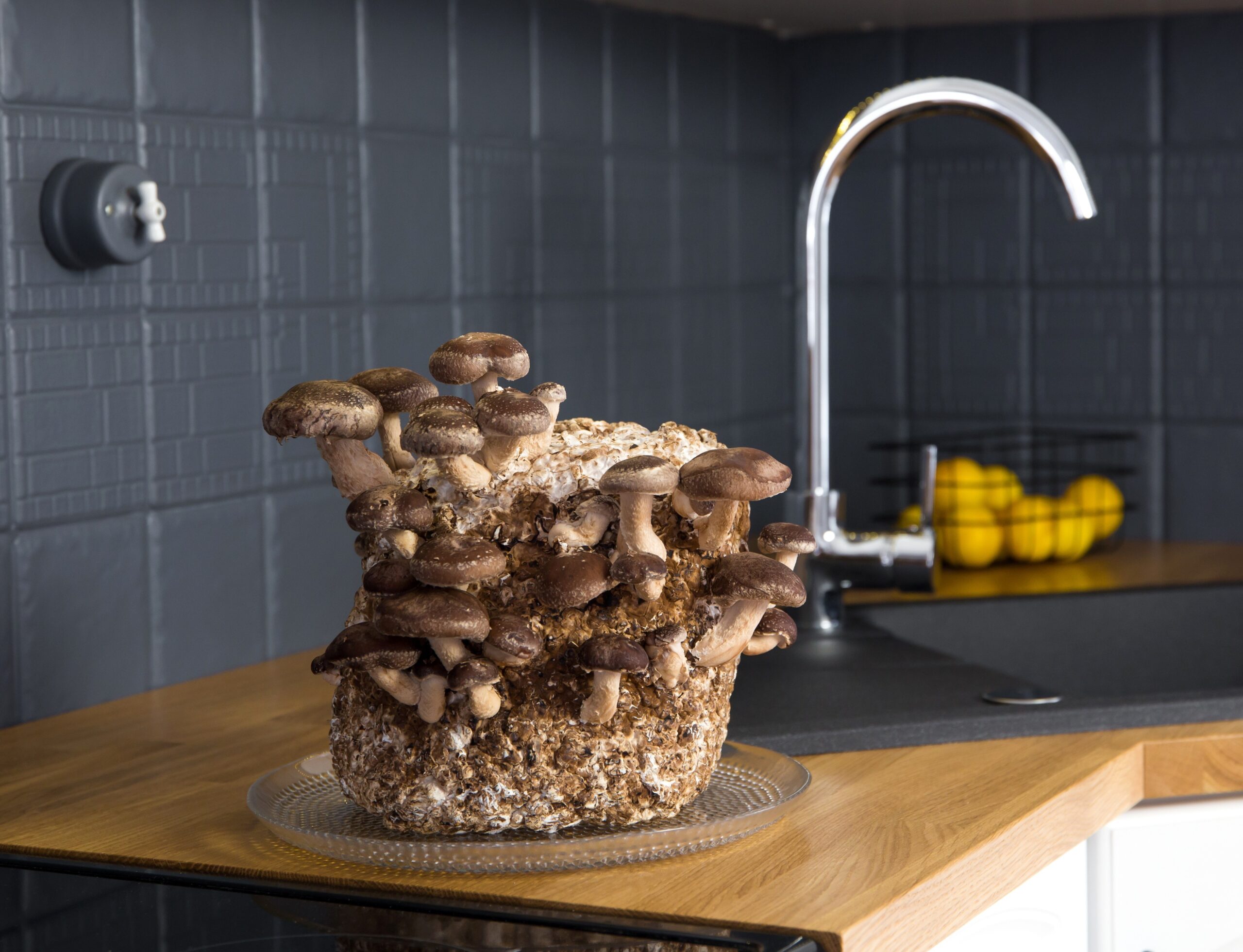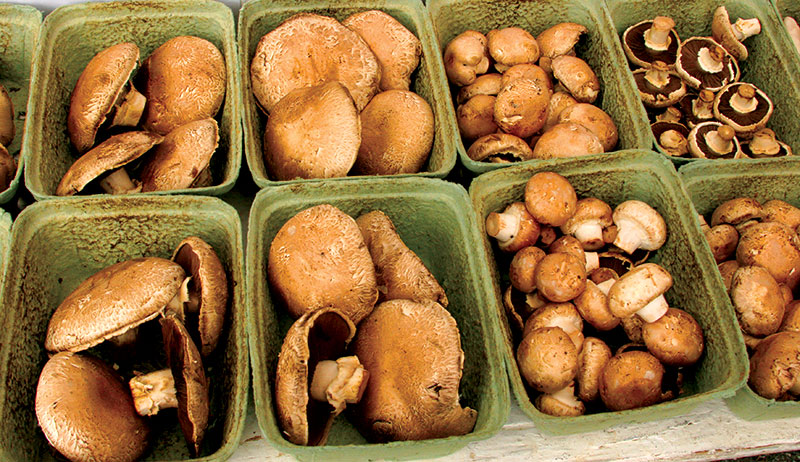
Mushroom farming is sprouting up across the country as more people discover its potential for profit, sustainability, and culinary excitement. Whether you’re selling gourmet varieties at the farmers market, supplying chefs through wholesale channels, or leading agritourism tours in your woods, mushrooms offer unique opportunities for small-scale growers. But while the mushroom farming industry is booming, building a successful mushroom business takes more than just passion—it requires planning, persistence, and the right sales channels.
The mushroom market is growing 5% to 6% each year, according to Tradd Cotter, owner of Mushroom Mountain near Easley, South Carolina, speaking at the Organic Growers School Spring Conference earlier this year in Asheville, North Carolina.
With many consumers no longer content to eat only the white button mushrooms purchased in neat plastic packaging at large-chain grocery stores, think morel mushrooms and more.
“I’ve been involved with the mushroom business for 15 years, and it’s amazing to me to see how much more educated the general public is now,” says Mike Kempenich, owner of the Minnesota-based mushroom-focused business called Gentleman Forager.
If you’ve considered mushroom farming, many business outlets exist for you, but—spoiler alert—none is simple.
Key Takeaways
- Mushroom farming can provide several income opportunities, including farmers markets, wholesale restaurant accounts, CSA programs, agritourism and value-added products.
- Farmers markets allow growers to educate customers and build direct relationships, but sales often require significant time and customer interaction.
- Wholesale accounts can offer more predictable sales and greater potential for growth, especially when growers establish reliable relationships with restaurants and other buyers.
- Mushroom CSAs can work well as an add-on to an existing vegetable CSA, helping growers reach customers without building an entirely separate subscription program.
- Farm tours, foraging classes and other agritourism activities can create additional revenue while introducing consumers to mushroom cultivation.
- Successful mushroom farming requires balancing production with marketing, sales, labor and business planning.
- Indoor mushroom production may benefit from economies of scale, while small-scale outdoor log production can allow growers to focus on quality before expanding.
- Value-added products, including dried mushrooms and compost made from production waste, can help growers make better use of their harvest and resources.
Selling Mushrooms at Farmers Markets

Amy Fox
The first market that often comes to mind for home-produced items is the farmers’ market. While farmers’ markets are becoming crowded for vegetable producers, there seems to be room for mushroom growers.
Why Farmers Markets Work for Mushroom Farming
“I take great pleasure in being able to provide the public with a variety of mushrooms they might not otherwise have the opportunity to purchase,” says Amy Fox, owner of Fox Farm & Forage in Apex, North Carolina. “I really take delight in educating my customers and absolutely love it when I am able to convert the reluctant or self-proclaimed mushroom hater to a mushroom lover. Weekly repeat customers are confirmation of my goal: to provide a quality product that people enjoy.”
Fox Farm & Forage, in its second year of operation mushroom farming, has a presence at three Saturday farmers markets in The Triangle area of North Carolina, a region anchored by North Carolina State University, Duke University and the University of North Carolina. That means Fox, her husband and a trusted employee work every Saturday. Finding that trusted employee has been tough.
Challenges of Selling Mushrooms at Markets
“Selling mushrooms is not like selling produce that people are familiar with,” Fox says. “Profits from selling mushrooms directly correlate to being able to engage a potential customer and then having the knowledge to complete the sale. One must be relatively knowledgeable about cooking and be able to make recommendations on which product to use in an indicated culinary application.”
Building Profitable Mushroom Farming Wholesale Accounts
Restaurant sales make up the bulk of Fox’s business, as well as grower Steve Sierigk of Trumansburg, New York.
How to Break into the Wholesale Mushroom Farming Market
“Shiitake growing and selling can be efficiently done if established accounts are eager for the crop,” Sierigk says. And his accounts at Hawk Meadow Farm are: he sells about 1,000 pounds per year, mostly to restaurants.

Hawk Meadow Farm
Wholesale vs. Farmers Market: Which Is Better?
“When I compare the amount of profit made versus the time and expense of wholesale versus farmers markets, wholesale is the obvious winner, hands down,” Fox says. “Also, there is much more room for growth within the wholesale market, whereas farmers markets have a pretty consistent profit ceiling.”
Fox points out that this might not be the case in your area, though. Fox will also continue to sell at farmers markets because wholesale accounts don’t let you connect with your customers in the same way that farmers markets do.
Be aware that in many states, it’s illegal to sell wild-harvested mushrooms to restaurants or wholesale accounts, so check your local state laws.
Adding Mushrooms to a CSA Program
A community-supported-agriculture model—or perhaps a community-supported-fungi model—is less common in the mushroom farming world than in traditional agriculture, but it’s out there.
How Mushroom CSAs Work
In Minneapolis, Kempenich partners with independent grocer Pahl’s Market to offer a mushroom add-on to the market’s vegetable CSA. This is the mushroom CSA’s first year, and 200 people—10 percent of the Pahl’s Market CSA—purchased a share, which exceeded expectations.
Considerations Before Starting a Mushroom CSA
“With more education, over time, we’ll continue to see that number grow,” says Kempenich, who has been foraging for more than 40 years.
He looks at this CSA as a wholesale account for his business because he knows he has a standing order of 200 mushroom units each week. Kempenich cautions that doing this as a stand-alone CSA would be more challenging: “It would be cost-prohibitive up front until you built a substantial number.”
Plus, part of the appeal of this CSA model is getting to partner with another independent, locally owned business.
Using Agritourism to Grow Your Mushroom Brand
While mushroom farming includes mushrooms that are cultivated in growth medium in buildings, they can also be cultivated outdoors. Both are interesting to the consumer, and Sierigk capitalizes on this by offering farm tours.
Hosting Farm Tours to Boost Sales
“The tours are a very different angle on things and require some degree of marketing energy and outlay of cash for advertising and all,” Sierigk says. “Farm tours can become time demanding … however, we really like connections with people that have generally not been exposed to the type of agriculture that we practice.”
Sierigk looks for any opportunity to spend time in the woods—such as leading these tours—and he points out that participants generally make a purchase on the tour, which adds a lot of value.
Foraging Adventures and Educational Events
About four years into his mushroom farming business, Kempenich started leading classes as a break from tending to mushrooms 70 to 80 hours each week. He now runs foraging classes as well as overnight tours through the woods of Minnesota with well-known chefs to forage and then cook mushrooms.
“I like tying everything together,” Kempenich says. “The mushrooms go to a great restaurant, so why not bring the chefs to the woods?” By adding this social aspect to forging, he creates more collective mushroom knowledge and also connects more people to the outdoors.
Selling Medicinal Mushrooms: What to Know
There’s an industry of mushrooms used for medicinal research. In biosecure labs and growing facilities, mushroom cultivators and scientists alike experiment and develop products for medicinal industries.
Regulatory Risks and Selling Restrictions
Independently, however, farms that sell tinctures and supplements from their mushrooms have to be much more careful. Scrutiny from the U.S. Food and Drug Administration has mushroom growers quietly offering these products. Those who make and sell holistic, health-promoting mushroom products must refrain from making any medical claims and can’t make the products on a large scale.
Creating Value-Added Products with Mushrooms
In any agricultural pursuit, waste occurs. How you handle that “waste” is up to you. At the OGS Spring Conference, Cotter, who has grown mushrooms commercially since 1994, suggested value-added additions to any mushroom enterprise.
Dehydrating and Composting for Profit
Dehydrate the mushrooms that you don’t sell at the market today so you can sell them later, and offer compost and vermicompost from your scraps. Partner with others to see your mushrooms in prepared foods, beer and other products.
There are nearly as many ways to profit from mushrooms as there are varieties of mushrooms themselves. None of these enterprise options is a simple, hands-off business, but each has a reward for the mushroom lover.
Quality vs. Quantity in Mushroom Farming
When producing mushrooms indoors, an economy of scale is at work, as you need to build a whole space for cultivation. See “The Mushroom Gold Rush” on page 62 for more about start-up costs. In these operations, mushroom producers such as Fox Farm & Forage’s Amy Fox say the key is to go big.
Indoor Growing Requires Scale
The directive here is quantity plus quality.
When using logs and an outdoor setting, Steve Sierigk, co-owner of Hawk Mountain Farm, suggests quality be the initial focus—forget about quantity right now.
Outdoor Growing Prioritizes Craft and Care
“Start modestly, as there are so many variables that need to be right for this to work well,” he says. “I always recommend quality over quantity in all aspects of natural-log mushroom production. It can be as small as about 100 production logs to give a modest weekly supply. In fact, I always recommend starting small to get the knack for handling the logs and all of the demands of the crop.”
Part of cultivating this quality is to have some idea of what you’re doing before you get started, in business as well as mushroom production. There are too many variables in the market and in production that can’t be learned just by reading a book. Fox has never hired a consultant, but she had known to do so: “It would have saved me thousands,” she says.
Frequently Asked Questions About Mushroom Farming
Is mushroom farming profitable?
Mushroom farming can be profitable, but success depends on production costs, labor, the varieties grown and access to reliable sales channels. Farmers’ markets, restaurants, CSA programs, agritourism and value-added products can all provide potential sources of income.
What is the best way to sell farm-grown mushrooms?
There is no single best sales channel for every mushroom farm. Farmers’ markets allow growers to sell directly to customers and educate them about unfamiliar varieties, while wholesale accounts can provide larger and more consistent orders. Many mushroom growers use a combination of sales outlets.
Can you start a mushroom farm on a small scale?
Yes. Small-scale mushroom farming can allow new growers to gain experience before investing heavily in infrastructure or expanding production. For outdoor log cultivation in particular, starting with a manageable number of logs can help growers learn how to handle the crop and maintain quality.
What can mushroom farmers do with unsold mushrooms?
Unsold mushrooms can sometimes be dehydrated and sold later as a value-added product. Mushroom farms may also find ways to use production waste, such as creating compost or vermicompost, depending on their production system and local market opportunities.
Final Thoughts
Mushroom farming offers small-scale growers a range of opportunities, from farmers’ markets and restaurant sales to CSAs, agritourism and value-added products. The right approach depends on your production system, available labor and, most importantly, the market you can build for your mushrooms.
Whether you start with a modest number of production logs or invest in an indoor growing operation, success takes more than producing a quality crop. Understanding your customers, developing reliable sales channels and growing at a pace that fits your resources can help turn an interest in mushrooms into a sustainable farm enterprise.
For more practical advice on building a productive and profitable small farm, subscribe to Hobby Farms and get expert guidance delivered throughout the year.