Rare heritage chicken breeds offer backyard flock keepers a chance to help preserve poultry history while raising productive, fascinating birds. Although some breeds have recovered through heritage-livestock conservation efforts from critically endangered status, many still remain uncommon and rely on dedicated breeders and small flock owners to survive.
Key Takeaways
- Rare heritage chicken breeds help preserve genetic diversity and agricultural history.
- Conservation status is not static—some breeds have improved since earlier listings, while others remain at risk.
- The Livestock Conservancy classifies breeds into categories such as Critical, Threatened, and Watch based on population and breeding sustainability.
- Heritage chickens often offer strong foraging ability, adaptability, and hardiness, even if egg production varies by breed.
- Backyard flock keepers play an important role in maintaining and supporting rare poultry populations.
- Each breed featured here carries unique traits worth preserving, from appearance to temperament to production qualities.
How The Livestock Conservancy Classifies Rare Chickens
The Livestock Conservancy, a national organization that strives to protect endangered livestock and poultry breeds from extinction, releases its Conservation Priority List every year. This list identifies heritage breeds that are critically endangered or threatened, are in recovery, bear watching or are of interest. Currently, 11 chicken breeds are classified as critically endangered. This means that, for each of these breeds, fewer than 1,000 birds exist throughout the world, with five or fewer primary breeding flocks in existence in America.
Why Raising Rare Heritage Chicken Breeds Matters
Rare heritage chicken breeds are more than an interesting addition to a backyard flock—they represent living agricultural history. Many of these breeds were developed over centuries for specific climates, local diets, and dual-purpose production, but modern industrial poultry systems pushed them to the margins.
When a breed becomes rare, it doesn’t just mean fewer birds exist. It also means a shrinking genetic pool, fewer dedicated breeders, and a greater risk that unique traits—such as cold hardiness, foraging ability, or natural broodiness—could be lost entirely.
The Livestock Conservancy works to protect this diversity by encouraging breeding programs and helping poultry keepers choose heritage breeds that still need support. Backyard flock owners play a real role in that effort. Even keeping a small number of heritage birds contributes to maintaining population stability and increasing awareness of these breeds.
For many keepers, there’s also a practical benefit. Heritage chickens often excel in outdoor environments, forage efficiently, and tend to be hardy and self-sufficient compared to modern production hybrids. While they may not always match commercial hybrids in egg output, they often offer longevity, adaptability, and a connection to traditional farming practices that many poultry keepers value.
Choosing rare heritage breeds is ultimately a balance of stewardship and enjoyment—helping preserve biodiversity while raising birds with distinctive histories, appearances, and behaviors.
Crevecoeur: France’s Rare Crested Chicken
This eye-catching black bird (illustrated in the photo above) sports a fluffy beard and crest, but its most noticeable feature is its striking V comb. One of France’s oldest breeds, the Crevecoeur has been documented as early as the 1700s and was admitted to the American Poultry Society in 1874. Small and active, with calm temperaments, Crevecoeurs are well suited for families with children and adapt well to most climates. Crevecoeurs are dual-purpose chickens, producing deeply dark leg meat and remarkably white breast meat. They adapt to most climates. The hens lay medium white eggs and rarely go broody.
Holland: One of America’s Rarest Chickens
An excellent selection for poultry keepers with limited acreage, Hollands are excellent foragers who scavenge for a considerable amount of their food. Despite their slow growth rate, Hollands are docile, dual-purpose birds that will produce plenty of medium-to-large white eggs. The hens can go broody and will sometimes rear their own chicks. Of the two varieties, the White Holland is believed to be extinct, while the Barred Holland is considered the rarest breed of American chicken.
Redcap: A Historic White-Egg Layer
Raised for generations in central England, the Redcap is easily recognized by its massive rose comb, which extends over most of the bird’s head and gives the breed its name. Alert and active, the Redcap is an extremely self-reliant bird best suited for free ranging and foraging. Despite its wild tendencies, the Redcap was a favorite with egg farmers in the early 1800s because of its high rate-of-lay: Hens produce a profusion of large white eggs, the only red-lobed chicken to lay white. By 1900, however, the breed had almost vanished. This disappearance is commonly credited to the Redcap’s feral-looking feather pattern—red plumage spangled with blue and black—which does not fully emerge until the adult bird’s second or third year.
Spanish: The White-Faced Heritage Breed
Shutterstock
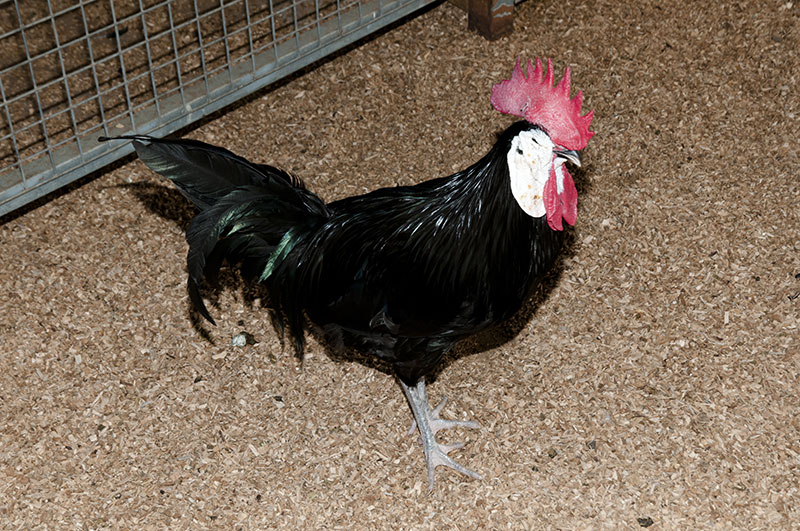
One of the earliest recorded show birds, the Spanish chicken was the darling of poultry exhibitions in England and the United States during the early to mid-1800s. Its chalk-white face, striking against its black feathers, made the Spanish a highly sought-after breed among poultry fanciers. This very trait also led to the bird’s demise, as breeders sacrificed hardiness for an increasingly prominent white face. The resulting delicacy led to the Spanish being passed over for more rugged, robust varieties. Spanish hens are excellent, non-setting layers, producing a bountiful number of jumbo white eggs.
Sultan: The Ornamental Heritage Chicken
Shutterstock
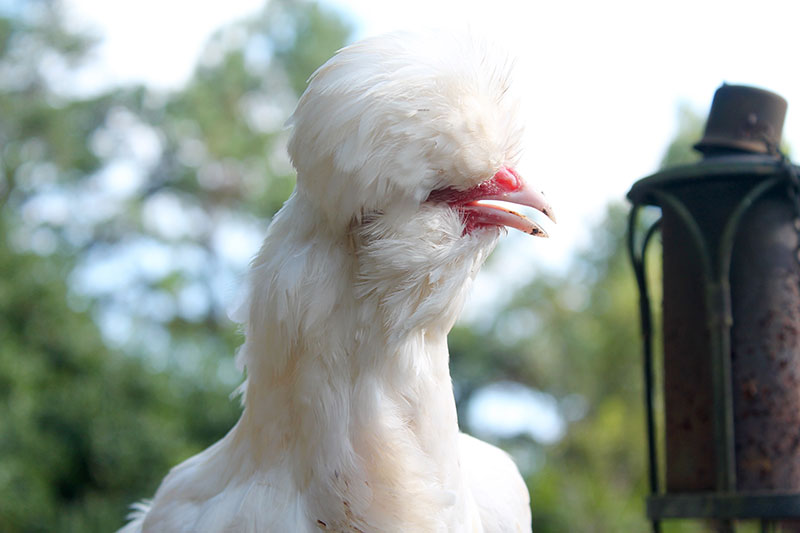
Bred as an ornamental fowl in its native Turkey, the Sultan features an assemblage of unusual traits found in other chicken breeds. It sports a crest like a Polish, a beard and muff like an Ameraucana, a V-shaped comb like a La Fleche, feathered shanks and toes like a Cochin, and five toes per foot like a Silkie. The Sultan stands erect yet holds its wings drooped, like a Serama. Its calm, content nature made the Sultan popular with American breeders in the late 1800s, but its all-white plumage made it popular with predators, leading to its plummeting population. Sultans are stay-at-home birds, preferring feed and grains to foraging. The hens lay large white eggs; they do not go broody.
FAQs About Rare Heritage Chicken Breeds
What is the rarest chicken breed?
Rarity can change over time, but some of the rarest breeds recognized by The Livestock Conservancy typically include birds like the Crevecoeur, Redcap, and White-Faced Black Spanish. These breeds have historically had very small breeding populations and limited hatchery availability.
What makes a chicken breed endangered?
A chicken breed is considered endangered when its global population drops to low levels, especially when there are few independent breeding flocks. The Livestock Conservancy also considers factors like genetic diversity, registration numbers, and long-term sustainability when assigning conservation status.
Are heritage chickens good egg layers?
Many heritage breeds are reliable layers, but production varies widely by breed. Some, like the Spanish chicken, are known for consistent egg production, while others may lay more seasonally or less frequently than commercial hybrids.
Do heritage chickens go broody?
It depends on the breed. Some heritage chickens, like the Holland, may go broody and raise chicks naturally, while others—such as the Sultan—rarely exhibit broodiness. This trait has been selectively bred out of many modern lines but is still present in several heritage breeds.
Are rare chicken breeds hard to raise?
Not necessarily. Many heritage breeds are hardy and well adapted to free-ranging. However, because they are less standardized than commercial hybrids, traits like egg production, temperament, and growth rate can vary more between individual birds and breeding lines.
Where can I find heritage chicken breeds?
Heritage breeds are often available through specialized hatcheries, breed clubs, and breeders who participate in conservation programs. The Livestock Conservancy website is a good starting point for identifying reputable sources.