Egg-eating hens can be a frustrating and costly problem for backyard chicken keepers. Once a hen discovers that eggs are a tasty snack, the behavior can quickly spread through the flock. Understanding why hens start eating eggs—and taking swift, practical steps to stop it—is key to protecting your daily harvest. In this article, we’ll explore the common causes of egg-eating in chickens and share nine proven strategies to prevent and correct this behavior before it becomes a habit.
Egg-Eating Hens: Telltale Signs
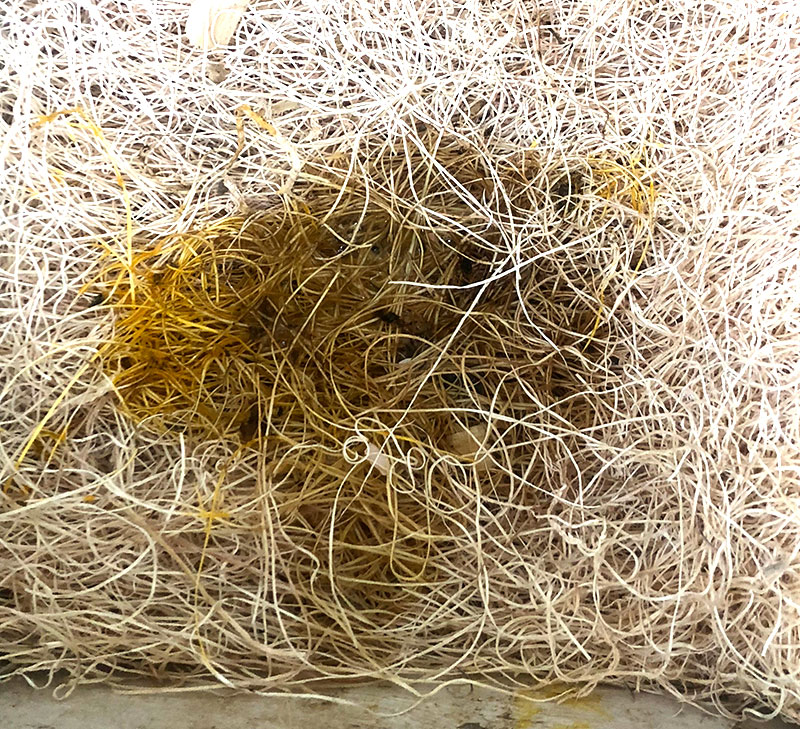
The telltale signs were hard to ignore. While the eggs collected from the ducks, Silkies and Ameraucanas were just fine, the ones from the main Orpington coop were not. At first, it was just one egg coming in coated with sticky, dried yolk. Over a week, the number of affected eggs increased to two or three per day. A peek into the coop’s nest boxes one morning revealed messy, rich yellow stains sullying all three nest pads. I quickly tossed these onto our compost heap and replaced them with fresh pads, but the next morning, one of the new pads—and the three eggs in it—bore the same golden blotches. There was no longer any doubt: These are the signs of egg-eating hens, and one of our birds was an egg eater.
Ana Hotaling
Why Do Hens Start Eating Their Eggs?
In egg-eating hens, the offending chicken pecks at an egg and then either eats the interior but not the shell or eats the entire egg. Egg-eating hens start this behavior for several reasons. Curiosity is one, especially in pullets and young hens. That oval thing that materializes seemingly out of nowhere? That bears investigating! An egg accidentally crushed by a heavier bird, such as a Brahma or English Orpington, or by overcrowded conditions? Very intriguing! Layers that are deficient in calcium might begin eating eggs to boost their mineral levels, while birds of both genders that are lacking in protein might find exactly what their bodies need contained within that fragile shell.
Proven Ways to Stop Egg-Eating Hens
Keep your flock free of egg-eating hens that cut into your profit margin by taking steps to thwart this behavior in your henhouse.
1. Collect Eggs Early and Often
Collect eggs regularly throughout the day. If the eggs aren’t sitting unattended in a nestbox, they won’t catch the attention of a potential eater.
2. Supplement with Calcium to Strengthen Shells
Place a hopper filled with crushed oyster shell or limestone in your coop to keep your girls’ calcium levels healthy—but only if there are no chicks or juveniles who might ingest it, as an overly high calcium level can cause improper bone growth and kidney failure.
3. Add More Protein to Their Diet
Protein is vital at all times, but especially during molting season, when it’s essential for feather regrowth. It’s also crucial for layers, who require it for egg production. Protein-filled treats such as sunflower kernels and dried mealworms, as well as protein-rich supplements, such as Calf Mann, provide your flock with this key nutrient. Switching to a starter or game-bird feed, both of which contain higher percentages of protein than layer rations, is another option to consider.
4. Provide Enough Nest Boxes to Discourage Egg-Eating Hens
Prevent accidental egg breakage by ensuring that you have enough nestboxes for your hens. One nestbox for every four girls is a good ratio and one that should keep your girls from all climbing into the same nestbox at the same time, potentially squashing the eggs already laid.
5. Practice Good Chicken Keeping Habits
Make sure that your chicken-rearing practices don’t encourage your birds to become egg-eating hens. Never dispose of cracked or pecked eggs by tossing them on the ground, where your chickens can feast on them and develop a taste for raw egg. Similarly, offering your flock their own eggshells as a source of calcium can have disastrous consequences. If you choose to offer eggshells, make certain that they have been thoroughly cleansed of membrane, yolk and albumen, baked until they are brittle, and crushed or ground until they no longer resemble eggshells.
Once you’ve determined that you have an egg-eater in your flock, your next move is to identify the perpetrator. You’d think that this would be easy: It’s the chicken with the yolk on her beak or the bits of shell on her feathers, right? Unfortunately, this isn’t always the case: Egg eating commonly occurs early in the morning, often before the birds have been released from their coop for the day. Those telltale traces often disappear by the time the door is opened.
5. Identify the Culprit Hen with a Camera
One way to catch a culprit is with a nestbox camera. Available at wild-bird supply stores and sites, a nestbox cam mounts on the wall of your nestbox and records all activity occurring within. There are drawbacks, however. You’ll need multiple cams if your coop features more than one nestbox; it won’t help at all if you’re recording the west box when eggs are being eaten in the east box. If your hens look alike, a nestbox cam will not help you identify your egg eater, because they’ll appear identical on the footage. Nestbox cams can also be a little pricey, especially the more compact models.
On a personal note, lying in wait with the hope of catching the offender red-handed—or golden beaked—was the option my sons chose. As expected, it lasted all of three hours. Trying to stay out of sight of our curious Orpingtons proved too difficult for two adolescent boys. Checking the Orpington nestbox every half hour also guaranteed that no hen would lay an egg, much less eat one, amongst all that commotion.
6. Catching the Culprit with a Dye-Filled Egg
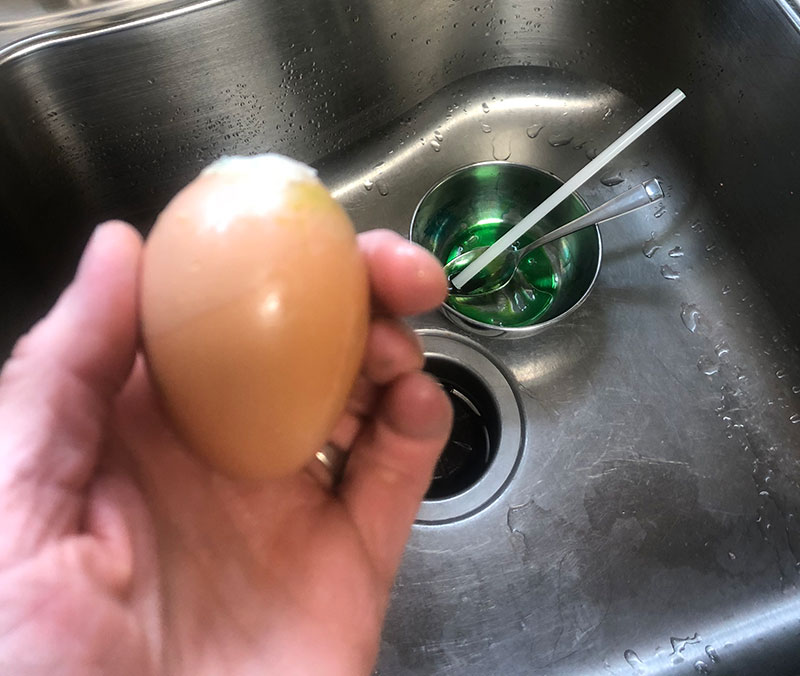
Several mornings of meticulously examining every Orpington upon release yielded no clue as to the identity of my miscreant. It was time to outsmart the outlaw. I selected a freshly laid egg, then shook it to release the yolk from its casing. Using a yarn needle, I carefully pierced the egg on the rounded end as well as the point, gently wiggling the needle on the round side to widen the opening slightly. With a straw, I blew the contents of the egg out of the shell into a small bowl.

Ana Hotaling
Using wax from a lit candle, I sealed the hole in the point. Next, using a tiny funnel, I filled the egg with light corn syrup colored a deep green using food dye. Once the egg was filled, I used wax to seal the top hole, then I lightly smeared a fine layer of blown egg yolk over the shell to mask the scent of wax and syrup.
Ana Hotaling
When the shell was dry, I placed it in the leftmost nestbox in the Orpington coop, then waited for results.
That first day, I was almost foiled by Flapjack Orpington, who went broody and, of course, chose my egg to hunker down on. After two hours, I remembered that Flapjack’s heat might very well soften the wax covering the openings on the egg, so I quickly shooed the poor disgruntled hen out of the nestbox. No further action involving my trap egg occurred that day. The next day, it rained all day and the birds spent most of their waking hours huddled underneath their coop, glaring at the puddles developing in their run.
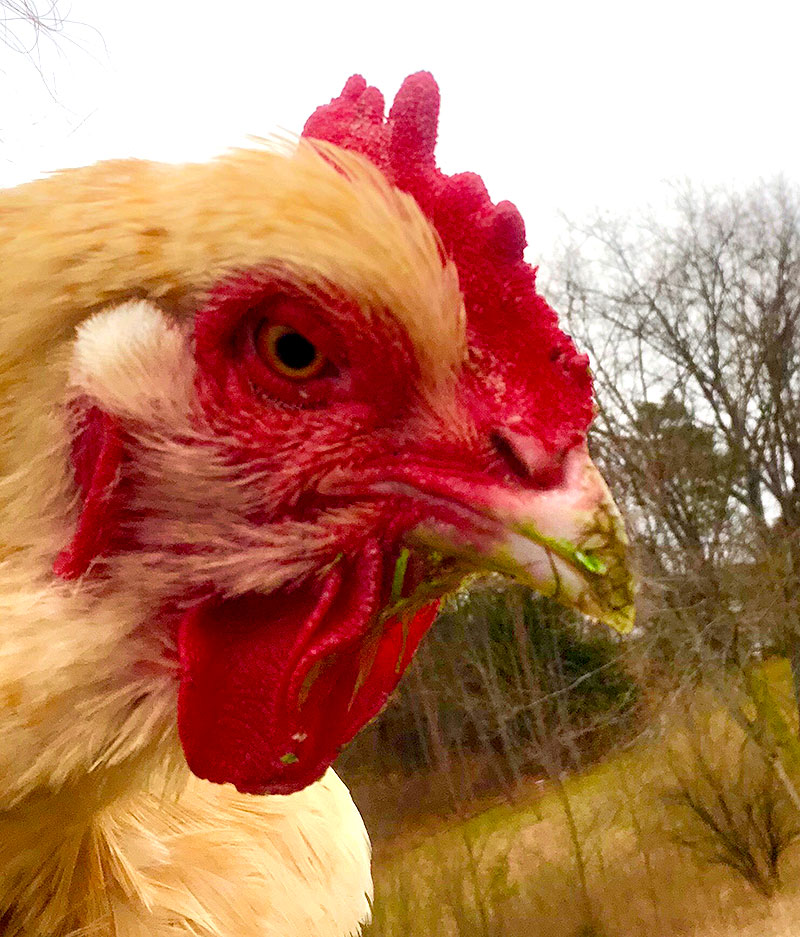
On the morning of the third day, I checked the coop nest boxes before releasing the Orpington flock, and bingo! All that was left of my trap egg were a few teal-colored pine shavings. Not one piece of shell remained. There wasn’t even a sticky mess in the nestbox, as I had feared might happen with the corn syrup. I opened the pop door, inspecting each chicken trooping out. Every single bird walked by with a clean beak— except the very last one. Lemon Cupcake stepped out of the coop, her beak and a few feathers tinted green. Our egg-eater was caught at last!
Ana Hotaling
Frequently Asked Questions About Egg-Eating HensWhy do egg-eating hens develop this behavior?Egg-eating often starts due to accidental breakage, poor nutrition, boredom, or curiosity. Once a hen tastes an egg and likes it, she may begin actively seeking them out. Can feeding eggshells cause hens to eat their own eggs?Feeding crushed, baked eggshells is generally safe and does not cause egg-eating. Make sure the shells are unrecognizable as eggs to avoid creating a connection. How can I tell which hen is eating eggs?Look for sticky beaks, yolk on feathers, or use a game camera to monitor nest boxes. Separating hens or using roll-away nests can also help identify the culprit. Can egg-eating hens be retrained?Yes—many egg-eating hens can be corrected with dietary improvements, nest box modifications, and deterrents like fake eggs. The sooner the behavior is addressed, the better the outcome. Should I cull a hen that eats eggs?Culling is a last resort. Try behavioral correction first. Do roll-away nest boxes really work?Yes. Roll-away nest boxes keep eggs out of sight and reach, which greatly reduces temptation and breakage—two major triggers for egg-eating hens. |
Should You Remove an Egg-Eating Hen from the Flock?
An egg-eating habit is extremely difficult to break, and most experts recommend culling the offender as the only true way to stop this behavior. Lemon Cupcake, however, is my son Jaeson’s chicken, and he asked me to please not kill the hen he’d raised from an egg. I moved Lemon Cupcake from the main Orpington coop to the New Orpington coop, where she settled in after a brief pecking-order display from head girls Butters and Selene. Everything went fine for two days. On the third morning, the egg eater was back in action.
I’ve now temporarily placed Lemon Cupcake with our Ancona duck flock; the ducks’ coop has a perch in it to accommodate unexpected overnight chicken guests. Because the Anconas bury their eggs, Lemon Cupcake will have a trickier time snacking. In the meantime, I’ll ready our chicken tractor for spring. Lemon Cupcake and her friend, Big Boy, will move in once it’s ready. This way, the only eggs at stake are her own.
I’ll also try a couple of recommendations from the University of Florida in an attempt to break her of this behavior.
- Offering her a dish of milk for several days to increase her calcium and protein intake.
- Offering her a highly peppered beaten egg.
I’m keeping my fingers crossed!
Final Thoughts on Managing Egg-Eating Hens
Egg-eating hens can pose a serious challenge, but with prompt action and consistent management, the behavior can often be stopped. By addressing nutritional needs, improving nest box conditions, and reducing boredom in the flock, you can eliminate the triggers that lead to egg-eating. Keep a close eye on your hens, collect eggs regularly, and don’t hesitate to try multiple prevention strategies until you find what works. With a proactive approach, your hens can return to laying—not stealing—your daily eggs.
This article about egg-eating hens was written for Hobby Farms and Chickens magazines. Click here to subscribe.