There’s no need to be limited to traditional spring and fall gardening when a simple cold frame greenhouse can protect plants and extend the growing season. By creating a warmer microclimate, this low-profile structure allows gardeners to harvest fresh vegetables weeks—or even months—beyond typical planting windows. From basic DIY designs to more advanced insulated setups, cold frame greenhouses offer a practical and efficient way to grow food in cooler conditions.
Key Takeaways
- A cold frame greenhouse is a low, enclosed structure that traps solar heat to protect plants and extend the growing season.
- It functions like a mini greenhouse, creating a warmer microclimate for crops in cool weather.
- Cold frame greenhouses can extend harvests by weeks or even months beyond traditional growing seasons.
- Simple designs—such as straw bales, wood frames or recycled materials—can be just as effective as more complex builds.
- Proper ventilation is essential to prevent overheating on sunny days.
- Hardy crops like spinach, kale, carrots and radishes perform especially well in cold frame greenhouses.
- These structures can be used year-round for season extension, overwintering and plant protection.
Cold Frame vs. Greenhouse: What’s the Difference?
At its most basic level, a cold frame is a bottomless box with a translucent lid that can be lifted or removed. It acts as a low-profile, passive structure that traps solar heat to protect plants. A traditional greenhouse, by comparison, is a larger, walk-in structure that allows for more vertical growing space and often includes active ventilation or heating systems.
A cold frame greenhouse falls somewhere in between—offering the simplicity of a cold frame with some of the protective benefits of a greenhouse. From there, designs can range widely. Some cold frames are insulated or heated with soil cables or light bulbs to withstand extreme cold, while others incorporate vents or fans to prevent overheating when temperatures inside can quickly exceed 100°F on sunny days.
How to Build a Cold Frame Greenhouse
Although having a tricked-out cold frame might be enjoyable, particularly for the mechanically inclined, a simple design is absolutely acceptable. Cold frames can be constructed from stacked blocks or bricks set partway into the ground or fashioned from temporary materials. Wisconsin gardening gurus Holly and Joey Baird take advantage of their post-Halloween straw bale surplus by making a cold frame from the bales given to them by friends.
Straw bales provide excellent insulation, can be inexpensive and require little to no construction experience. The Bairds stress that it’s important to use straw versus hay bales because straw is the byproduct of the grain harvest, meaning there are less seeds.
When setting straw bales, level out the area and configure the bales to create the size of the cold frame you wish. Holly says to set them with the smooth side (versus the cut ends) facing up to make it more level. (The cut section of a straw bale often tends to be very wavy as the straw is gathered and bound.) To reduce any open spaces at the bottom of the cold frame, and to increase the depth of the soil in the planting area, they add up to a foot of additional soil. This creates an ideal situation for root crops.
For the lid, the Bairds use a frame with screen as a support and 4-mil (or heavier) plastic; they have also used recycled windows set across the top. Whatever they use, they weigh down the lid to prevent it from blowing or shifting. You can use large rocks, bricks
or any heavy item to keep the lid in place.
“You want to make sure it’s more or less airtight,” Holly says. Once they have the bales set out in the shape of the cold frame and the lids on top, they stuff gaps with more straw to ensure there are no significant drafts. This is especially important for northern climates with prolonged cold spells.
The Bairds planted spinach, leeks and other cold weather crops in the fall and enjoyed fresh vegetables long before even the first traditional spring plantings.
“When you harvest, you want to make sure you just open the lid at the warmest point in the day,” Holly says. This way, it has time to warm back up before the chill of nightfall.

Michael Cornelius/Flickr
While many gardeners think of cold frames only in northern climates, they’re equally useful in more temperate zones. Debra Graf loves her square-foot-gardening-designed beds in her Virginia garden (zone 6b) and shares her experiences with gardeners on her Square Foot Abundance website. Like the Bairds, she utilizes flat-topped cold frames with considerable success.
For a quick and easy cold frame to extend the season in the spring or the fall, Graf built a simple 4-by-4-foot box frame that fits on top of her raised beds. Because her winters are relatively mild, she forms the lid by fastening a heavy-duty floating row cover to a frame and sets it on the top of the box. She can secure it with bungee cords, if necessary. It’s instant, effective protection for her climate.
“It’s self-venting so it’s not going to overheat,” Graf says. She will remove the cover if the daytime temperature is going to reach more than 60 degrees, but for the most part, the plants are safe below the row cover lid.
“You want to keep your cold frame cool when you’re growing winter vegetables,” she says, concerning winter gardening in temperate climates. Winter vegetables can typically handle freezing and thawing events, yet when the temperature in the cold frame is too warm, they lose this quality. This will result in more fragile plants, as well as less flavorful ones, due to the stress of the temperature fluctuations.
Using the floating row cover also allows the moisture from snow or rain to penetrate the fabric and water the garden. “I noticed Northern gardeners can often go two to three months during the winter without having to water,” Graf says. In her southwestern Virginian home, the mild temperatures throughout the winter cause the plants to require more water. It’s much easier to let the rain water the plants instead of having to haul hoses during winter.
While the floating row cover works well in mild regions, most cold frames have a solid lid of some sort. One year, Graf used a sheet of solid plastic when she was looking for an extremely economical option. It worked well to temperatures even below 10 degrees because she could toss a blanket over the top to further insulate the bed. Her primary complaint was that the plastic sagged when it rained or snowed. Most of the time, she could push it up to release the water, but during one incident, it rained too much and she had to poke a hole in the plastic. Using a screen or other support can minimize this issue.
Although Graf prefers floating row covers, if the temperature is going to dip below 10 degrees for a prolonged period or long spells of rain are forecasted, she will use a solid polycarbonate material for a lid so water won’t pool on the flat surface. Corrugated plastic was once popular, but with greenhouse specific materials on the market, there are better options for a durable, solid lid that won’t yellow or crack.

Shutterstock
Best Lid Designs for a Cold Frame Greenhouse
The next step in design complexity, although still falling far short of requiring a construction background, is creating a cold frame with a slanting lid to maximize the amount of sun the plants receive. Traditional thought claims the way to calculate the best angle is to add 15 degrees to your latitude. If you live at the 47th parallel, making a lid with a 62-degree angle gathers as much sunlight as possible during the winter months. However, frankly, the angle of the lid is not critical. Angling it does provide more sunlight to your plants to some degree and allows rain to flow off of it, but I have successfully grown plants just as well in my cold frame with a 20-degree lid.
Best Crops for a Cold Frame
You can plant practically anything in a cold frame, as long as you have enough height in the walls. Yet, cold frames really shine when you’re harvesting vegetables much earlier or later than normal. When you’re choosing what to plant, a number of varieties thrive even in the cold, many of which develop sweeter flavors in the cold seasons. Here are a few to consider:
- Asian Greens: Bok choi, pak choi and other Asian vegetables are fast-growing and surprisingly resilient options that do well in cold frames.
- Carrots: As long as you have adequate soil depth, you can grow carrots in a cold frame, particularly grown as a fall and winter crop. Sow by the late summer in order for the carrots to reach an acceptable size by the end of October (when the light diminishes substantially in most areas). You can mulch them with straw before the exceptionally cold weather hits to make them easy to harvest throughout the winter.
- Kale: Many kale varieties practically overwinter without protection, so by growing them in a greenhouse, you’ll enjoy a longer season of sweeter leaves.
- Leeks: Leeks are excellent cold-weather crops that are easy to grow in a cold frame. If you can’t have fresh onions, you might as well have leeks.
- Mache: Also called “corn salad,” mache is a truly hardy winter green and a good replacement for more tender lettuces.
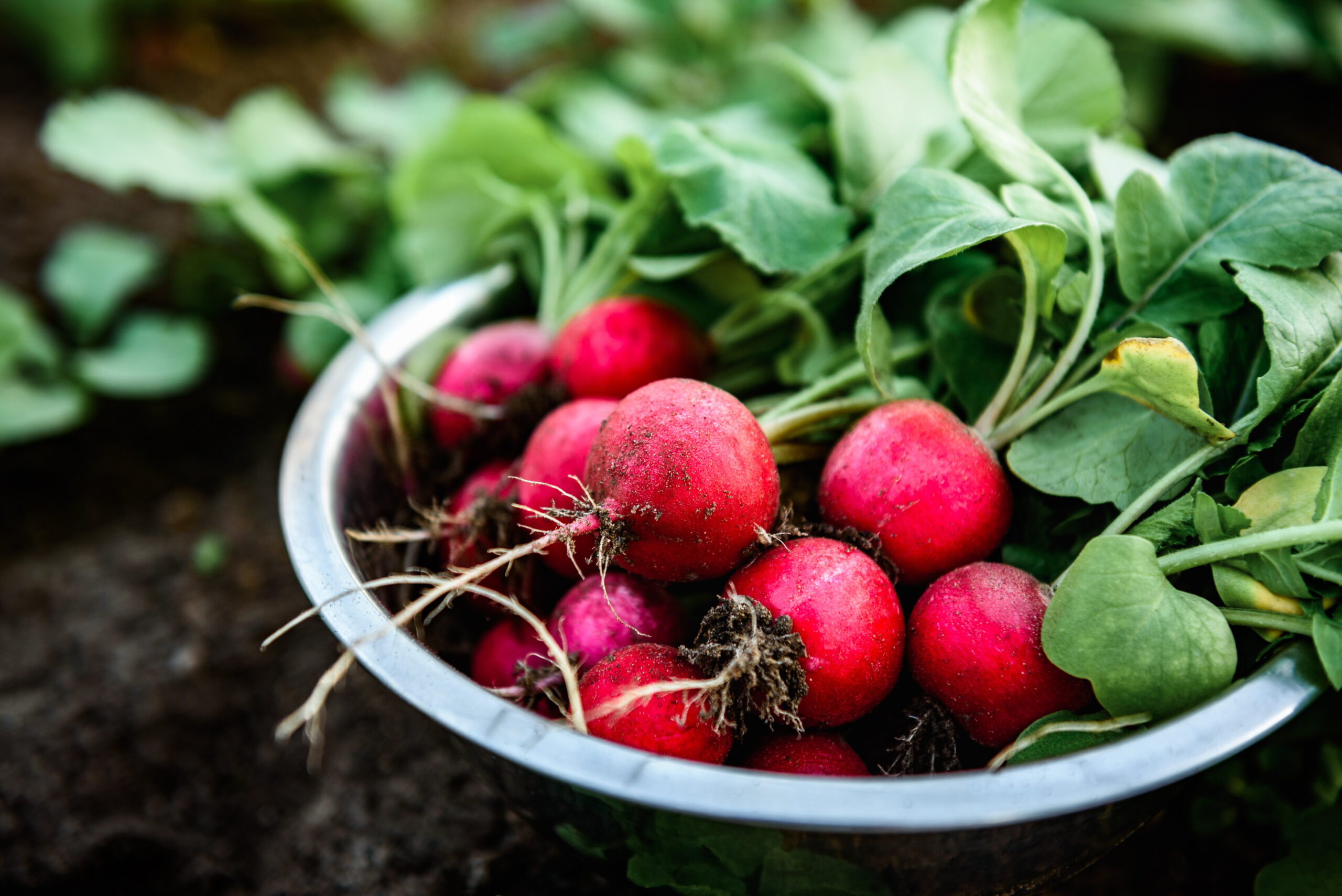
- Radishes: Sown on either end of the season, quick-growing radishes are an excellent cold frame crop.
- Spinach: Germinating at a 35-degree-Fahrenheit soil temperature, spinach can be planted in the late winter or mid-fall for a multiseason harvest.

Susy Morris/Flickr
How a Cold Frame Protects Plants
A cold frame I used for years was a 3-by-4-foot plywood box with an angled, attached Plexiglas lid. The front “wall” was 10 inches tall; the back, 22 inches. It was light enough that I could move it wherever I needed it. I often used it to protect flats of seedlings coming out of the greenhouse or planted greens in it early in the season. After my spring crops were done, I set it over tender ones, such as basil, so I could close the lid when the autumn nip was in the air. This simple design served me well for many years.
A friend once was planting lettuce, radishes and spinach around Christmas. I thought cabin fever had finally gotten to him. However, I sung a different tune when I went over that February and watched him harvest fresh, delicious greens from his insulated cold frame, heated with a halogen light bulb. Of course, I had to have one.
Following my friend’s general design, my husband built us an insulated cold frame using 11⁄2-inch rigid insulation sandwiched between plywood walls. I buried it at least 6 inches in the ground to reduce the amount of frost creeping underneath. The lid is Plexiglas so when our young sons crawl on top of it, they don’t risk injury.
The heat source I used for when the temperature plummets to the teens or below is a 75-watt halogen light bulb. (Always protect any electrical fixtures from moisture, use an appropriate outdoor approved extension cord and only plug it into a GFCI outlet.) Even with subzero temperatures, the cold frame remained warm enough to keep the spinach and lettuce alive. During a prolonged cold event, I learned it was beneficial to throw an old quilt over the cold frame for additional insulation.
While the plants didn’t grow very much from November to February due to the reduced daylight hours, I could still harvest some of the greens. Once spring arrived, we were enjoying fresh salads without going to the grocery store.
Cathie Draine of Black Hawk, South Dakota, has a cold frame nearly any gardener will envy.
A master gardener with decades of experience in the challenging northern Plains climate, she and her husband, LeRoy, built a cold frame that is roughly 4-by-10 feet. They rented a mini-excavator and dug into a slight slope to protect the cold frame from the north wind, and then built the structure using 1-by-6 treated lumber. The lids are made of greenhouse panels because they allow light to penetrate, won’t yellow and will last for years. It’s been practically maintenance-free.
“Use the best possible greenhouse materials for your lids,” Draine says. “I have to lift my lids so I don’t use glass.”
Draine is serious about not using old windows in the garden, primarily as a safety issue but also because they tend to be bulky and heavy. “There was a time when it was the only alternative,” she says. But with all of the greenhouse-specific materials we can use, she believes there’s no reason to use windows.
Not only are they hazardous if they break, particularly if you have children or pets or live in a windy region, but they are exceedingly heavy, causing another issue for older gardeners or someone who isn’t very strong.
Another reason to use lighter materials is to be able to vent the cold frame more easily. “If you’re not going to be home (all the time), you will need an automatic vent opener,” Graf says.
Because of a cold frame’s small size in comparison with a greenhouse, it will heat up extraordinarily fast. I’ve had situations when it was cold and gray, even too chilly to open up the cold frame for fear of harming the plants, when I went to town only to have to rush back home when the sun burned through the clouds. More than once, everything died. It’s frustrating when plants survived subzero temperatures only to succumb to an unseasonably warm winter day.
As Graf notes, an automatic vent is the way to go. When the sun is out, it heats up the wax in a tube on the opener. As the wax expands, it pushes a piston, which will lift the lid. Many of them can lift up to 30 pounds. They cost around $50 but can save that much in plants on a single sunny day.
Premade Greenhouse Options
If you’re not into do-it-yourself, there are a number of portable greenhouses that provide an additional layer of protection to plants. I used a collapsible cold frame for five years until it finally fell apart. Made of a flexible reinforced plastic sheeting, it didn’t stay as warm as the cold frame with the solid top (several times I lost plants in the portable one and not the other), but it certainly helped. It even protected tall peppers from the wind during the summer, which is something my other greenhouse couldn’t do because it was too short.
There are also rigid plastic cold frames that snap together like a big Lego set. They are easy and give everyone the option to use this valuable gardening resource.
Soil Prep for Cold Frame Greenhouse Gardening
After you have your cold frame, the next important consideration is the soil. “Urban soil is a creation of its conception,” Draine says. “It’s almost never truly viable.”
If your soil is questionable due to urban contamination, such as from heavy metals or unknown materials in the ground, you can always go to raised beds. Graf has gardened using Mel Bartholomew’s square-foot-gardening method for years with tremendous results. This is a great way to work around mediocre soil.
Even if your soil is workable, it continually needs improvement. “I refresh the soil by covering it with 3 to 4 inches of horse manure and chicken bedding in the fall and take off the lids,” Draine says. This allows the rain and snow to help break down the materials.
For those who don’t have access to manure, there is always fresh kitchen waste. “You’re going to have kitchen trimmings, coffee grounds and eggshells,” she says, “and worm castings are wonderful in a cold frame.” Work all of this into the soil in the fall, and it will be in good shape by the spring.
Gardening in a cold frame creates a brand-new set of options for gardeners. Not only does it protect plants during the cool shoulder seasons, it also provides a viable climate to overwinter hardy varieties through the harshest cold snaps.
Cold frames can also be used to protect more tender annual summer vegetables in regions where cool summer nights, frequent hailstorms or strong winds create added challenges. Draine often grows bush cucumbers, patio tomatoes and other shorter varieties so she can close the lid when foul weather threatens.
As with any garden, once the seeds or plants are in the ground, you need to maintain adequate moisture. This completely depends on your location, including temperature and whether you have your lid open. Feel the soil. Make sure it’s moist if you’re germinating seeds. And once the plants are established, water when it’s dry 1/2 inch below the surface.
As long as you have a small area in your yard, you can have a cold frame. It doesn’t matter whether you construct a high-tech insulated box or choose to use a portable model; adding the microclimate of the cold frame expands your gardening possibilities.
Frequently Asked Questions
Is a cold frame the same as a greenhouse?
No. A cold frame is a smaller, ground-level structure, while a greenhouse is larger and allows for walking inside. A cold frame greenhouse acts as a mini version of a traditional greenhouse.
How warm does a cold frame greenhouse get?
It can be 5 to 20°F warmer than outside, depending on sunlight and insulation.
Do cold frame greenhouses need ventilation?
Yes. They can overheat quickly, so lids should be opened or vented on sunny days.
What can you grow in a cold frame greenhouse?
Hardy crops like spinach, kale, carrots, leeks, mache and radishes thrive in these conditions.
This article about cold frame greenhouse gardening was written for Hobby Farms magazine. To subscribe, click here.