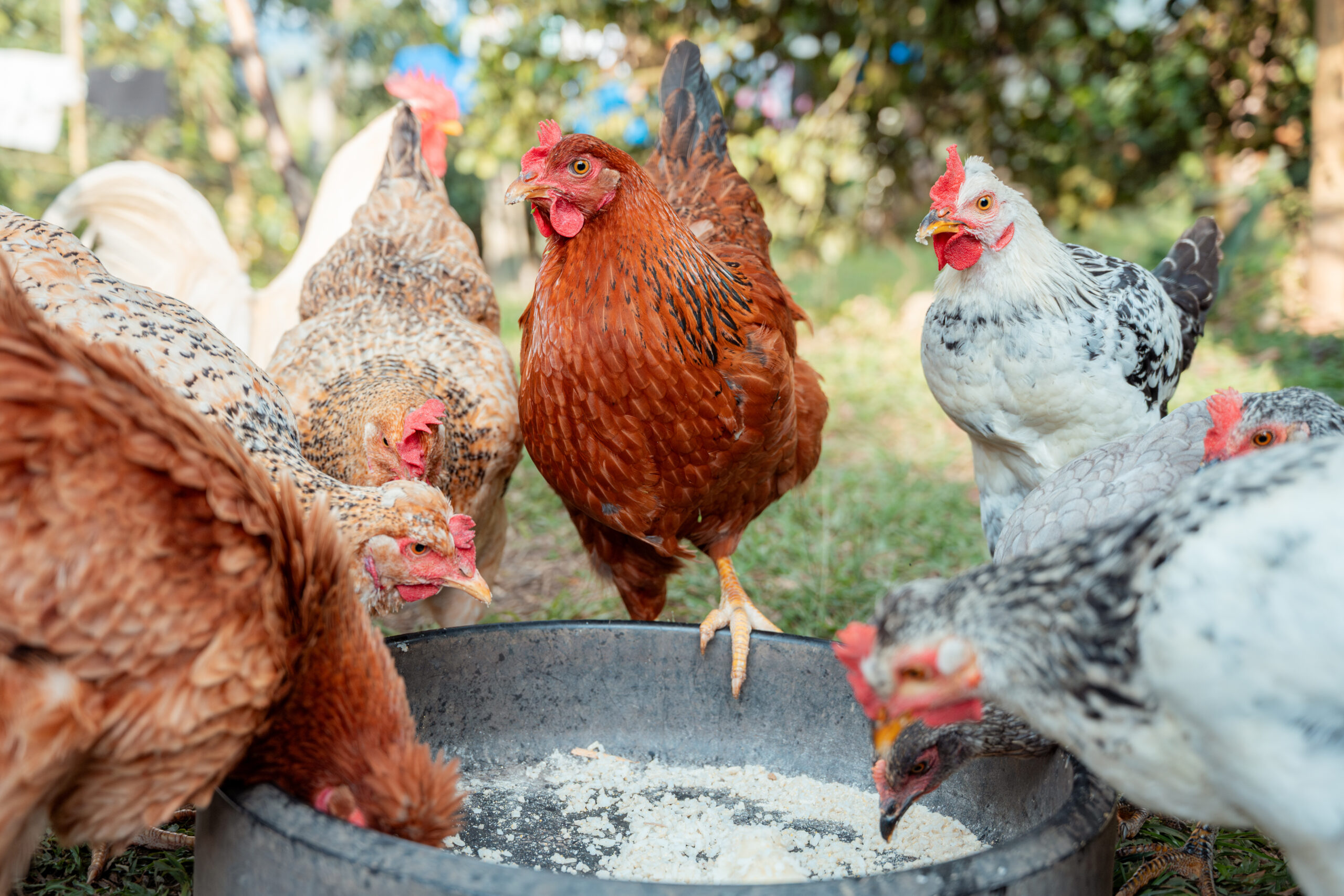
Types of chicken feed can be confusing for new flock owners. With different life stages, purposes, and feed formulations available, choosing the right option for your chickens isn’t always straightforward. Selecting the wrong feed can actually do more harm than good, but understanding the different types of chicken feed—and when to use them—makes it much easier to provide a balanced diet and the nutrition your flock needs.
Types of Chicken Feed for Broilers vs. Layers
Before you can begin to choose a feed, you first need to answer an important question. Are your chickens broilers or layers?
To the novice, this question may not seem like it would make a big difference, but knowing what you’re raising your chickens for and choosing the right feed to fit their needs can be the difference between life and death. Let’s take a look at some important life stages and broiler versus layer options to help you choose the right feed.
Chick Starter: The First Type of Chicken Feed
Usually referred to as starter, chick feed is recommended for day-old chicks until they reach eight weeks of age for layers (three to four weeks for broilers). There are several chick starter options to choose from, including starter for replacement hens (layers) and starter for broilers.
Broiler starter provides a balanced ration that will support fast growth. The protein is 20 to 23 percent. Meat birds eat a lot, and most broilers will put away 10 pounds of feed in the first six weeks of life.
Starter chick feed formulated for layers is made with 20 to 22 percent protein (an important factor for growing birds) and is formulated to promote the fast growth rate and growing feathers that chicks experience in the first two months of their lives.
Another option is a feed called “start and grow.” This feed is formulated to meet the dietary needs of replacement chicks for the first eighteen weeks of their lives.
You can also find a medicated starter for both broilers and layers that includes a coccidiostat to protect against an intestinal disease spread through droppings called coccidiosis. Check the label carefully if you have other animals on your farm, as some medications, including monensin, are toxic to horses. Note: Never feed a medicated feed if your chicks have been vaccinated for coccidiosis, as the coccidiostat or antibiotic can negate the vaccination.
Grower Feed for Developing Chickens
Grower feed is for developing pullets aged 6 to 20 weeks. The protein is less for this age group at 14 to 16 percent. Grower feed may also be medicated and can be fed up to 18 weeks. Meat birds require broiler grower feed from four to six weeks of age.
Broiler Finisher Feed for Meat Birds
Fed to broilers from six weeks of age until they reach butchering time, finisher food should have eighteen percent protein to increase energy, rapid growth, and good meat quality. Never feed broilers medicated finisher feed, as all medications should be discontinued one week before butchering.
Layer Feed for Egg-Laying Hens
Layer food is appropriate for laying hens once they reach the point of lay (about the age of 18 to 20 weeks). The protein levels in layer vary from 16 to 18 percent, depending on the brand and whether or not it is a high-protein layer.
One of the things that sets layer apart from other kinds of chicken feed is the high calcium levels to support strong bones and eggshells. Despite the extra calcium, laying hens should still have access to free-choice oyster shell to ensure they are receiving enough calcium.
Crumble vs. Pellets: Common Types of Chicken Feed
All chick starter feed is formulated in crumble, as pellets are too large for a chick to swallow. But as your flock grows, it’s time to choose between crumble and pellets. Though many flock owners prefer crumble feed, pellets have their place, as they are less of a choking hazard for adult chickens and are more economical, as hens tend to waste less.
Natural vs. Organic Chicken Feed
Natural and organic chicken feeds may be easy to confuse with each other, but they are not the same thing. Natural chicken feed generally means there are no animal by-products, fillers, or antibiotics in the feed, but the feed is not organic.
Organic feed contains ingredients grown in compliance with the United States Department of Agriculture (USDA) certified organic regulations, including using non-GMO seeds and avoiding the use of herbicides and chemicals.
How to Choose Among Types of Chicken Feed
Whether you raise broilers or layers, when selecting a feed for your flock, there are several things to look for.
1. Is the feed age-specific?
2. Is the feed formulated with grains only grown in North America?
3. Is the feed vegetarian-based (excluding probiotic ingredients)?
4. Is the feed formulated with prebiotics and probiotics?
5. Is the feed considered a complete ration? (Meaning all the chicken’s dietary needs are met in the food).
If you answer yes to all these questions, then you have found a good feed choice for your flock.
How to Safely Switch Types of Chicken Feed
Whether you are switching out the starter for the grower or changing layer food brands, it is important to make the switch gradually over the course of a week or two to avoid upsetting your flock’s digestive system.
Types of Chicken Feed FAQ
How much do chickens eat?
On average, one laying hen eats approximately one-half cup of feed per day. The amount varies based on the time of year, the age and breed of the chicken, and whether or not the hen is laying eggs.
What do chickens eat?
Chickens consume a wide array of food, including plants, seeds, bugs, and even small rodents, reptiles, and amphibians.
Are chickens herbivores?
No. Chickens are omnivores, meaning they eat both meat and plants.
Can I mix my own chicken feed at home?
While you can mix your own chicken feed at home, it isn’t recommended. Chickens have complex dietary needs and a delicate digestive system, which can quickly go awry if their dietary needs aren’t met.
Another downside to mixing your own feed is that in order to get the right amount of vitamins and minerals, help from a local feed or grain mill is a must. Grain mills mix feed in large batches, and though this may not seem like a problem at first, most backyard flock owners do not have a need for two thousand pounds of chicken feed.
How often should I feed my chickens?
Chickens should be fed twice daily. Once in the morning, and then again in the evening before the sun sets. Allow your flock access to the feed for thirty minutes to ensure everyone has had their fill.
To control feed waste and prevent chickens from overeating, do not allow your flock access to feed at all times. Note: This tip is especially important when raising broilers, as broilers raised without constant access to feed live longer and have fewer heart attacks.
Final Thoughts on Types of Chicken Feed
Finding the right feed to fit your flock’s needs can be challenging, but it’s well worth the effort. Chickens are what they eat, so giving your flock’s health a helping hand will help your chickens stay healthy and produce top-quality eggs and meat for your family to enjoy.
This article about types of chicken feed was written for Hobby Farms and Chickens magazines. Click here to subscribe.