Morel mushrooms are one of the most sought-after wild edibles. Their rich flavor, sponge-like texture, and unique appearance make them a favorite among chefs, foragers, and mushroom hunters alike. In this guide, you’ll learn how to find morel mushrooms in the wild, identify them safely, and cook them to perfection.
Not only do morel mushrooms have a meatier texture than most store-bought mushrooms, but they are relatively easy for beginners to learn to safely identify. As the mountain folks say: “If it’s hollow, you can swallow.”
What Are Morel Mushrooms?
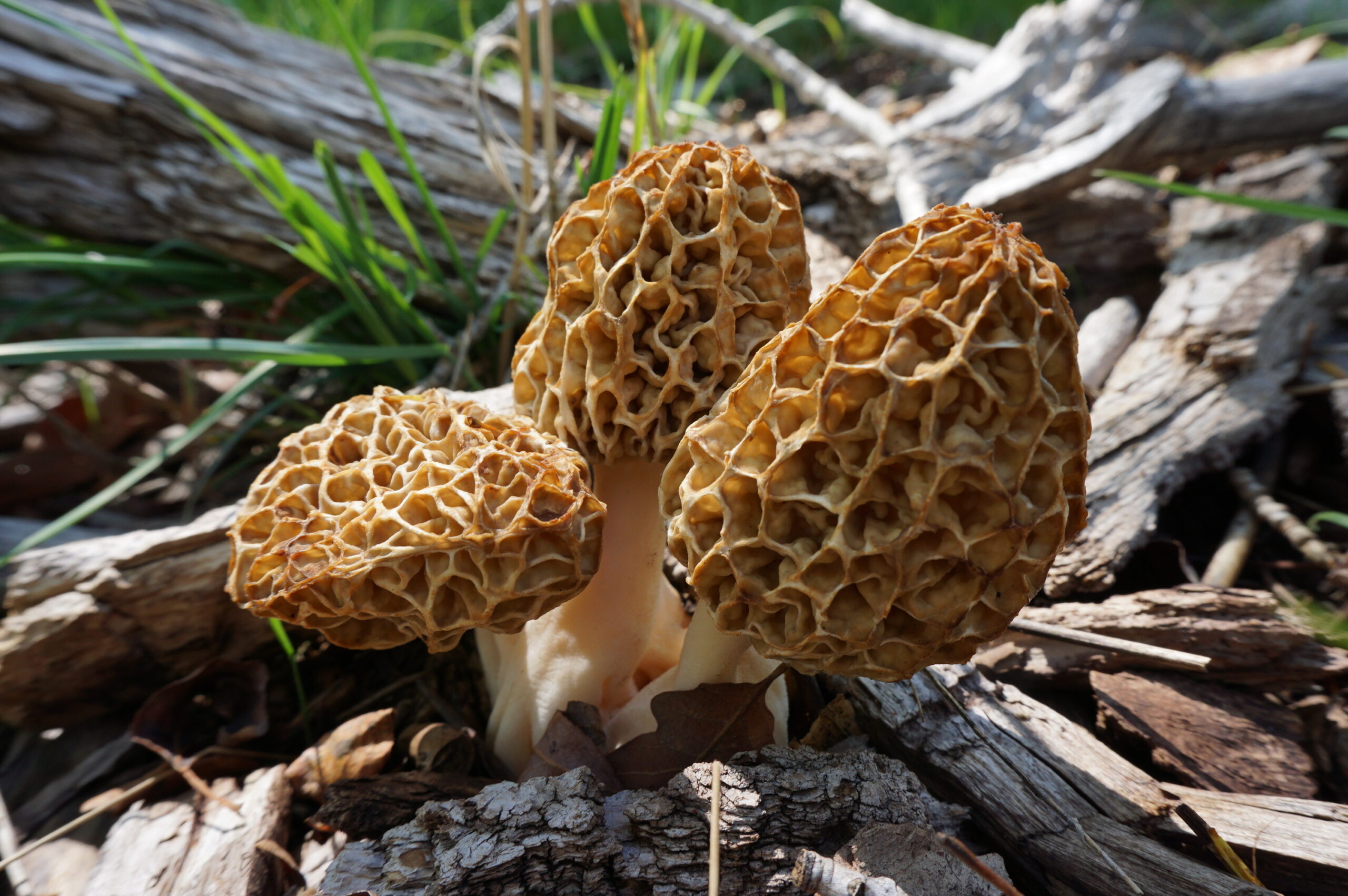
Morel mushrooms (Mochella deliciosa, M. esculenta, M. elata) somewhat resemble the outline of a cartoon Christmas tree: a fat stalk and a crinkly, conical cap. Cut a morel in half from top to bottom. Both the stalk and cap have enough of a void that you could stick one on every digit like so many finger puppets.
The hollow is also big enough to house a few insects, another reason to slice them open before cooking. But then again, there are some people who say that bugs are the next wave of foraging!
There are a few mushrooms that, with some enthusiastic wishful thinking, look enough like a morel to earn the name “false morels.” But they are mostly solid inside with terrible potential as finger puppets.
No matter whether you are an expert or using our beginners guide to mushrooms, those who find these should leave them be. They are either unappetizing or could play havoc with your digestion.
How to Cook Morel Mushrooms
Always cook morels. The heat denatures a toxin that would send you running to the toilet. In any event, even if you grow your own mushrooms, you don’t want to eat mushrooms raw for three reasons.
- They are about as digestible as wood, so there’s no nutritional value in a raw mushroom.
- A tiny number of people will be mildly allergic to any given mushroom, more so to one that hasn’t been cooked long enough.
- There’s a small chance that on the surface of the mushroom, some woodland bacteria might exist that won’t sit well with some people. Especially if your edible mushrooms were left in the back seat of a hot car all afternoon or left on the counter overnight. Always refrigerate in a paper bag as soon as you get home to reduce the possibility of old-fashioned food poisoning.
So be a smart mushroom hunter. Cook morel mushrooms and everything else you find for at least a few minutes in butter or fat and only eat a small amount of a new species your first time to learn if you’re sensitive.
And even with all those precautions, experienced mushroom hunters can develop an allergy to morels decades after their first bite. Sometimes—but not always—this is triggered by eating superhuman quantities of morels. So, don’t be greedy.
When and Where to Find Morels
Morels appear in mid-spring, usually after the last frost, but before the tree leaves come out. They seem to be triggered by a good rain about the time the soil temperature reaches 50 to 53 degrees.
Being a good morel hunter means being a good tree hunter. The submersed part of a morel—its inedible, stringy mycelia—grows in forest floors in collaboration mostly with mature tulip poplars, but also elms and ashes and among old apple trees in orchards. A dying elm tree can also spur its morels to fruit heavily before their primary food source is lost.
In the Midwest and Pacific Northwest, morels respond to the previous year’s forest fires with great flushes rising from blackened earth. Unfortunately, Southern morels haven’t learned this trick. This makes them a bit more difficult to track down.
Chefs and farmers-market shoppers will pay $25 to $50 a pound for fresh or dried morel mushrooms. If you’ve ever had them in a stew, perhaps with venison and ramps, you’d understand why.
If you have a surplus, putting them in a dehydrator overnight at about 110 degrees Fahrenheit will let you save them in a jar in your cupboard. Rehydrate for 10 to 20 minutes in warm water, milk, broth or wine before adding to a sauté pan, soup or casserole.
Tips for Successful Morel Hunting
Don’t be discouraged if you don’t find morel mushrooms on your first foray. Most edible soil-borne mushrooms announce themselves across the forest floor like so many brightly colored periscopes of yellow, orange, red or blue.
But morels camouflage themselves quite well. They wear the brownish grays of fallen leaves, with their outline broken up by a shadowy honeycomb of craters in their caps.
My technique for finding morels? Like the commander of a luckless sub-chaser, I often stop in disappointment and disgust at being empty-handed even though I’m standing amongst massive tulip poplars. Then I look down at my feet.
Half the time, I’m standing in the middle of an under-the-radar fleet of morels. Then, I use my pocketknife to cut morel mushrooms off at soil level (no sense getting dirt in all those craters). I debate the various ways to cook them on the way home.
This article originally appeared in Hobby Farms magazine. Click here to subscribe.