A porch swing is a staple of farmhouse life, as essential to the home as window boxes and apple pies. Their charm isn’t just practical—it’s cultural. One of the most famous porch swings in television history appeared on The Waltons, where the family spent countless hours relaxing and sharing stories on the expansive front veranda.
The swing became so iconic that in 2015, its owner sold it to Warner Brothers, with proceeds benefiting a children’s residential treatment center. From classic TV to real-life farmhouses, the porch swing continues to embody comfort, connection, and timeless rural charm.
Read more: Harvest fruit faster with this advanced fruit-picking bucket!
Discover the Charm of a Porch Swing
There’s something comforting about a porch swing—the coziness, the peaceful rhythm drifting back and forth like a rural lullaby sung to the song of the stars and the moon and the peepers.
Any farming or agricultural pursuit requires a lot of time outside. And a lot of those hours involve fighting the elements.
We work in the weather all the time, but we don’t spend enough time just enjoying the outdoors. So when we do find some downtime, what better place to go than the porch swing?
Porch Swing Origins: A Seat of History
The porch swing, it seems, didn’t really exist prior to the 1880s. By 1900, newspapers advertised porch swings along with hammocks as tools for combating the dog days of summer. In those days, you could snag a porch swing for $3.75.
The Lewisburg Journal in Pennsylvania described the new-fangled porch swing in their June 15, 1900 issue. “A large seat suspended by stout reliable ropes. Hung from the ceiling of porch or the limb of tree. [Won’t] disarrange one’s clothes and hair like the hammock. They are comparatively new. We will show them in town for the first time.”
(Historical note: In those days, the swings were described as “2-passenger,” as opposed to “2-person” or “2-seater” as they’re known today.)
By 1910, you could purchase porch swings in any manner of styles and materials. And free installation was a popular marketing technique of the time. “[Hanging the swing is] not the easiest task in the world,” read an advertisement in The Indianapolis Star in 1909. “We supply the chain and hang every swing bought of us,” it added.
In 1913, syndicated columnist George Fitch penned a widely circulated article entitled “The Porch Swing” that compared the charms of the porch swing versus that of the automobile.
“A porch swing can be bought on installments like the automobile, but the buyer does not have to mortgage his home in order to do it.”
Why a Swing on the Porch Is a Timeless Classic
By the 1950s, however, porch swings had fallen out of fashion as American lifestyles evolved. Still, the porch swing remains an icon of the South. Not that northern inhabitants dislike porch swings. But those in southern climates have the opportunity to utilize their porch swings for far more of the year than their northern neighbors.
While a December night might be splendid for porch swinging in South Carolina, the same swing would most likely be covered in a foot of snow in Minnesota—not exactly conducive to small talk and secrets.
Read more: Add these 20 homesteading skills this year!
Porch Swing Types: Hanging vs. Freestanding
A porch swing is a porch swing, right? Not so fast!
You can have a hanging porch swing, which is suspended by chains from the joists of the porch ceiling. Or you can choose a freestanding porch swing that has a frame and a canopy overhead.
There are advantages to the freestanding swing. You can move it around if you decide you prefer a different location. Plus it’s a safe alternative if your porch ceiling isn’t secure enough to support a hanging swing.
But there’s something decidedly traditional about a hanging swing, with its thick chains or rope and permanent location on your porch.
Choosing Materials for Your Porch Swing
A porch swing can be crafted from a variety of materials. Wood is obviously a classic choice, but metal, plastic or wicker are also options. Your choice of material will reflect your priorities in terms of durability, comfort and aesthetic.
Aluminum porch swings are durable but a bit light and might bang around somewhat in windy conditions. The same can be said for wicker and some light plastics. Swings made of quality HDPE (high density polyethylene), however, are heavier and may rival wood for sturdiness.
Wrought iron swings have a classic look and are much heavier than aluminum but may not be the most comfortable swing unless cushions are added. Wrought iron is also susceptible to paint chipping. In the end, your porch swing will probably become a cherished piece of family furniture with plenty of memories surrounding it, regardless of the material you choose.

Daniel Johnson
Best Wood Options for a Porch Swing
It’s worth looking a bit more closely at the various wood types that can be used for a swing. Strong, durable woods such as cedar, cypress or teak are perennial favorites for outdoor furniture, including porch swings.
These woods tend to be naturally rot-resistant when exposed to the elements. This gives them a long outdoor lifetime.
Cedar and cypress will turn a pleasing gray over time if left natural, although you can stain them as well for a different color and for added protection.
Cedar, in particular, has that awesome, pleasant scent that everybody seems to love. It also has some insect resistance.
Cypress performs well in applications where it doesn’t touch the ground—so it can be just right for a porch swing project.
Teak can be an expensive wood, but it might be worth the cost because of its natural water-resistant oils, along with the fact that it continues to darken to an attractive brown over time.
If cost is a factor, or you’d just like to keep things simple, you can always opt for pressure-treated pine, leaving the wood natural or painted/stained. Treated pine has a very long lifespan, even in an outdoor setting. A swing in the fairly protected environment of your porch may last even longer.
However, pine is a softwood and may damage easily from nicks and bumps.
Tips for Secure Hanging
Always keep safety in mind when it comes to installing your porch swing. Carefully follow the manufacturer’s directions for assembly and installation, paying special attention to the necessary requirements for safe hanging from your porch ceiling. Your ceiling joists will need to be of sufficient size (2-by-8 is commonly recommended) to support the weight of your swing when it’s occupied by two or three people.
You’ll also need to invest in the appropriate heavy-duty hanging hardware so that your porch swing can hang safely and securely. If you opt for a DIY porch swing rather than one from a manufacturer, you can find step-by-step instructions online that explain all the specifics and considerations for safely installing your swing.
You certainly don’t want the swing to somehow come free and crash down, especially when people are using it, so always prioritize safety and correct installation. Also, always consider the specific weight capacity of your particular swing. This figure will vary.
Step-by-Step Tips
Porch swings are the stuff of Hallmark movies (so romantic!). And making one yourself can be a real labor of love.
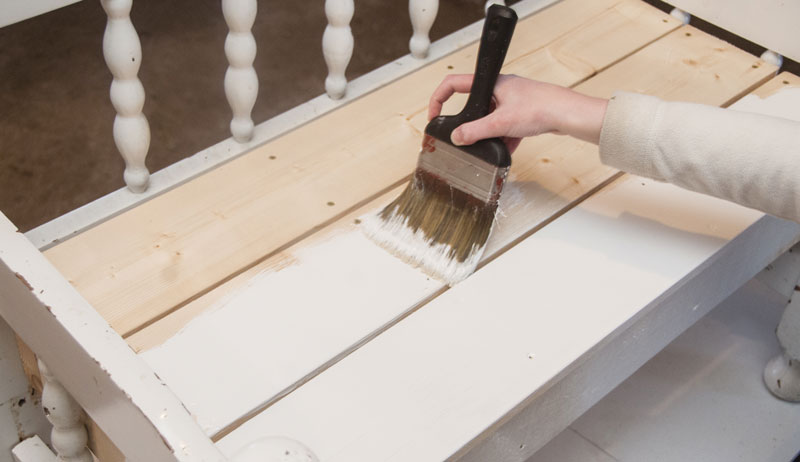
But there is just something nice about a manageable-but-large project such as a porch swing that appeals to the DIY nature of many people. If the thought of constructing your own wooden porch swing appeals to you, keep the following tips in mind.
Daniel Johnson
When To Ask For Help
Not everyone has a carpentry background. While a porch swing certainly isn’t the most difficult project in the world, a project like this needs to be of sound construction.
You might enlist the help of a friend or relative with carpentry skills. They’ll probably jump at the chance to work on something fun like this.
Use Rust-Resistant Hardware
Be sure to purchase exterior-grade screws, hooks, chains and other metal hardware for your swing that won’t rust or degrade and will look fantastic.
Use a Plan
If you don’t have experience designing furniture, research plans that are already tried-and-true. You might also want to avoid getting too fancy with an initial DIY project. Save the graceful curving armrests for a future project!
Porch Swing Finishing Touches: Cushions & More
Once your new porch swing is installed and ready to go, you’ll probably still want to add a couple of finishing touches to make the final product picture-perfect. Some of these might include:
Upholstered Cushions
Comfortable though the swing may be on its own, a nice selection of outdoor-safe upholstered cushions will help make it even more relaxing. Plus, you can utilize attractive patterns to upgrade your outdoor space and interesting colors to complement your home’s exterior.
Musical Instruments
They knew all about simple pleasures in the old days—just think of Andy Griffith sitting on the porch and casually strumming a guitar.
If you’re looking for your own taste of Mayberry, consider adding a guitar, harmonica, kalimba or other portable musical instrument. See who shows up for the outdoor concert!
Porch Swing Beverages
It almost goes without saying that you’ll be most likely using your front porch on warm days and evenings. A nice pitcher of icy lemonade, sweet tea or a couple of cans of soda will add the perfect finishing touch to this wonderful setting.
And if the weather does cool off, you can always swap them out for coffee and hot chocolate!
With a swing in place, your porch will become an idyllic hub for family gatherings, reminiscent of the olden days and a gentle reminder to slide into a slower pace of life. Perfect for breezy days and evenings filled with the chirps of crickets, this simple addition to your home will soon grow into a centerpiece of sentiment and solace.
Porch Gliders
Similar to the swing, the porch glider is a stationary unit that you don’t have to suspend from above. The relaxation benefits are the same as the swing, with greater ease of setup. Plus you can move a glider around more easily.
No front porch? No problem! Place your porch glider in any suitable location with a good view and glide into some downtime.
Where to Hang Your Porch Swing
Swings need more space than you might think. It’s more than just the physical size of the swing. Whether it’s 4- or 5-feet-long doesn’t matter much. You have to factor in the necessary vacant space around the swing (2 to 4 feet on all sides).
You’ll hang your swing so that it’s approximately 18 inches off the ground—just the right distance to make swinging comfortable for everyone.
This article was written for Hobby Farms magazine. Click here to subscribe.