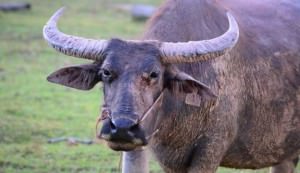
American water buffalo are mixtures of riverine and swamp buffalo that serve their owners well as oxen, as well as milk producers for highly esteemed dairy products.

Noted for their fast weight gain and well-marbled meat, Angus cattle first came to the United States from Scotland.

Medium-sized, long-horned Ankole-Watusi, produced high-fat milk; breeders may add them to the herd to dairy herds to boost the butter-fat levels.
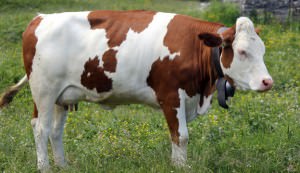
Originating in Scotland, milk-producing Ayrshires are striking cows with mottled, reddish-brown patches set against a white background.
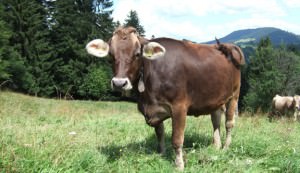
Hardy, good grazing Brown Swiss produces plenty of milk, especially liked by cheese makers.
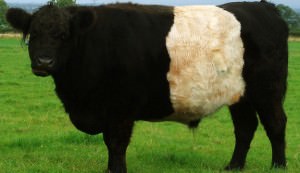
Similar to the Galloway, the Belted Gallowy is distinguished by its striking "Oreo" pattern. They're an excellent meat breed for cooler climates.
The Delaine Merino, one type of Merino sheep, has been described as the most practical Marino on the average farm and is especially adapted to range sheep production in the Western and Southwestern states. It has a history and characteristics similar to other Merinos.
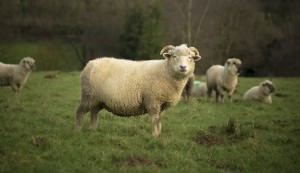
Dorsets are dual-purpose wool and meat sheep. Dorset ewes produce fast-growing, meaty lambs; twins are the norm.
A prolific breed that evolved from wild mountain sheep, the Finnsheep offers both meat and soft, lustrous wool.
The medium-sized Gotland is a true multipurpose, long wool sheep. They yield good-flavored, close-grained meat, fur skins and soft lustrous fleece. Gotland sheep still exist on the island of Gotland.
Try the Hampshire for an efficient meat producer, as well as fine, dense wool. Use as sires is also common.
These rugged, low-maintenance sheep produce mainly white wool and make a fine choice for hobby farmers.