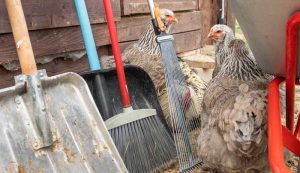
Provide clean conditions for your flock to help prevent this disease triggered by E. Coli.
Avoid adding a mycoplasmosis-infected chicken to your flock or you’ll have a tricky health situation on your hands.
If you notice problems with your chickens’ digestive tracts, hairworm might be to blame.
The hard-to-kill roundworm is a dangerous parasite that can be lurking in the topsoil around your chickens’ coop.
If your chickens are affected by a disease causing weight loss and diarrhea, find out if coccidiosis might be the culprit.
If you catch your chickens scratching—themselves not the ground—be on the lookout for lice in your flock.
A lack of vitamin A in a chicken’s diet can lead to problems with its mucous-producing glands and egg-laying abilities.
An imbalanced diet can lead to rickets in chickens. Recognize the symptoms and take preventative measures with these tips.
The natural inclination for chickens to peck can be problematic if it turns aggressive and harmful to the flock.
I remember the first time I saw her. She was a little gray ball of fuzz, no bigger than a mouse.
Our chicks arrived on Friday, and now there are 10 red-and-yellow peeps in the living room. (Their brooder makes a good light for when me ‘n’ Uzzi creep in at night to use the computer.)
Before you add these new peepers to your coop, give them a good start to life with these helpful hints.