Katahdins make hardy, low-maintenance meat animals and produce excellent lamb crops that hold appeal for specialty markets.

The Merino is justifiably famous for its wool. Hand spinners adore the Merino’s exceptionally fine fleece, which spins up into a soft yarn.

Miniature Cheviots can make great farm pets. Many Miniature Cheviots are white sheep, but they also provide wool in a variety of colors, from ranging black to pale beige and silver.

Navajo-Churros have a lustrous fleece composed of a strong outer layer and a soft undercoat which is low in lanolin. The open locks and wide color range make Navajo wool ideal for hand spinners and weavers. .
These fine wool producers, can do especially well in the southwest. They also yield good lambs.
The easily adaptable Romney produces fine, easy-to-spin wool, as well as meat.

In Europe, the long, coarse wool of the Scottish Blackface is made into fine carpets, Irish and Scottish Tweeds, and used to stuff mattresses. This medium-sized breed also produces a lean, fine-grained, and flavorful meat. .

Shetlands grow soft, strong fleeces in a delightful range of colors, patterns, and textures – a spinner’s dream come true. Indeed, the Shetland woolen industry with its fine, un-dyed sweaters, shawls, and other knitted garments owes its fame to this hardy little wool breed. .
Shropshires produce a heavy, dense fleece with a soft handle and little kemp. The wool is wonderful for spinning and knitting. The lambs of this dual-purpose breed gain weight quickly and yield a good, meaty carcass.

The fast-growing Southdown is an efficient and economical converter of grass to lean, tender and flavorful meat. They make popular exhibition livestock and good projects for young people due to their mellow temperaments.
A popular meat breed, the large Suffolk has a regal look that also offers medium wool.
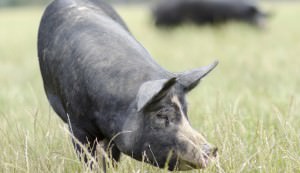
The black and white Berkshire has long been known for its excellent meat. It's becoming more popular as a niche breed among small farmers.