Can chickens eat strawberries? Yes. Strawberries are a safe, nutritious treat that most chickens love. Packed with vitamin C, antioxidants, fiber and water, they make an excellent occasional snack when fed in moderation. Like all treats, strawberries should make up no more than 10 percent of your flock’s daily diet.
Beyond strawberries, many other berries are also safe for chickens, while some wild berries can be toxic. Here’s what you need to know about feeding strawberries and other berries safely to your flock.
Key Takeaways
- Strawberries are safe and healthy for chickens when fed in moderation.
- Feed no more than one whole strawberry per adult hen each day as an occasional treat.
- Strawberry tops and leaves are safe if they are fresh and pesticide-free.
- Never feed moldy, rotten or heavily pesticide-treated strawberries.
- Baby chicks can eat tiny pieces of strawberry after they are eating starter feed and have access to chick grit.
- Other safe berries include blueberries, blackberries, raspberries and cranberries.
- Avoid feeding toxic berries such as baneberries, chinaberries, holly berries and privet berries.
Can Chickens Eat Strawberries?
Yes. Chickens can safely eat strawberries as an occasional treat. These sweet berries are low in sugar, high in water, and packed with nutrients, including antioxidants, fiber, magnesium, potassium and vitamin C. Most chickens love strawberries, but like all treats, they should make up no more than 10 percent of a flock’s daily diet.
As a general guideline, offer one whole strawberry or two to three strawberry tops with a little fruit attached per adult hen. Always wash strawberries thoroughly before feeding, and never offer berries that are moldy, spoiled or treated with pesticides.
Strawberries are an excellent fruit choice for chickens, as they are low in sugar and are packed full of nutrients, including high amounts of antioxidants, fiber, magnesium, potassium, and vitamin C. The potassium and manganese in these bright red berries help boost metabolism to keep chickens energized throughout the day. Strawberries also contain a large amount of water.
Never feed chickens strawberries that are moldy or treated with pesticides (including non-organic strawberries found at your local grocery store and farmer’s market). Like all treats, strawberries should not make up more than ten percent of your flock’s daily diet. A general guideline is about one whole strawberry or two to three strawberry tops with a little fruit still attached daily for an adult hen.
Can Chickens Eat Blackberries?
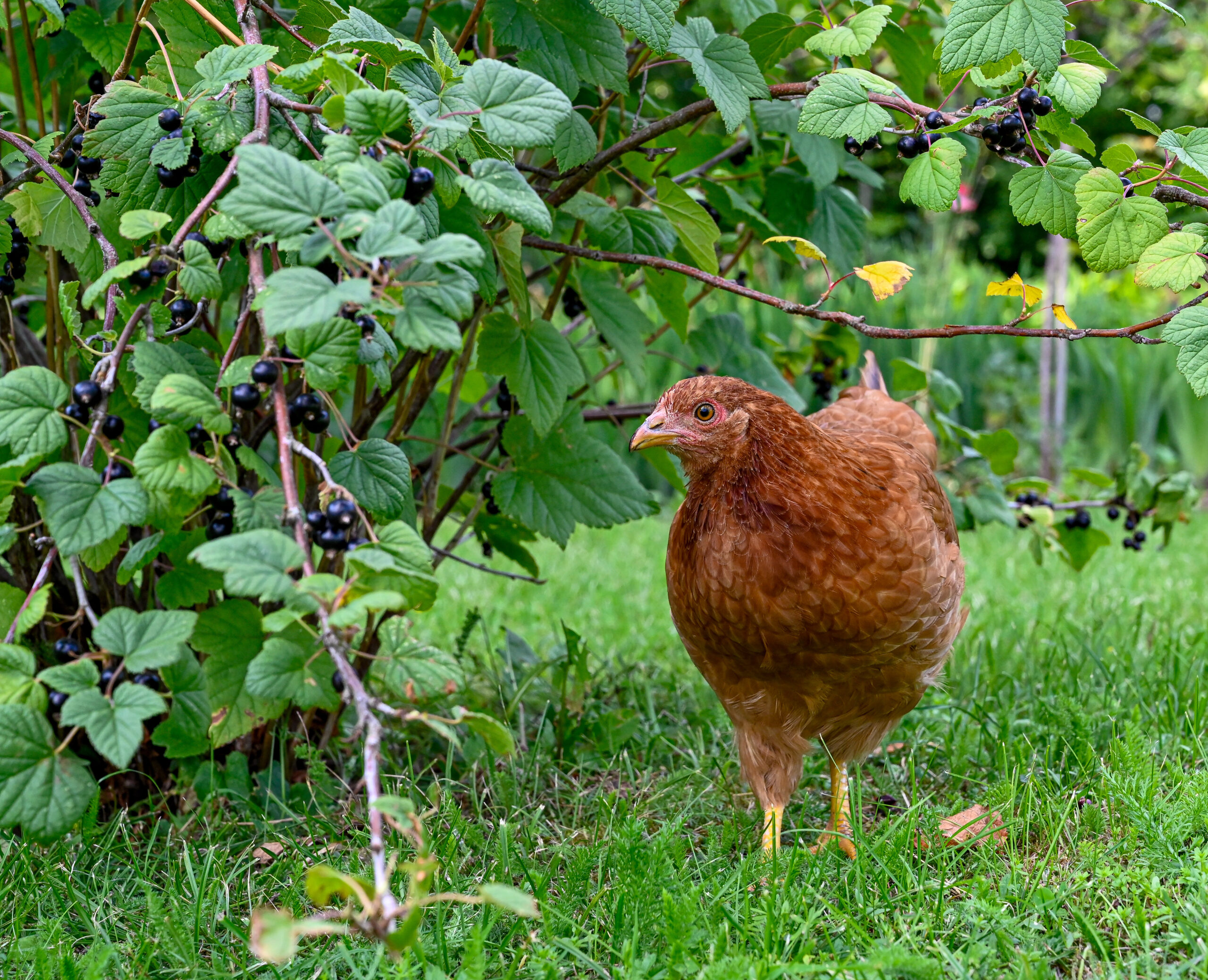
If you have blackberries growing in your backyard or garden, you might be wondering. Can chickens eat blackberries? Yes, they can. Just like strawberries, chickens love the taste of fresh blackberries and will devour any that are within their reach.
An overall immune booster, blackberries are a highly nutritious treat for chickens. Blackberries should not exceed more than ten percent of a chicken’s daily diet (about two to three blackberries per day for an adult chicken).
Blackberries are a good source of antioxidants, fiber, and vitamins and minerals. The seeds found in blackberries are also edible and work as a natural grit inside the chicken’s gizzard to help digest food.
Note: Blackberry seeds should never take the place of commercial free-choice grit (available at farm supply stores), as chickens need grit to properly digest their feed. Without grit, a chicken’s digestive system will stop working properly and lead to serious, potentially fatal diseases.
Can Chickens Eat Blueberries?
Yes, chickens can eat blueberries. These super berries are chock-full of nutrients for backyard flocks and are one of a chicken’s favorite berries. Although nutritious, chickens should never be allowed to consume more than 10% of their daily diet (about four blueberries per adult hen). When feeding blueberries to smaller chickens, consider slicing them in half to prevent choking.
High in antioxidants, fiber, prebiotics, and vitamins C and K, blueberries aid in digestive health and improve a chicken’s overall immune system, including the ability to fight certain types of cancer.
Blueberries also support eye, bone, and heart health, regulate blood pressure, and can even be used as boredom busters to help encourage mental and cognitive abilities in backyard flocks.
Blueberry Boredom Busters For Chickens
- Roll blueberries across the coop or run and watch your hens chase after them. Not only is this fun, but it helps get your hens moving, which helps improve the health of their circulatory and immune systems.
- Teach your hen to jump/fly for blueberries. Hold a blueberry loosely between your fingertips several inches above your hen’s head and watch her jump for them. Once she gets the hang of the game, keep raising your arm several inches at a time until she has to fly for her treat. This activity keeps chickens in good physical condition and also aids in mental stimulation as the hen needs to accurately calculate how far she has to jump to get the treat.
- Sprinkle blueberries in a pile of straw to boost foraging and scratching instincts. Note: When allowing your flock to forage for blueberries, clean up leftover blueberries daily to prevent hens from consuming moldy or spoiled berries.
Can Chickens Eat Raspberries?
Yes, chickens can eat raspberries, but not all hens enjoy the slightly tart taste of a red raspberry. Full of water and nutrients, raspberries provide hydration and support the digestive system and gut health.
Thought to reduce cellular stress, raspberries reduce the risk of cancer and support an overall healthy immune system. These delicious berries are also an excellent source of carbohydrates to provide chickens with energy.
Although healthy, raspberries should not exceed more than 10% of your flock’s daily diet, as the high sugar levels can cause heat stress and obesity in laying hens.
Can Chickens Eat Cranberries?
Yes. Another chicken favorite, cranberries are an excellent berry to feed in winter, as this delicious bright red berry can improve the mood of cooped-up chickens. A wonderful boredom buster, cranberries can be sprinkled in the straw for a fun foraging activity. Or you can serve frozen cranberries to your flock for a refreshing summertime treat.
These delicious red berries have a high water content and provide chickens with energy. Full of essential vitamins and minerals, cranberries are a good source of calcium, folate, magnesium, phosphorus, potassium, and vitamins A and C.
Believed to improve gut health, cranberries help to produce gut microbiota, which helps to naturally control harmful bacteria and support intestinal health.
Cranberries should not exceed more than ten percent of your flock’s daily diet. Note: To avoid choking hazards, cut cranberries in half before feeding to your flock. While chickens can eat dried cranberries, be sure to only feed dried cranberries that do not contain sugar or artificial sweeteners.
Toxic Berries Chickens Should Never Eat
Can chickens eat strawberries? Yes, there are many edible berries for chickens to enjoy, including strawberries, blueberries, blackberries, raspberries, and cranberries, but not all berries are safe for chickens to consume. The following list contains toxic berries for chickens.
- Baneberries
- China berry
- Elderberries
- Holly berries
- Privet berries
Frequently Asked Questions
Can baby chicks eat strawberries?
Yes, baby chicks can eat strawberries, but only if they are cut into tiny pieces to prevent choking and crop impactions. Be sure chicks are eating their starter ration before offering them strawberries. Keep treats limited to less than 10% of their daily diet and offer free-choice chick grit at all times.
Can chickens eat rotten or moldy strawberries?
No, rotting and moldy strawberries should never be fed to chickens, as they can cause digestive upsets and possible death.
Can chickens eat strawberry tops?
Yes. Strawberry tops and leaves are safe for chickens to eat as long as they are fresh, clean and free of pesticides. Many chickens enjoy pecking at the leafy tops just as much as the fruit itself.
Can chickens eat processed strawberry products?
No, due to the added sugar and artificial sweeteners and preservatives, which can be harmful for backyard flocks, chickens should never be fed processed strawberry products.
Can chickens eat frozen strawberries?
Yes. Frozen strawberries make an excellent summertime treat. Allow them to soften slightly or cut them into smaller pieces before serving to reduce choking risk.
Can chickens eat strawberry leaves?
Yes. Strawberry leaves are not toxic to chickens. Wash them thoroughly before feeding to remove dirt or pesticide residue.
Can chickens eat wild strawberries?
Yes, provided you are certain they are true wild strawberries and have not been treated with herbicides or pesticides. Avoid feeding berries unless you are confident they are safe to identify.
Conclusion
Strawberries are a healthy, refreshing treat that most chickens eagerly enjoy. When served fresh, clean and in moderation, they provide vitamins, antioxidants and hydration without replacing a balanced layer or grower feed. Whether you’re sharing strawberries, blueberries, blackberries or raspberries, offering a variety of safe fruits can provide enrichment while supporting your flock’s overall health. Just remember that treats should always remain an occasional snack, not a substitute for complete poultry nutrition.
Want more expert advice for raising a healthy, happy flock? Subscribe to Chickens magazine for practical tips on poultry care, coop management, breeds, nutrition, and more delivered right to your door.