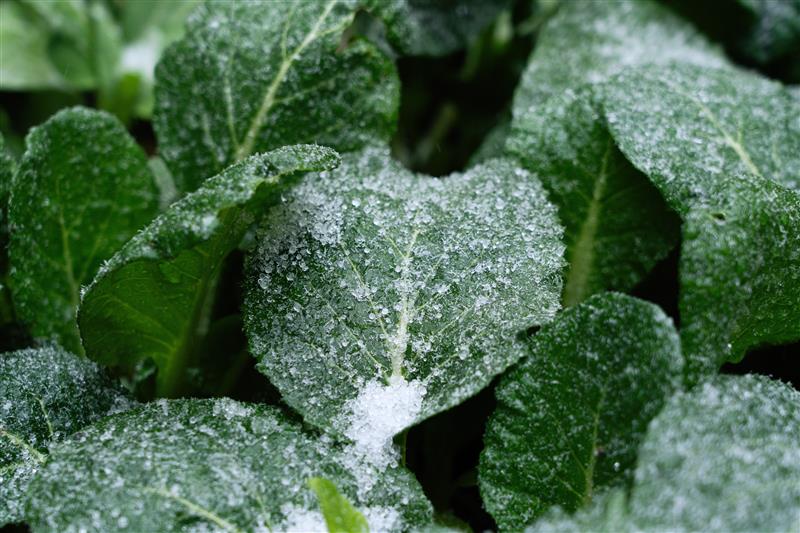
Cold weather vegetables and other late-season crops are known to see a marked taste improvement after a light frost or two. For the best-tasting apples, leafy greens, and root crops, a dousing of cold weather can be just the ticket. This is true not only for fall harvests, but also for early spring crops that experience chilly nights. And yet, that doesn’t answer the question of why this works. Why would temperature play any role whatsoever in sugar content?
To understand the answer, think about a couple of related examples. Like, how do you keep the cooling system of your vehicle of tractor from freezing? With antifreeze. Or, how are icy roads made safer in the winter? By adding salt. Or, how do farmers prevent the fluid ballast inside large tractor tires from freezing to a solid in cold weather? In all three cases, it’s the fact that something is dissolved in the water that keeps it freezing under control: glycol in antifreeze, salt on the road, and sugar in beet juice ballast.
The same basic principle is at play with cold weather vegetables. Some plants have natural freeze-protection processes that work in much the same way. When cold temperatures are present, the plant begins to convert starch into sugar, with the goal of lowering the plant cells’ freeze point. Water with sugar dissolved in it requires temperatures much lower than the standard 32°F before they start to endure damage from the cold. That’s the practical reason from the plant’s perspective. But from the human perspective, this plant survival strategy has the bonus side effect of improving the taste of some late-season garden crops! You might see slight taste benefits in things like:
Cold Weather Vegetables: Brassicas and Leafy Greens
You’re probably already aware that many brassicas and greens are cold-tolerant. This includes many garden favorites like kale, spinach, mustard greens, cabbage, broccoli, cauliflower, kohlrabi, Brussels sprouts and many others. These are excellent spring and fall garden crops for northern regions, as they can easily handle a surprise frosty morning. But in all these cases, that touch of cold can increase the sugar content and make them tastier then before.
Cold Weather Vegetables: Root Crops that Sweeten After the Frost
Sure, the edible portion of your basic root crops is below the soil and hidden from a light frost, but the vegetation portion of many root crops is also cold-hardy. And there are a few root crops in particular that will benefit from a cold-stimulated sugar rush. Carrots, for one, may benefit from increased sugar content, as well as—no surprise—sugar beets. But you can also achieve better flavor with your radishes after a frost.
Cold Weather Crops: Fruits That Benefit From Cold
A touch of cold weather can make all the difference in a tart fruit only suitable for cooking and a delightful off-the-counter crunch. Apples most certainly benefit from a period of frost, and they can be much tastier this way. Some grape varieties are another late-season fruit crop where cold weather can be a good thing.
Key Takeaways
- Cold weather vegetables often taste sweeter after a light frost.
- Plants convert starches into sugars to protect against freezing.
- This natural process lowers the freezing point inside plant cells.
- Brassicas, leafy greens, and root crops benefit the most.
- Both fall and early spring crops can develop improved flavor in cold conditions.
Cold weather vegetables offer one of the most rewarding surprises in the garden—better flavor with less effort. Whether you’re harvesting after a fall frost or nurturing early spring crops through chilly nights, these plants naturally respond by increasing their sugar content. Understanding this simple science helps gardeners make the most of both seasons, turning cold snaps into an advantage instead of a setback.
This article about cold weather vegetables was written for Hobby Farms magazine. Click here to subscribe.