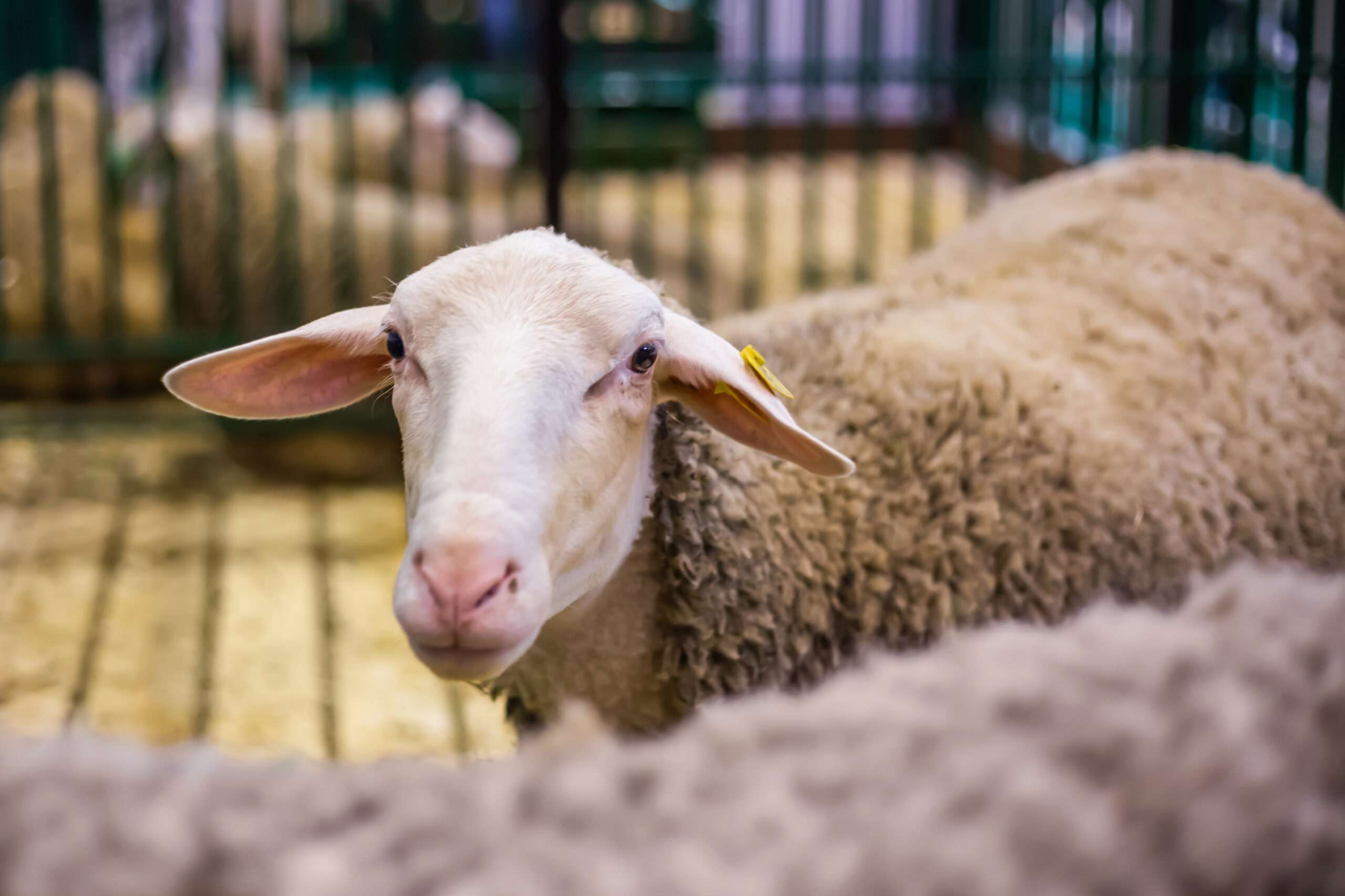
Dairy sheep offer rich, creamy milk that’s packed with nutrition—higher in calcium, phosphorus, and vitamins A, B, and E than cow milk. Their smaller fat globules make the milk easier to digest, and the high solids content makes it ideal for cheese and yogurt. If you love homemade dairy products or simply want another productive addition to your hobby farm, dairy sheep might be the perfect fit. But before you bring home your first ewe, there are some important things to consider.
Why Dairy Sheep Need Companionship
Sheep crave the safety of a flock, so a lone sheep is a stressed sheep. Stress leads to increased parasite loads, depressed immune systems and unhappy sheep. Most researchers say a flock should contain at least three sheep, but a pair of bonded buddies generally suffices. You shouldn’t keep just one sheep.
If you don’t need at least two ewes for milk, keep a castrated male for a single milker’s companion. A friendly goat, camelid or pony might also work, depending on the individuals involved, but a second sheep is always best.
Also, sheep are strongly wired to stay alert and flee from danger. This makes them more reactive than most other barnyard species. It’s not a bad trait, but it’s something to factor into daily handling, especially on the milking stand. A soft voice and lots of kindness go a long way when handling sheep.
Time Commitment of Milking Dairy Sheep
If you’ve milked cows or goats, you already know how much time it takes. If you haven’t, consider that a milking ewe doesn’t allow for holidays, sick leave, nasty weather or weekend sleep-ins.
You or a reliable helper must milk once or twice a day, every day, at roughly the same time, throughout your ewe’s lactation. You’ll also need to have her bred, be with her for lambing and deal with caring for her lambs. If that sounds like more than you’re willing to take on, don’t try dairying, sheep or otherwise.
Choosing the Best Dairy Sheep Breeds
Before buying or even choosing a breed, decide what you need from your sheep. Do you want to raise sheep for only milk? How much milk? Do you want milk and wool? Are meaty lambs part of your vision? Are hardiness and flightiness important?
There are two ways to approach milking: with specialized dairy sheep or with nondairy breed ewes. Dairy ewes offer considerably longer lactations. A dairy ewe’s lactation can last as long as eight months, while a typical nondairy ewe’s lactation usually lasts three to five months. And she’ll produce a whole lot less per milking.
The best bets for high production and long lactations are East Friesian and Lacaune dairy sheep, or crosses of these two breeds.
Top Dairy Sheep Breeds for Milk Production
East Friesian: High Milk Yields & Friendly Disposition
East Friesian sheep are fairly readily available German sheep that typically produce about 1,000 pounds of milk during a 220- to 240-day lactation. The East Friesian is also a wool breed that shears a 9- to 12-pound, 30- to 35-micron, low-luster fleece, with a staple length of roughly 4 to 6 inches. Most East Friesians are white, but a dark brown strain is also available. East Friesian ewes average slightly more than two lambs per lambing, and, bred to heavy breed rams, their lambs are quite meaty. East Friesians are typically docile and friendly, but they’re not particularly hardy.
Lacaune: Hardy Sheep with High Milk Solids
Lacaune sheep are improved French dairy sheep that give slightly less milk than East Friesians, but the milk contains more milk solids. Plus, Lacaunes are hardier sheep. Authentic French Roquefort cheese is crafted using certified Lacaune milk. These are technically wool sheep, but their heads, legs and bellies are wool-free and they tend to shed much of the rest of their fleece, so raising them for wool is counterproductive.
Awassi: Rare, Rugged, and Prolific
Awassi sheep are fat-tailed dairy sheep that originated in the Middle East and are still rare in North America. They’re prolific milkers, second only to East Friesians in production. They’re exceptionally hardy carpet-wool sheep that come in many colors.
Assaf: Dual-Purpose Dairy Breed
Assaf sheep are spin-offs created in Israel by crossing Awassi with East Friesians. The Assaf is a dual-purpose wool-and-dairy breed and, like Awassi, is difficult to find and buy in North America.
Icelandic & Katahdin: Alternative Breeds Worth Milking
Several nondairy breeds produce enough milk during a long enough lactation to warrant milking them, especially because sheep milk freezes beautifully, and it’s easy to save up enough for making cheese. The best of these are Icelandics, a triple-purpose wool-milk-and-meat sheep, and Katahdins, a popular, parasite-resistant hair sheep breed.
How to Select Healthy Udders in Dairy Sheep
Ewes’ udders are placed back farther than those of goats or cows, essentially positioned between their hind legs, so you milk sheep from the rear.
Udders differ by individual. The ewes you choose should have soft, pliable udders with two teats — no more, no less, not even nubs. Extras are considered supernumerary teats. Supernumerary teats are often blind teats, meaning they have no opening to the outside, a condition that can lead to serious udder diseases such as mastitis. Each teat should have a single orifice on the end.
If you hand-milk, make sure the teats are big enough to grasp with at least your thumb and two fingers. Feel the udder carefully, checking for lumpy scar tissue that can indicate past rounds of mastitis, which tends to recur.
Feeding Dairy Sheep for Optimal Milk Yield
It takes good feed to produce a decent supply of milk. In addition to high-quality forage, meaning rich pasture or legume hay, dairy ewes need a measured amount of concentrated feed such as a homemade mix formulated by a nutritionist or a good commercial sheep feed.
They need access to clean water and sheep-specific minerals at all times of the day. Take care that they aren’t exposed to commercial feed or minerals formulated for other species such as goats, horses or cattle. These contain copper, which can slowly accumulate in a sheep’s liver and contribute to copper toxicity. In time, too much copper can kill a sheep.
Key Dairy Sheep Facts at a Glance
Annual Milk Production in Dairy Sheep
Domestic Ewes: 100 to 200 pounds
Dairy/Domestic crossbred Ewes: 300 to 650 pounds
Dairy Ewes: 400 to 1,100 pounds
Dairy Ewe Traits
Mature Body Weight: 150 to 190 pounds
Years to Reach Mature Size: 2 to 3 years
Production Lifespan: 5 to 7 years
Wool Production: 3 to 10 pounds/year
Milk Composition: fat content — 6 to 8 percent; protein content — 5 to 7 percent
Source: Guide to Raising Dairy Sheep, University of Wisconsin-Extension
If you’re ready to embrace the rewarding challenge of raising dairy sheep, you’ll gain more than just rich milk—you’ll become part of a time-honored tradition of small-scale, sustainable dairying. Whether you want to make your own cheese, enjoy nutrient-dense milk, or expand your homestead’s productivity, dairy sheep offer a unique and fulfilling path. Just remember: thoughtful planning, careful breed selection, and daily dedication are the keys to success. So do your homework, start small, and don’t be sheepish—your flock is waiting.
This story about raising dairy sheep was written for Hobby Farms magazine. Click here to subscribe.