With the right fall flowers, a garden doesn’t have to fade when summer ends. You can easily grow beautiful flowers that will grow deep into autumn, providing your landscape with color and pollinators with a valuable late-season nectar source. Ideally, these flowers should continue to produce plenty of blooms even when the days are shorter and the temperatures a little cooler. They may not survive hard frosts, but they should be able to grow and bloom right up until that time. Happily, there are plenty of flower options that fit these criteria. There’s no reason you can’t have bright, colorful flowers decorating your porch and garden until late into the year.
Autumn Blooms Key Takeaways
- Some perennials and annuals continue producing fresh blooms late into the season.
- Fall flowers can extend color in garden beds, containers and porch plantings.
- Combining plants with different bloom times can keep your landscape colorful from spring through fall.
- Many late-blooming flowers also provide valuable food for pollinators late in the season.
1. Sunflowers
Sunflowers are classic fall flowers. There are the delightful mammoth varieties, of course, easily reaching eight or ten feet tall and producing simply gigantic blooms. But don’t forget about the other types of sunflowers. There are many that grow a healthy five or six feet tall, with smaller blooms in many fun fall colors. You also have dwarf varieties like Teddy Bear sunflowers that only grow a couple of feet high, but still produce bright yellow blooms right up until the weather changes.
The bees just love sunflowers and will happily spend many a lazy autumn afternoon gathering nectar from these flowers as they sway in the breeze. Bumblebees will actually camp overnight on sunflower blossoms, then wake up with the morning sun to continue foraging.
2. Zinnias
Zinnias are remarkably productive annuals. Their bright flowers come in a wide range of colors, and plants can continue producing new blooms well into fall.
Zinnias tolerate heat and dry conditions once established and can keep flowering as summer gives way to autumn. Regular deadheading can encourage additional blooms, making zinnias a useful choice when you want color that lasts until frost.
3. Black-Eyed Susans
It’s hard not to like black-eyed susans, with their pure yellow petals surrounding a central dark seedhead. Black-eyed Susans produce flowers reliably, and they’re content to grow and bloom without a lot of effort during the later portions of the summer. Garden cultivars of black-eyed susans often bloom late into the fall (wildflowers might peter out before then).
These native North American flowers are also useful pollinator plants. Give them plenty of sun and avoid overcrowding to help maintain healthy plants and flowers late into the season.
4. Calendula
Calendula produces cheerful orange, yellow or cream-colored flowers and can continue blooming into cool weather. Unlike many heat-loving annuals, calendula actually performs well as temperatures moderate, making it a useful choice for fall flowers in the garden.
It works well in beds and containers and can provide color after many summer annuals have begun to fade. In mild climates, calendula may continue flowering well into winter.
5. Sedum
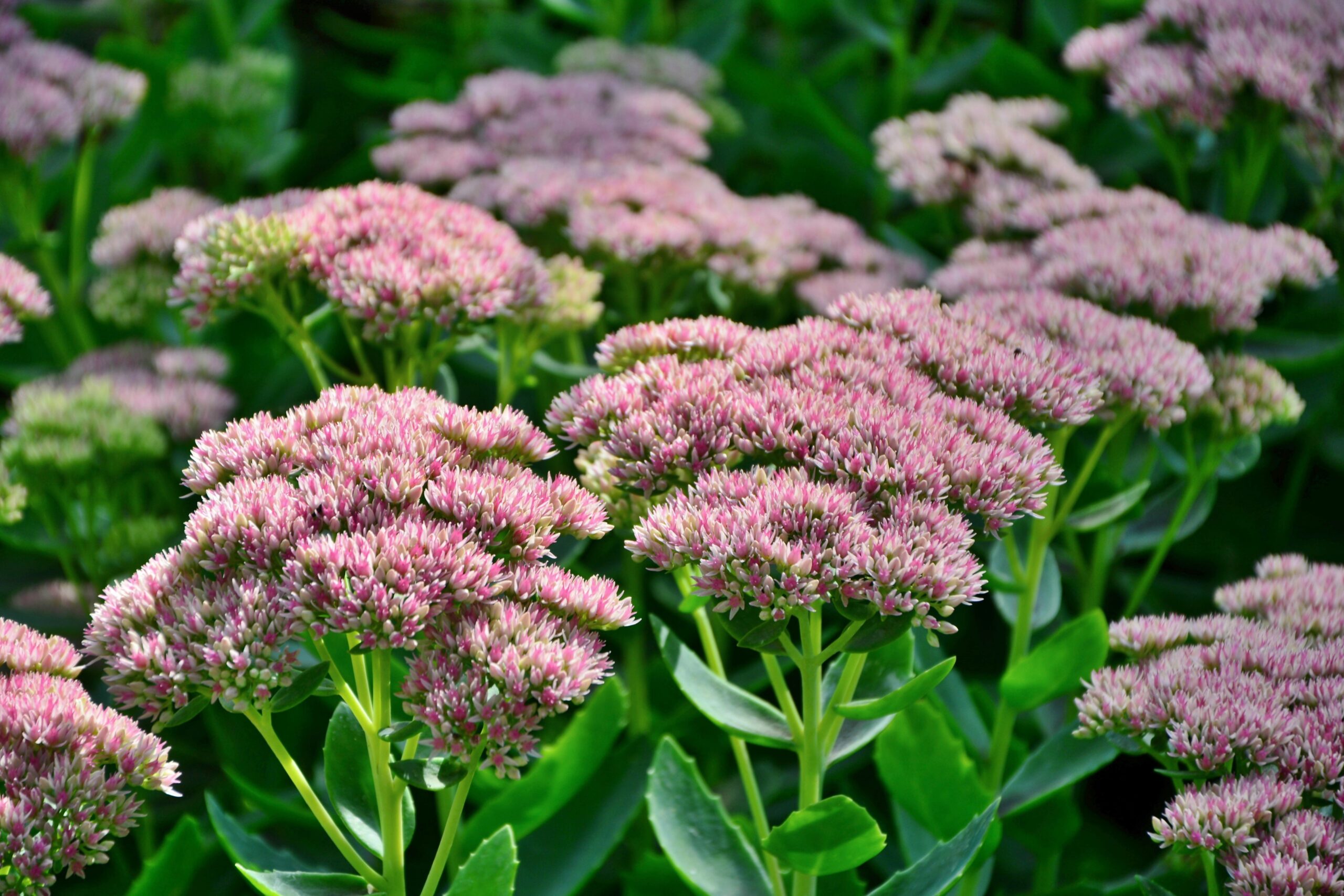
Sedum is one of the most reliable perennial choices for late-season color. Varieties such as ‘Autumn Joy’ produce broad clusters of flowers that begin pink and deepen in color as autumn progresses.
Sedum is drought-tolerant, easy to grow and attractive to pollinators. Because it returns year after year, it can serve as a dependable part of a garden designed for fall flowers and other late-season interest.
Frequently Asked Questions About Fall Flowers
What flowers bloom in the fall?
Many flowers bloom in fall, including sedum, black-eyed Susan, zinnias, calendula, sunflowers, asters, chrysanthemums and goldenrod. Bloom time varies by plant, variety and growing conditions.
Should you keep watering fall flowers?
Yes. Continue watering when needed while plants are actively growing and flowering, particularly during dry periods. As temperatures fall and plants enter dormancy, their water needs generally decrease.
Should you keep deadheading fall flowers?
It depends on the plant. Deadheading can encourage some annuals and perennials to produce more flowers, but you don’t necessarily need to remove every spent bloom. Leaving some seedheads can provide food for birds and add winter interest to the garden.
With a mixture of annuals and perennials, you can keep flowers coming well after the traditional summer garden begins to fade. Planting for overlapping bloom times is an easy way to extend color and give pollinators more resources late in the growing season.
This article about fall flowers was written for Hobby Farms magazine. Click here to subscribe.