The Silkie chicken is one of the most distinctive poultry breeds in the world, admired for its soft, fur-like feathers and gentle disposition. Venetian explorer Marco Polo (circa 1254–1324) returned from Asia with tales of a “furry” chicken, and while the exact origin remains uncertain, both China and Japan claim this extraordinary fowl as their own.
Fun Facts About the Silkie Chicken
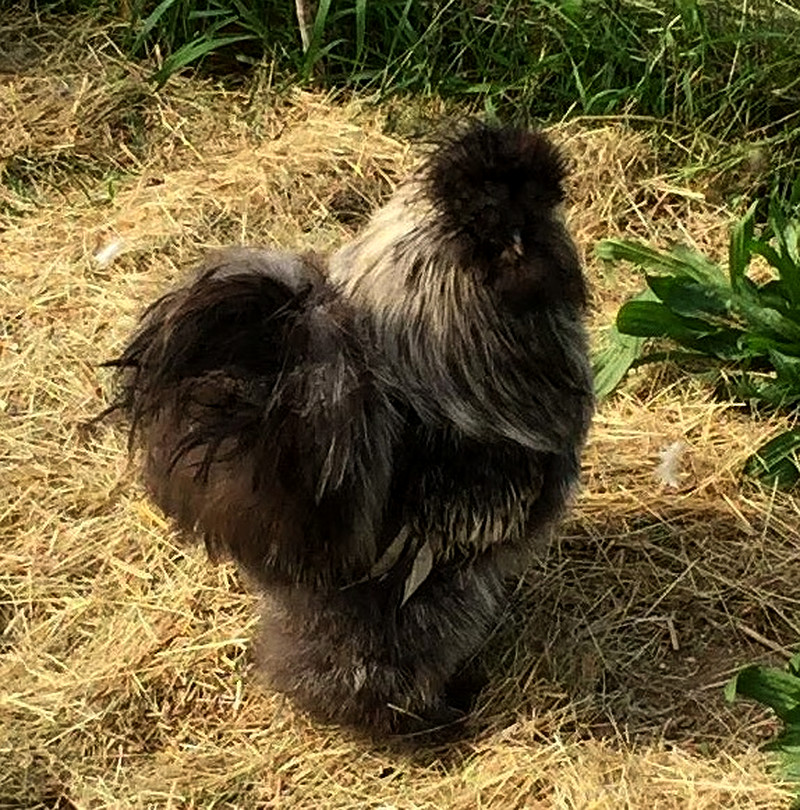
Silkies are named for the long, silk-like feathers that cover their bodies. Their small walnut combs and small to medium-sized wattles appear deep mulberry to black.
Silkie plumage looks like fur or down instead of feathers. This is because Silkie plumage lacks barbicels, the hooked projections normally extending from and interlocking the secondary branches of chickens’ feathers. In addition to luxurious, fluffy plumage, the breed has dark-blue legs with abundant feathering, turquoise-blue earlobes, black skin and bones, and grayish-black flesh.
The Silkie has five toes; most chickens have only four.

Anna Hotaling
This breed comes in an assortment of colors, and some varieties are bearded with an extra muff of feathers covering their earlobes. The American Poultry Association recognizes Black, Buff, Gray, Partridge and White, and (bearded only) Splash, Blue and Self Blue varieties.
Mature males weigh only 36 ounces. Hens weigh 32 ounces.
Ana Hotaling
Silkie Chicken Characteristics and Facts
Silkie chickens are known for their calm and friendly temperament, making them ideal pets and exhibition birds. Their unique feather structure means they require a bit more protection from wet or cold weather compared to other breeds.
Broodiness and Maternal Instincts
One of the most remarkable traits of the Silkie chicken is its extreme broodiness. Silkie hens readily sit on eggs for extended periods and make excellent surrogate mothers, even hatching and raising eggs from other birds such as quail and ducks. This natural instinct makes them invaluable for breeders and backyard poultry enthusiasts who want to hatch a variety of poultry species.
Silkie Chicken History
In 1599, Italian naturalist and author Ulisse Aldrovandi wrote about “wool-bearing chickens;” however, today’s Silkie chicken breed is considerably different than those of the past. It was recognized in the American Poultry Association’s first Standard of Perfection, published in 1874.

Ana Hotaling
Silkie Chickens in Cuisine and Culture
The Silkie chicken is more than just a unique pet or show bird—it holds a special place in Asian haute cuisine. Known as wu gu jis or “dark-boned chicken” in Chinese, Silkie meat is prized for its distinctive gray-black color and rich flavor. This culinary tradition has even found its way into French cuisine, where the Silkie occasionally appears in gourmet dishes.
Silkie Chickens Make Great Pets
Silkies are sweet, ultra-docile chickens. They are friendly and make good pets.
Silkie Chicken Egg Size
Silkie chickens lay about one small tinted egg per week.
Silkie Chicken: Final Thoughts
The Silkie chicken may be small in size, but it holds an outsized place in the hearts of poultry keepers. With their distinctive plumage, unusual black skin and bones, and sweet, docile nature, Silkies are as charming as they are useful. Whether you raise them for exhibition, as devoted broody hens, or simply as friendly backyard companions, these unique birds are sure to bring beauty, personality, and plenty of conversation to your flock.
This article about the silkie chicken was written for Hobby Farms and Chickens magazines. Click here to subscribe.