The Wyandotte chicken is a beautiful breed for both exhibition and backyard flocks; it is a good choice for those looking for a friendly, reliable, dual-purpose breed.
Key Takeaways
- The Wyandotte chicken is a dual-purpose breed raised for both eggs and meat.
- Wyandotte hens lay approximately 150–200 large brown eggs annually and are known for reliable winter production.
- The breed comes in several recognized color varieties, including silver laced, golden laced, Columbian, black, blue, buff, partridge, silver penciled and white.
- Wyandottes are generally calm, friendly and confident, making them popular with backyard flock owners.
- Their small rose combs and heavy feathering help make Wyandottes well suited to cold weather.
- Wyandottes are also popular exhibition birds, although breeding chickens that meet the APA standard can be challenging.
History of the Wyandotte Chicken
The Wyandotte chicken originated between Ontario and New York in the 1870s. But unlike many other chickens, they were created by several breeders, instead of just one. Mr H.M. Doubleday, Mr. John Ray L. Whittaker, and Mr. Fred Houtlette are all credited with helping develop this popular breed.
Working together, the three men created the Wyandotte by crossing a Silver Sebright to a Cochin or Brahma. The offspring were later bred to a Silver Hamburg to create what they hoped would be a more practical version of the Sebright.
The breeding program was successful. While the Wyandotte chicken sports the fancy looks of the Sebright, it is also a good producer of both eggs and meat.
Wyandottes were accepted into the American Poultry Association (APA) Standard of Perfection in 1883. Although the breed fell out of favor for several decades, it has since rebounded and graduated from the Livestock Conservancy in 2016. Today, it is widely kept in backyard flocks.
Physical Appearance
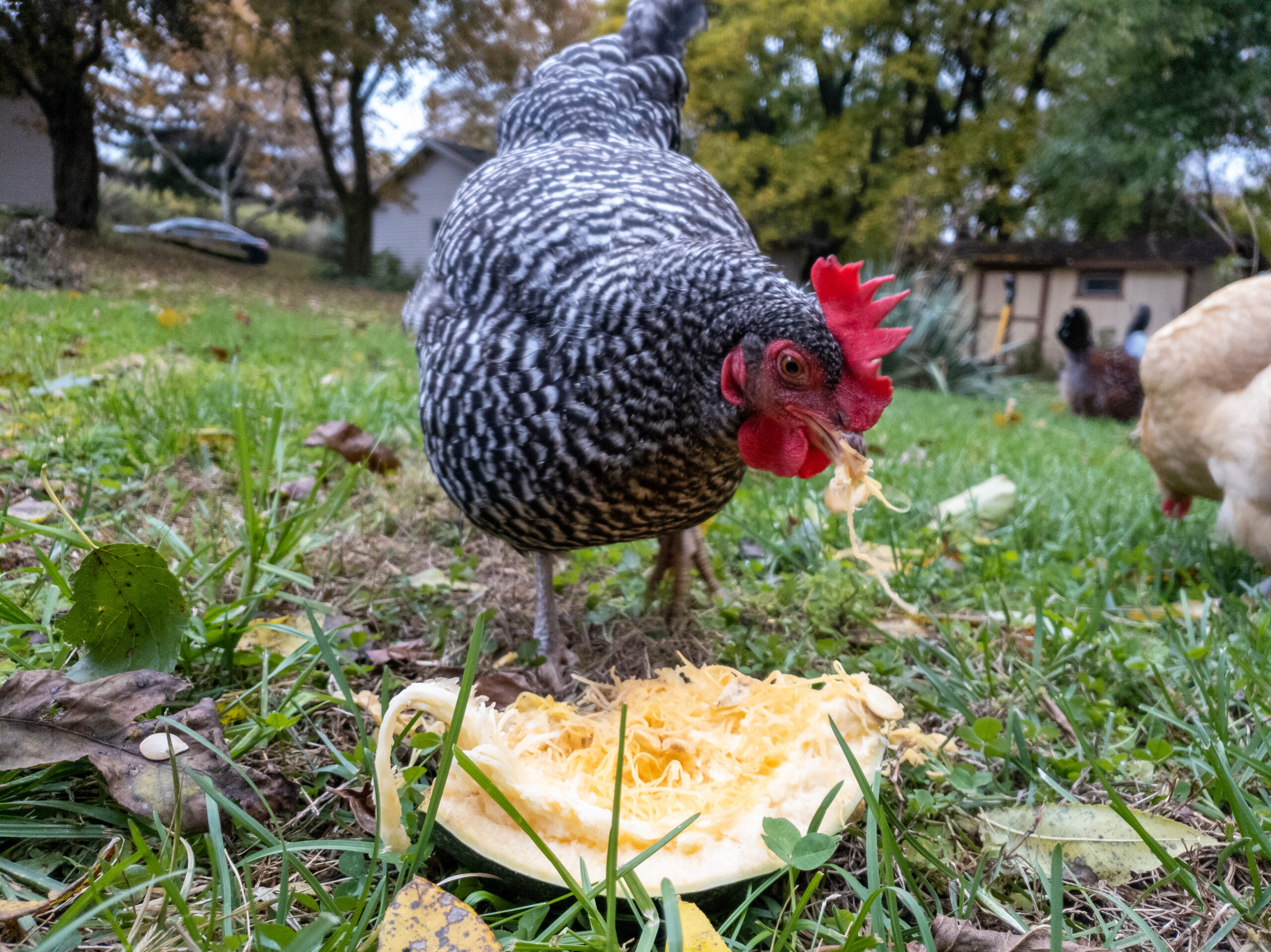
The Wyandotte chicken is a large, fluffy bird. Their rounded appearance gives them their signature description of a “body of curves.” Meaning the head, body, and tail should all be rounded enough that it looks like it is curving into a full circle.
Both hens and roosters have bright red earlobes, wattles, and rose combs. The legs, feet, and skin are bright yellow, but leg color can fade a little on mature laying hens. The breed is also heavily feathered, giving them the appearance of being larger than they actually are.
Average Mature Weight:
Roosters: 8–9 lbs.
Hens: 6–7 lbs.
Note: While Wyandottes are ideal for showing and backyard flocks, potential breeders should be aware that it can be challenging to breed birds that match the APA standard.
Wyandotte Chicken Colors & Varieties
One of the things that sets the Wyandotte chicken apart from other breeds is their assortment of eye-catching colors. The APA recognizes them in nine colors: black, blue, buff, Columbian, golden laced, partridge, silver laced, silver penciled, and white. Other colors also exist, including the blue-laced red and black-laced red.
The silver-laced and golden-laced varieties are the two most popular colors, with silver-white or reddish-gold feathers laced in black. The Columbian Wyandotte is also popular, with chickens of this variety featuring a white head and body, with black neck, wing, and tail feathers.
Wyandotte Chicken Health and Care
The Wyandotte chicken is hardy and healthy and has no known breed-specific concerns. It has an average lifespan of six to eight years. Their overall hardiness makes them a good choice for novice chicken keepers. Like all chickens, however, they can be prone to internal and external parasites.
Due to their heavy feathering, Wyandottes should have their vent areas checked regularly to ensure they are staying neat and clean. If messy, gently clean them with mild, unscented, pet-safe soap and warm (not hot) water. During colder weather, use a hair dryer to dry birds after a bath.
Wyandottes are hardy in both cold and hot weather, but due to their small combs, they may not be the best choice for areas with intense heat.
Like many heavyweight breeds, Wyandottes can’t move as quickly as smaller, more agile breeds, and require a predator-proofed coop and run to keep them safe.
Wyandotte Chicken Egg and Meat Production
The Wyandotte chicken is a good dual-purpose breed. Hens are reliable winter egg layers, averaging one hundred and fifty to two hundred large brown eggs annually (about three to four eggs per week). Hens are fast to mature, often producing their first egg around the age of five months.
While they don’t have the high output as some other breeds, Wyandotte hens consistently produce eggs for the first three years of life. After that, production rapidly declines, though some hens are reported to lay at least several eggs until the age of six. Hens also go broody and make wonderful mothers.
Cockerels are also fast to mature and make good table birds, reaching table weight between sixteen and twenty weeks.
Wyandotte Chicken Temperament
The Wyandotte chicken is a good choice for backyard flock owners and exhibition enthusiasts. The breed’s docile, calm personality makes them a good choice for those looking for friendly hens who enjoy coming to see you, but aren’t likely to sit on your lap. However, some strains do learn to enjoy being cuddled if they have been exposed to frequent gentle handling from an early age.
Despite their outgoing disposition, Wyandotte chickens may not be the best choice for families with small children. In a mixed flock, they are naturally confident and assertive and are often the top hens in the pecking order.
Wyandotte roosters are not the best choice for backyard flocks, as they are prone to becoming aggressive towards humans.
Wyandotte Chicken Fun Facts
- The Wyandotte was first named the American Sebright, but the name was later changed to “Wyandotte” after the local Native American Tribe.
- Did you know? Wyandotte chickens also come in a bantam variety.
- Golden Laced Wyandottes are the friendliest variety.
- Although Wyandottes are bred to have a rose comb, not all roosters carry the gene. When the gene is missing, offspring will have a single comb.
FAQs
How many eggs do Wyandotte hens lay?
Wyandotte hens lay an average of three to four large brown eggs a week, or approximately 150–200 eggs annually.
Do Wyandotte hens lay in winter?
Yes. Wyandotte hens are considered reliable winter layers and may continue producing eggs when other hens reduce or stop production during colder months.
Are Wyandotte chickens friendly?
Yes, Wyandotte chickens are friendly. They enjoy interacting with people, but they don’t always enjoy being picked up for a snuggle. The breed is ideal for individuals looking for a friendly laying flock rather than a pet.
Do Wyandotte chickens get bullied?
Wyandotte chickens are not usually prone to being bullied. Their confident, assertive nature often puts them near the top of the flock’s pecking order. However, this also means they may bully more submissive breeds.
How does the Wyandotte chicken handle cold weather?
Wyandotte chickens handle cold weather well. Their small rose combs help the breed stay warm by not allowing too much body heat to escape through the comb. The small comb is also not as prone to frostbite as breeds with large single combs.
Final Thoughts
The Wyandotte chicken combines attractive exhibition qualities with the practical traits backyard flock owners want. Its reliable egg production, dual-purpose qualities, calm temperament and cold-weather hardiness make it a versatile choice for a small flock. While the breed’s assertive personality may not suit every mixed flock, Wyandottes can be excellent chickens for keepers looking for a hardy, productive and distinctive breed.
Want more backyard chicken tips? Subscribe to Chickens for breed profiles, flock-care advice, recipes and more.