Angora goats look more like sheep than goats, thanks to their thick wool coats. One of only two purebred goat breeds to produce fiber, this breed offers fiber producers a fun alternative to sheep.
Angora Goat History
Angora goats have an unknown breed history, with many people believing the breed dates back to early biblical times. While the breed’s origin remains a mystery, it is believed to have been developed in the district of Angora in Asia Minor.
This goat was later imported to Europe during the sixteenth century and made its way to America in 1849, when Dr. James B. Davis brought nine goats from Turkey to South Carolina.
Today, the Angora goat is widely known and is especially popular in Texas, Turkey, and South Africa, where they are favored for their mohair production.
What Do Angora Goats Look Like?
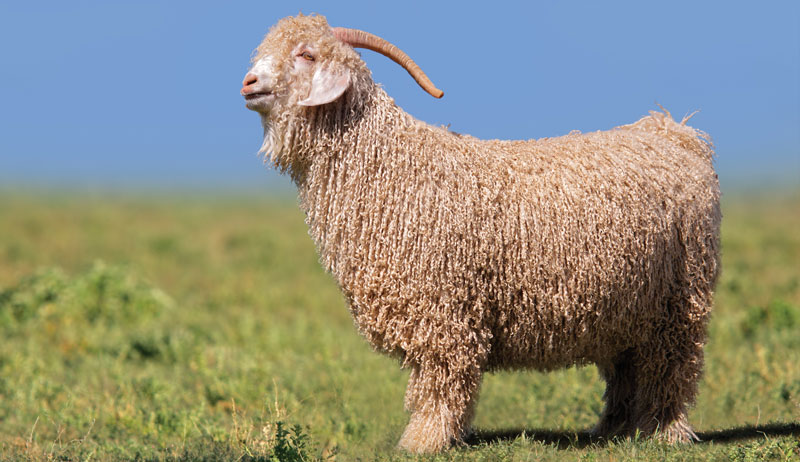
This looks more like a sheep with horns than a goat. They are a small breed, with males weighing about one hundred pounds and females weighing almost eighty pounds.
An Angora goat’s body is covered in long, white, curly ringlets of mohair. Faces are also covered in mohair and feature large drooping ears. Males’ horns are more pronounced, but both males and females sport horns that curve backwards away from the head and neck.
Angora Goat Meat Production
Did you know? Angora goats can also be raised for meat. While they are generally overlooked as a meat breed, it is a fair producer of lean meat.
When raised as meat goats, Angoras produce a thinner carcass than Boer goats. However, their meat is reported to be a delicacy, especially when harvested from young, well-cared-for Angoras
Fiber Goats: Mohair Production
The Angora goat is an excellent fiber (mohair) producer. The breed is considered valuable, as their soft, luscious, and silky mohair can be harvested twice yearly, unlike the annual wool harvest sheep produce.
Each adult Angora goat produces an average of five to ten pounds of mohair per fleece. The mohair is easy to dye and is also durable. The finest fiber comes from yearling kids.
Did you know? An Angora goat’s mohair is considered one of the warmest fibers in the world.
What is Mohair Used For?
Mohair is used for many different crafts and products, including clothing, upholstery, knitting, crocheting, and felt.
Are Angora Goats Friendly?
The Angora goat has a quiet and laid-back personality that makes them easy to work with and also makes them a good choice for individuals looking for a pet with benefits.
When compared to other breeds, Angoras have a more docile and gentle nature, making them ideal for families with small children or for kids looking to raise their own goats. They enjoy interacting with humans and “helping” their owners with chores and other farm tasks.
Sweet, friendly, calm, and quiet, the Angora goat can be more susceptible to bullying when raised with other goat breeds. Like all goats, however, they are sociable and must have the company of other Angoras.
Another plus to the breed is that these goats are reported to be less destructive to pasture fences.
Males (also called bucks) are generally calm and gentle, but during the goat rut (breeding season), they can behave aggressively.
How Long Do Angora Goats Live?
Angora goats live an average lifespan of ten years (about the average lifespan of most domestic goat breeds), but with good genetics and proper care, some may live even longer.
Angora Goat Health Concerns
Due to their thick fleece, Angora goats are more prone to lice than other breeds. Checking the horns of your goats for waxy horn tips and mohair stuck to the tips of horns is a good way to determine if lice are a problem in your herd. Lice can ruin fiber quickly, so be extra vigilant in preventing these pesky bugs.
These goats are also susceptible to internal parasites, hoof rot, fleece rot (a condition when the fleece becomes damp and doesn’t dry), and malnutrition.
For best results, feed your goat a high-protein, nutritious diet to prevent health problems from occurring.
Damp Conditions to Beware Of
Angora goats are very susceptible to damp living conditions and can easily fall sick if they become chilled. This is especially prevalent after they have been sheared, before the wool starts to grow in again.
Their inability to handle damp or wet conditions is why the breed requires adequate shelter from the elements. Angora goats should not be allowed access to the outdoors (pasture or an uncovered barnyard) whenever precipitation is falling or when the ground is wet, muddy, damp, or snow-covered.
Final Thoughts on Raising Angora Goats
The Angora goat may require more additional work than other breeds, but their sweet and gentle nature and high fiber yields make the endeavor worthwhile.
This article was written for Hobby Farms magazine. Click here to subscribe.