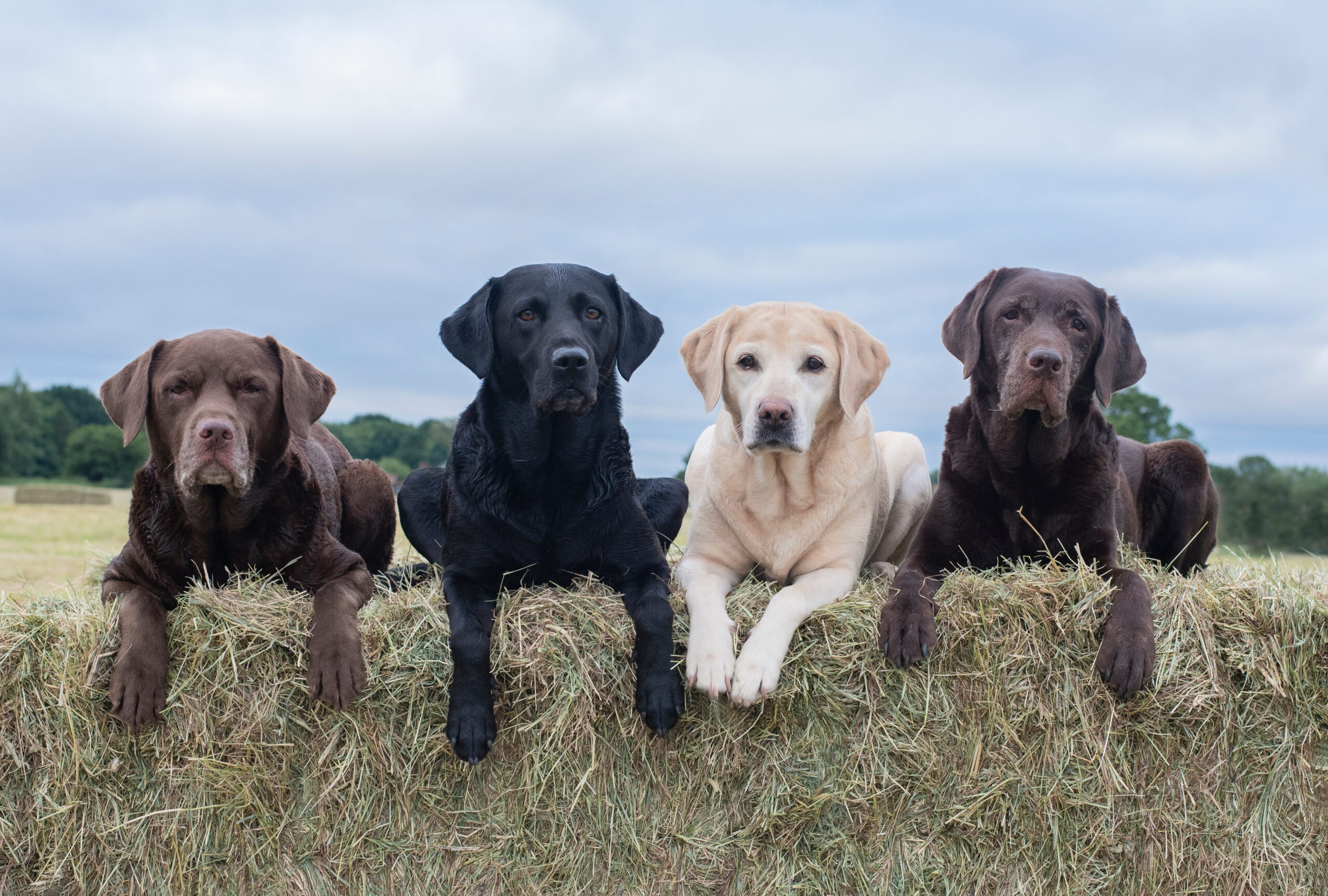
Farm dogs come in many shapes and sizes, from Border Collies to Australian Cattle Dogs. But some lesser-known breeds are just as capable and versatile. In this article, we’ll highlight six uncommon farm dogs that excel at herding, guarding livestock, and helping farmers with daily chores.
#1 Labrador Retriever – A Versatile Farm Dog
The Labrador Retriever was first bred in the United Kingdom in the 1800s when European Settlers bred St. John’s water dogs to British hunting dogs to create today’s Labrador. These highly popular dogs were first bred to be waterfowl retrievers, but these days they are trained to perform a variety of jobs, including farm dogs.
Temperament and Personality
Labradors are sweet, even-tempered, and make ideal family pets and farm dogs. Their endless energy makes them the perfect choice for busy farmers on the move. Highly intelligent and trainable, Labradors are an ideal choice as an all-purpose farm dog for both farm life and companionship.
Even though they are easily trained, Labs are prone to putting everything in their mouths and need to be trained out of this bad habit.
Labrador Retrievers can get along well with most livestock, including sheep and cows. They can also get along well with chickens when properly trained, but due to their original purpos,e they should not be paired with waterfowl.
When selecting a Lab for farming, stay clear of dogs with hunting bloodlines to avoid high prey drives.
Health Considerations
Labrador Retrievers can suffer from several potentially serious health conditions, especially if not kept at a proper weight or if encouraged to over-exercise as a puppy.
Hip and elbow dysplasia, heart disease, obesity, ear infections, arthritis, allergies, Progressive Retinal Atrophy, and Exercise-Induced Collapsed.
Average Lifespan
10 – 12 years
Roles on the Farm
Farm dogs have many jobs to perform, including herding and guarding livestock. While the Labrador doesn’t excel at herding, they do make good guard dogs and can help guard livestock. (Labs should never be left alone in the pastures for long extended periods of time, like other livestock guard dogs, due to their people-loving personalities.)
But the most important job farm Labrador Retrievers excel at is assisting disabled farmers with their daily chores.
#2 Standard Poodle – Smart and Energetic Farm Dogs
Standard Poodles may not look much like farm dogs with their fancy fur-dos, but don’t let these dogs fool you.
The Standard Poodle originated in Germany and were known as the German water dog, originally bred to retrieve ducks and other waterfowl for hunters.
While some Standard Poodles are still used for retrieving today, the breed is now used for other purposes too, including all-purpose farm dogs.
Temperament and Personality
The Standard Poodle has an ideal personality for all-purpose farm dogs. Highly energetic and trainable, Standard Poodles enjoy being part of the family. These dogs are sweet and affectionate, and can be trained to live in harmony with other pets and livestock.
Standard Poodles can become easily bored if not given a job to do, and are happiest when working alongside their handler.
Health Considerations
Potential health concerns of the Standard Poodle include Addison’s Disease, bloat, epilepsy, eye problems, heart disease, thyroid problems, skin issues, and von Willebrand’s disease.
Average Lifespan
12 – 15 years.
Roles on the Farm
Standard Poodles can be trained to do any job performed by a farm dog. From herding to livestock guarding, retrieving tools, and companionship, the Standard Poodle is an exceptional farm dog.
These farm dogs can also be trained to assist farmers with hearing and vision impairments, diabetes, mental problems, and can also be used as seizure alert dogs.
#3 German Shepherd – Loyal and Protective Farm Dogs
German Shepherds have been trained to do almost any job, but their original purpose was a farm dog.
Bred in the late nineteenth century by Max von Stephanitz, who bred traditional German herding dogs to create a breed of dog he could admire that was loyal and intelligent enough to work sheep.
Temperament and Personality
German Shepherds have high energy levels, making them an ideal choice as farm dogs for active farmers. With their familie,s they are loyal and affectionate and make excellent guard dogs for their human families, livestock, and farm.
While these dogs do make excellent farm dogs and pets, care should be taken to ensure proper training and plenty of mental and physical stimulations to ensure that they don’t become bored or aggressive.
Health Concerns
German Shepherds make wonderful farm dogs, but they do have some potential health concerns that owners should be aware of.
Common health concerns include allergies, bloat, cancer, degenerative myelopathy, elbow and hip dysplasia, epilepsy, eye diseases, and pancreatic insufficiency.
Average Lifespan
9 – 13 years.
Roles on the Farm
German Shepherds are a versatile breed of dog, making them an exceptional breed for any farm. When properly socialized from an early age, these powerful dogs can be trained to herd and guard livestock. However, this breed thrives on human interactions, so never leave a German Shepherd unattended in the fields and pastures all day with no human interactions.
Their loyalty and love of family is another plus for farm families, as German Shepherds enjoy being with the entire family and don’t just bond to one person.
Like Labradors and Poodles, German shepherds can also be trained to work as service dogs for disabled farmers.
#4 Jack Russell Terrier – Small but Mighty Farm Dogs
Jack Russell Terriers make a unique choice as farm dogs because they aren’t usually thought of as good livestock dogs.
The Jack Russell was originally bred in the eighteenth century by John “Jack” Russell. Mr. Russell, an avid hunter, wanted a terrier to flush out foxes with a tempered aggression to pursue the hunt.
The breed has changed slightly over the years, but they are still often used for hunting purposes and farm dogs.
Temperament and Personality
Bouncy and lively, the Jack Russell Terrier makes a wonderful addition to the family and farm. They require a strong handler who has experience working with dogs. They possess a stubborn nature and can be difficult to train,
These fearless dogs are highly intelligent, playful, and energetic, and are prone to finding mischief if not provided with adequate mental and physical stimulation.
Health Considerations
Jack Russell Terriers are known for being hardy, healthy dogs, but they can have some potential health problems owners should be aware of, including allergies, Cushing’s disease, deafness, epilepsy, eye problems, joint issues, and von Willebrand’s disease.
Average Lifespan
13 – 16 years.
Roles on the Farm
Jack Russell Terriers are excellent farm dogs who work well with larger livestock, if properly socialized at a young age to prevent these playful pups from pestering the farm animals. Their fearless and protective nature makes them good candidates for protecting livestock such as sheep from predators.
Bear in mind that while Jack Russells work well with larger livestock, they should never be allowed to interact with poultry or rabbits as their prey drive can quickly take over and cause the dog to attack smaller livestock.
Another plus for using Jack Russell Terriers as farm dogs is their hunting skills. Small and determined, these feisty little terriers enjoy nothing more than hunting vermin around the farm.
#5 English Shepherd – Gentle and Skilled Farm Dogs
English Shepherds are perfect farm dogs for poultry farmers looking for a breed gentle enough to work with poultry, but can also protect the farm.
The English Shepherd was brought to the U.S. by British and Irish settlers in the eighteenth century. These beautiful dogs share common ancestors as the Border Collie, Australian Shepherd, and Rough Collie, but no one is sure of the breed’s true origin.
English Shepherds quickly gained popularity in the eastern states, working to herd livestock, guard the farm, and provide companionship.
Temperament and Personality
Described as busybodies, the English Shepherd is happiest when they have a job to do. They possess a strong herding instinct and will gladly herd anything that moves, including family members.
English Shepherds are active, alert, gentle, loyal, and loving with their family. They are highly intelligent and must have daily physical and mental stimulation to keep these hardworking dogs out of mischief.
Health Considerations
English Shepherds are fairly healthy dogs, but like all breeds, they are prone to some health problems, including: allergies, bloat, degenerative myelopathy, eye problems, hip and elbow dysplasia, hypothyroidism, and other joint problems.
Average Lifespan
12 – 15 years.
Roles on the Farm
The English Shepherd is a versatile breed and can do almost any job on the farm. From herding livestock, guarding the family farm, and hunting vermin, this breed assists the farmer in many ways.
Due to their gentle nature, English Shepherds are one of the few breeds known for their ability to herd chickens and other poultry without injuring the birds.
In general, the breed is a valuable asset to any working farm.
#6 Rottweiler – Strong and Fearless Farm Dogs
Rottweilers have been used as farm dogs since the breed was created. The breed’s origin dates back to Roman times, where they were kept as herders and driving dogs.
Nicknamed the “butcher’s dogs”, a Rottweiler’s job was to protect the farmer and his cows. These responsible farm dogs were expected to drive the cattle to the butcher alone and receive payment, which the butcher would tie onto the dogs, before the dogs returned home with the farmer’s money.
Temperament and Personality
The Rottweiler is an independent, fearless, and courageous worker who is not afraid to put themselves in danger to protect those they love and guard. (think livestock) Because of these characteristics, the breed is often thought of as a law enforcement dog, rather than a working farm dog.
With their human families, Rottweilers are affectionate, loyal, sweet, and playful. With proper training, Rottweilers make wonderful dogs for families with children.
Health Considerations
Rottweilers may live shorter lifespans than the other breeds mentioned here, but outside of their increased risk of cancer, they shouldn’t pose more health concerns than the other breeds. Health concerns include: cancer, digestive disorders, eye problems, heart problems, hip and elbow dysplasia, joint problems, orthopedic problems, and skin conditions.
Average Lifespan
8 – 10 years.
Roles on the Farm
True to their breed’s original purpose, Rottweilers make excellent farm dogs, excelling at herding and guarding the livestock and farm.
Rottweilers are natural herders, using their bodies to move the livestock. The breed works particularly well when working stubborn cows.
If properly trained and socialized, Rottweilers also excel at working with sheep, chickens, and pigs.
FAQ: Farm Dogs
Q: What breeds make the best farm dogs?
A: Traditional farm dogs like Border Collies, Australian Cattle Dogs, and the six uncommon breeds in this article—Labradors, Standard Poodles, German Shepherds, Jack Russell Terriers, English Shepherds, and Rottweilers—excel at herding, guarding, and assisting farmers.
Q: Can farm dogs work with poultry and other small animals?
A: Some breeds, like English Shepherds, can safely herd chickens and other poultry. Breeds with high prey drives, such as Jack Russell Terriers, should be supervised around smaller animals.
Q: Do farm dogs need special training?
A: Yes. All farm dogs benefit from early socialization and training. Herding and guarding breeds especially need consistent guidance to ensure they work safely and effectively with livestock.
Q: How long do farm dogs usually live?
A: Lifespan varies by breed. For the breeds in this article, it ranges from about 8 years for Rottweilers to 16 years for Jack Russell Terriers, with most averaging 10–15 years.
Q: Can farm dogs also be family pets?
A: Absolutely. Many farm dog breeds are loyal and affectionate, making them great companions while also performing farm tasks. Labradors, Poodles, and German Shepherds, in particular, are known for balancing work and family life.
Many dog breeds can thrive as farm dogs with proper training and socialization. Whether you choose a traditional breed, one of the uncommon breeds highlighted here, or a mixed breed, a well-trained farm dog can be an invaluable companion and helper on both working and hobby farms.
This article about farm dogs was written for Hobby Farms and Chickens magazines. Click here to subscribe.