I’m lucky enough to be headed east to the Philadelphia Flower Show later today. I’ll be spending the entire day tomorrow walking around checking out acres of beautiful flowers and gardens with two of my very best friends. I can’t wait!
We saw the first robins of the season today, hopping around on the front lawn. There were two plump ones with beautiful orange bellies pulling worms out of the soil. I couldn’t help but wonder if they were a mating pair looking to build a home somewhere at our place.
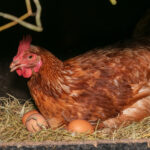
I know that spring is just around the corner because the chickens have started to lay again. That’s always a good sign. There are, of course, other indications that spring is nearly here.
It has been a cold, snow-covered winter—certainly not as much snow as last year, but the cover has been consistent for more than two months. It’s good for the plants, I suppose—a bit of extra insulation and some protection from the deer is never a bad thing.
Dear Zodie, you were the best dog this Earth has ever seen. I am going to miss you so very much.
Wild Pollinators Share PathogensDiseases that affect your Honey bees could also affect 11 other species of wild pollinators, a study finds.Diseases that affect your Honey bees could also affect 11 other species of wild pollinators, a study finds.By Amy GrisakFebruary 8, 2011In a December 2010 Penn State University study involving apiaries in Illinois, New York […]
Diseases that affect your Honey bees could also affect 11 other species of wild pollinators, a study finds.
Photo Credit: Size: 1 to 2 pounds Sunlight requirements: Full (A minimum of six to eight hours per day is ideal.) Water requirements: A minimum of 1 inch per week — water the root zone as needed and keep foliage dry to deter foliar diseases. Proper mulching aids in prevention of blossom end rot, drought stress and […]

Witch hazel will thrive almost anywhere. Considered a shrub or small tree, witch hazel’s crooked branches are covered in smooth, gray bark and witch hazel’s arresting, yellow flowers appear in the fall or winter – the bloom time depends on the species you choose. The distilled extract from witch hazel’s leaves and bark has long been used as a general tonic and swelling reducer, and witch hazel is still used to treat minor skin irritations, burns, acne and more. .

With smooth, needle-like leaves ranging from gray-green to silvery-gray, there are many different lavender varieties featuring a characteristically sweet, clean scent. Lavender’s volatile oils are thought to have antiseptic properties and were often used to clean wounds and freshen the air in hospitals and sick rooms. Now lavender oils are commonly found in herbal soaps, shampoos and perfumes. A fantastic border plant, lavender naturally repels insect pests and it dries well for use in wreaths, flower arrangements, potpourris and sachets.

The people of ancient Greece originally used feverfew, a southeastern European native, to dispel fevers – hence its name. With white petals and yellow button centers, feverfew’s flowers look a bit like chamomile, but its bitter odor and yellow-green leaves confirm feverfew as another herb entirely. Feverfew (Chrysanthemum parthenium) is a member of the daisy family. Known for its anti-inflammatory properties, feverfew has had countless medical uses, including the treatment of migraine headaches, arthritis, digestive problems, menstrual and labor irregularities, and asthma. In the garden feverfew serves as a natural insect repellent (including bees). It is also used to make dried wreaths and flower arrangements, as well as a from-scratch, greenish-yellow dye.

What we know as chamomile is technically two different plants — German chamomile (Matricara recutita) and Roman (or English) chamomile (Chamaemelum nobile) — with many similarities including gray-green, feathery leaves; tiny, daisy-like flowers; and a pleasing, apple scent. Both types of chamomile are relatives of the daisy family and have been used to aid in digestion, calm frazzled nerves, alleviate menstrual cramps and soothe some skin conditions. It’s thought that the Roman chamomile is also able to reduce some kinds of inflammation. Whether you grow German or Roman chamomile, either will make a soothing cup of tea, herbal bath or steam facial.