I’ll admit that I feel lousy at the moment. It’s been years since I was ill, and now I remember how much I dislike it.
Dear Zodie, you were the best dog this Earth has ever seen. I am going to miss you so very much.
Photo by Judith Hausman For Valentine’s Day, I like to incorporate local ingredients, such as local butter and berries, into my sweets. I also try to use ethically produced chocolate. Keeping Valentine’s Day sweets local is a fun challenge to meet around here. We face blustery cold, sad imported fruit in the supermarket and, of […]
We are in the midst of winter farm show season, nationally as well as here in the Midwest. A week and a half ago, I was in Sioux Falls, S.D., for their show. Last week, there was a big show in Des Moines, Iowa.
Wild Pollinators Share PathogensDiseases that affect your Honey bees could also affect 11 other species of wild pollinators, a study finds.Diseases that affect your Honey bees could also affect 11 other species of wild pollinators, a study finds.By Amy GrisakFebruary 8, 2011In a December 2010 Penn State University study involving apiaries in Illinois, New York […]
Diseases that affect your Honey bees could also affect 11 other species of wild pollinators, a study finds.
Photo by Audrey Pavia The sight of an Anna’s hummingbird feeding at my agave plant is one of the many joys of living on an urban farm. The expression “stop and smell the roses” takes on new meaning when you live on an urban farm. There’s nothing like having a little farm in the backyard […]

Some of the Spanish goat's colorful regional names suggest one of their primary uses: they're called "brush goats" and "briar goats" in the Carolinas, "wood goats" in Florida, "Hill goats" in Virginia, and "scrub goats" throughout their original range.
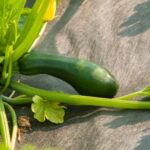
Photo Credit: Size: 1 to 2 pounds Sunlight requirements: Full (A minimum of six to eight hours per day is ideal.) Water requirements: A minimum of 1 inch per week — water the root zone as needed and keep foliage dry to deter foliar diseases. Proper mulching aids in prevention of blossom end rot, drought stress and […]

Witch hazel will thrive almost anywhere. Considered a shrub or small tree, witch hazel’s crooked branches are covered in smooth, gray bark and witch hazel’s arresting, yellow flowers appear in the fall or winter – the bloom time depends on the species you choose. The distilled extract from witch hazel’s leaves and bark has long been used as a general tonic and swelling reducer, and witch hazel is still used to treat minor skin irritations, burns, acne and more. .

With smooth, needle-like leaves ranging from gray-green to silvery-gray, there are many different lavender varieties featuring a characteristically sweet, clean scent. Lavender’s volatile oils are thought to have antiseptic properties and were often used to clean wounds and freshen the air in hospitals and sick rooms. Now lavender oils are commonly found in herbal soaps, shampoos and perfumes. A fantastic border plant, lavender naturally repels insect pests and it dries well for use in wreaths, flower arrangements, potpourris and sachets.

The people of ancient Greece originally used feverfew, a southeastern European native, to dispel fevers – hence its name. With white petals and yellow button centers, feverfew’s flowers look a bit like chamomile, but its bitter odor and yellow-green leaves confirm feverfew as another herb entirely. Feverfew (Chrysanthemum parthenium) is a member of the daisy family. Known for its anti-inflammatory properties, feverfew has had countless medical uses, including the treatment of migraine headaches, arthritis, digestive problems, menstrual and labor irregularities, and asthma. In the garden feverfew serves as a natural insect repellent (including bees). It is also used to make dried wreaths and flower arrangements, as well as a from-scratch, greenish-yellow dye.