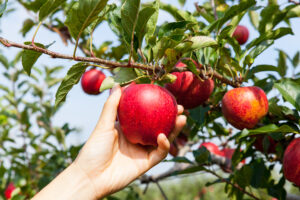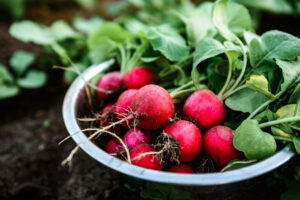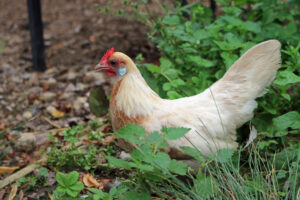
Courtesy Westchester Land Trust/ Eileen Hochberg At Kitchawan Farm, a local native farmer is protecting family land by farming it. To help revive a little of the country-gentleman farming so prevalent in the northern part of my county a scant generation ago, an innovative suburban land-use program, the Westchester Land Trust, last year established a Local […]
Courtesy Dan Lutz Dan Lutz and Marc Anderson of Beloit, Wis., are performing experiments to fuel cars with water broken down into hydrogen and oxygen molecules. If your car didn’t run entirely on fuel, imagine the environmental and personal impact of fewer emissions, lower gas cost and improved gas mileage. Dan Lutz, fleet manager of the […]
Courtesy GardenMaps.org At GardenMaps.org, New Yorkers can search for community gardens based on specific criteria they’re looking for. Searching for a community garden in SoHo with a composting program, fruit trees and a partnership with local schools? There’s a map for that. A brand-new online map, GardenMaps.org, launched in December 2010, to allow users to […]
I’ll admit that I feel lousy at the moment. It’s been years since I was ill, and now I remember how much I dislike it.
Photo by Judith Hausman For Valentine’s Day, I like to incorporate local ingredients, such as local butter and berries, into my sweets. I also try to use ethically produced chocolate. Keeping Valentine’s Day sweets local is a fun challenge to meet around here. We face blustery cold, sad imported fruit in the supermarket and, of […]
Photo by Audrey Pavia The sight of an Anna’s hummingbird feeding at my agave plant is one of the many joys of living on an urban farm. The expression “stop and smell the roses” takes on new meaning when you live on an urban farm. There’s nothing like having a little farm in the backyard […]

Witch hazel will thrive almost anywhere. Considered a shrub or small tree, witch hazel’s crooked branches are covered in smooth, gray bark and witch hazel’s arresting, yellow flowers appear in the fall or winter – the bloom time depends on the species you choose. The distilled extract from witch hazel’s leaves and bark has long been used as a general tonic and swelling reducer, and witch hazel is still used to treat minor skin irritations, burns, acne and more. .

With smooth, needle-like leaves ranging from gray-green to silvery-gray, there are many different lavender varieties featuring a characteristically sweet, clean scent. Lavender’s volatile oils are thought to have antiseptic properties and were often used to clean wounds and freshen the air in hospitals and sick rooms. Now lavender oils are commonly found in herbal soaps, shampoos and perfumes. A fantastic border plant, lavender naturally repels insect pests and it dries well for use in wreaths, flower arrangements, potpourris and sachets.

The people of ancient Greece originally used feverfew, a southeastern European native, to dispel fevers – hence its name. With white petals and yellow button centers, feverfew’s flowers look a bit like chamomile, but its bitter odor and yellow-green leaves confirm feverfew as another herb entirely. Feverfew (Chrysanthemum parthenium) is a member of the daisy family. Known for its anti-inflammatory properties, feverfew has had countless medical uses, including the treatment of migraine headaches, arthritis, digestive problems, menstrual and labor irregularities, and asthma. In the garden feverfew serves as a natural insect repellent (including bees). It is also used to make dried wreaths and flower arrangements, as well as a from-scratch, greenish-yellow dye.

What we know as chamomile is technically two different plants — German chamomile (Matricara recutita) and Roman (or English) chamomile (Chamaemelum nobile) — with many similarities including gray-green, feathery leaves; tiny, daisy-like flowers; and a pleasing, apple scent. Both types of chamomile are relatives of the daisy family and have been used to aid in digestion, calm frazzled nerves, alleviate menstrual cramps and soothe some skin conditions. It’s thought that the Roman chamomile is also able to reduce some kinds of inflammation. Whether you grow German or Roman chamomile, either will make a soothing cup of tea, herbal bath or steam facial.

Offering a near-continuous run of cheerful, golden flowers, calendulas (Calendula officinalis), or pot marigolds, are a very hardy herb. This Mediterranean native is a annual from the Asteraceae family. Once used as an all-purpose tonic, calendula flowers really made the rounds in the kitchens of England and parts of Europe; the Romans even relied on calendula to treat scorpion bites. Less popular now, calendula makes a pretty addition to the herb garden and its petals can be used to create a striking yellow dye. Calendula’s dried flowers are sometimes still used in topical ointments for burns, cuts and minor skin irritations; a few handfuls of calendula petals can make for an energizing, herbal bath.