Salmon Faverolles have worked their way into many backyard chicken lovers’ hearts with their unique feathering and sweet dispositions. Pretty and practical too, the Salmon Faverolles are slowly gaining popularity in backyard flocks.
Nineteenth-Century Origins of Salmon Faverolles
Bred in northern France in 1860 between the villages of Houdan and Faverolles, these birds were originally bred to be a utility breed producing both eggs and meat.
Many breeds played a role in developing this friendly chicken, including the Houdan, Crevecoeur, Dorking, and Brahma.
Due to their need for confinement, legend suggests that the Faverolles became the pioneer of cage layers, until the breed was replaced by higher production hybrid layers. After the introduction of hybrids, the Faverolles nearly went extinct until they were rediscovered by modern chicken keepers.
Today, the breed comes in two distinct breeding lines. Exhibition and utility. The utility Faverolles are from German and French bloodlines, producing both eggs and meat. The exhibition is ornamental and only raised for show and pets.
Show-Stopping Beauty
Salmon Faverolles are gorgeous chickens with their unique salmon color. Roosters have distinctive markings from the hens, sporting straw colored feathers with red and black markings on the back, chest, and tail.
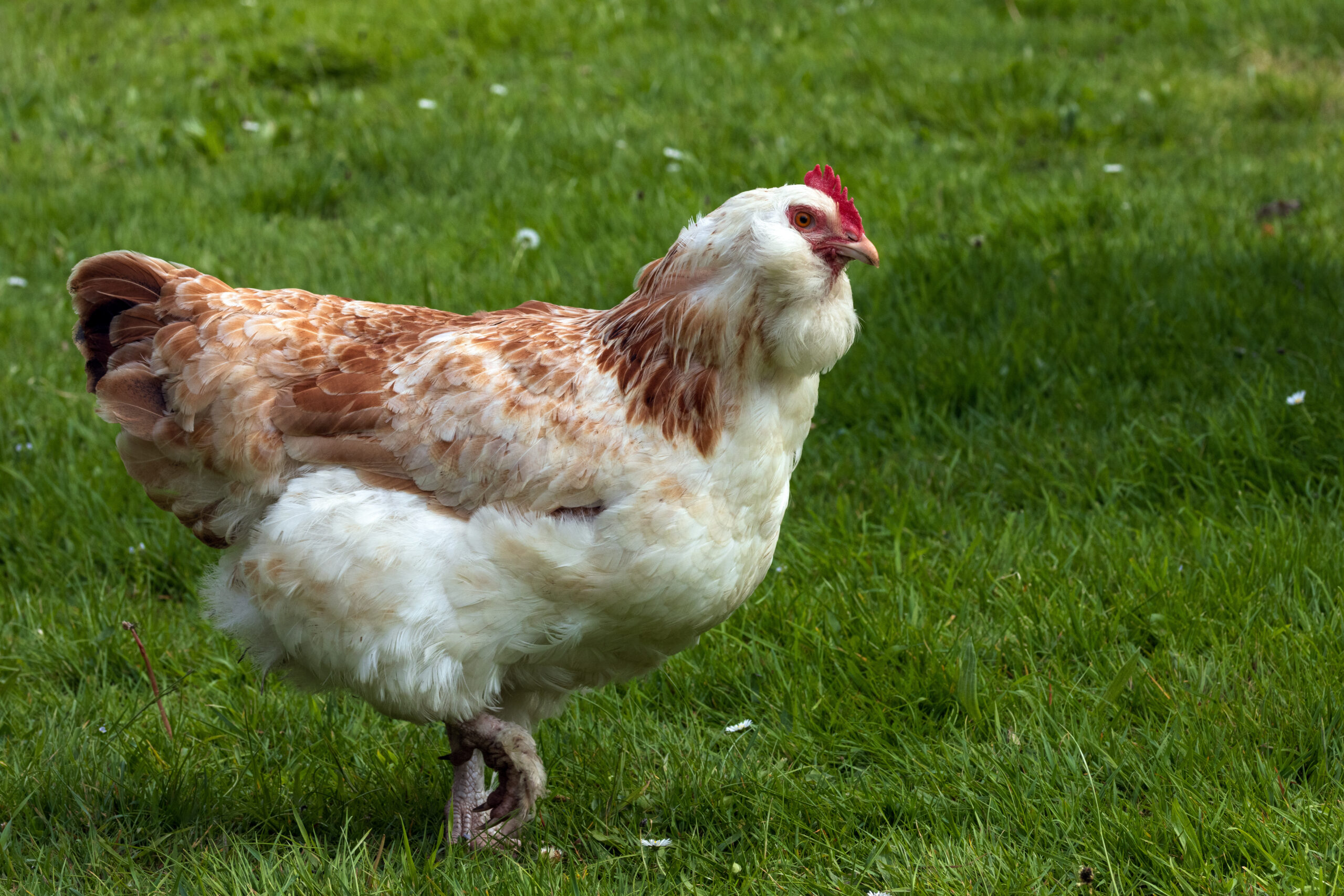
Hens are equally as stunning as the roosters with creamy white feathers marked in the exquisite salmon color (a pale reddish brown) the breed is named after.
Both hens and roosters have feathery legs and feet, five toes, and a beard and muff. The comb is red, small, and single. The red wattles are tiny and almost invisible.
Size and Weight of Salmon Faverolles
Salmon Faverolles are a decent-sized backyard chicken, and their impressive feathering can make them look even bigger. The weight of a mature bird can vary, as they are frequently known to grow larger.
Average Weight:
Roosters 8lbs.
Hens 6.5lbs.
Weather Hardiness and Climate Adaptability
Faverolles are an extremely cold-hardy breed. With their thick feathers, fluffy legs and feet, and small combs and wattles, the breed thrives in regions with colder climates.
During the warmer months, the Faverolles can survive the dog days of summer without a hitch if provided with access to shade and fresh water. While the breed is not prone to having heat-related illnesses, they will cease to lay when temperatures heat up.
Lifespan of Salmon Faverolles
The lifespan of a Salmon Faverolles is shorter than many heritage breeds with an average life expectancy of about five years.
Sweet and Docile Personalities
Both hens and roosters make ideal pet chickens and are reported to be one of the most affectionate breeds available. Sweet, gentle, docile, and entertaining, they are a good option for children as their easy-going personality makes them great for young handlers.
Salmon Faverolles have a talkative nature and enjoy carrying on animated conversations with their owners. Their friendly and bold nature has contributed to the breed’s popularity as pet chickens.
While the breed enjoys interacting with humans, if not handled frequently as chicks, they can be prone to being shy.
Salmon Faverolles in Mixed Flocks
Salmon Faverolles do well in mixed flocks if housed with other docile breeds, such as Orpingtons, Cochins, and Dorkings. However, due to the breed’s gentle nature, they can be easily bullied and should not be housed with more aggressive breeds such as Plymouth Rocks or Rhode Island Reds.
Acquiring and Raising Salmon Faverolles Chicks
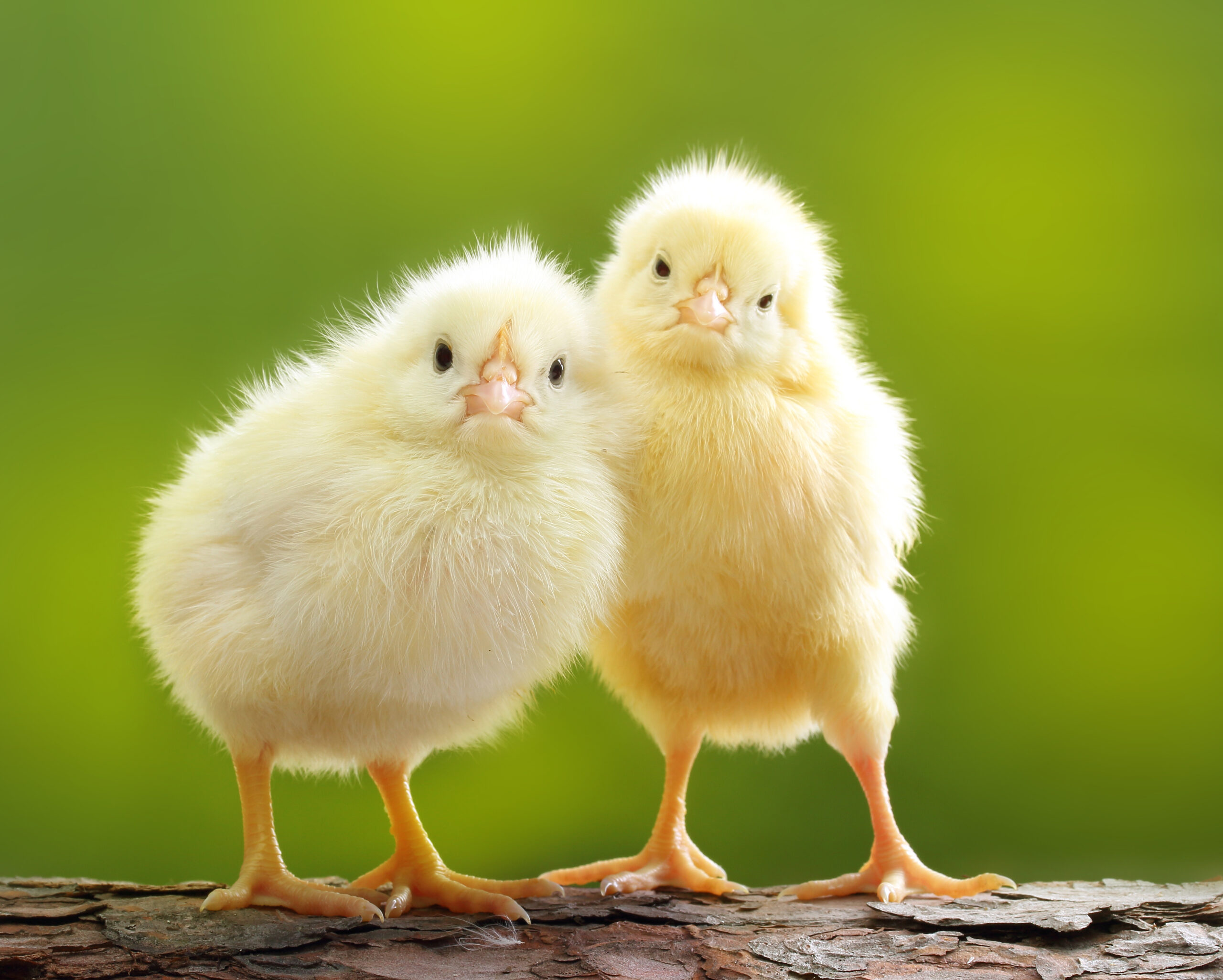
Salmon Faverolles chicks are less hardy than other breeds. Unlike other chicks, they can not survive for several days after hatching without food or water.
Therefore, it is critical to purchase chicks from a breeder or hatchery in close proximity to increase the survival rate. Chicks should be given access to feed and water as quickly as possible to reduce the risk of casualties.
While adding probiotics to a chick’s water is advised for all breeds, these chicks need the extra boost of nutrition to increase their chance of survival.
Sexing Salmon Faverolles Chicks
Unlike other breeds, Salmon Faverolles are nearly impossible to sex via the traditional vent sexing. However, they do feather out quickly, and once feathered, the males are easy to spot among the females.
Health and Care Considerations
These are healthy chickens and are not prone to many of the egg-laying problems that plague many heritage and hybrid egg layers.
Due to their thick feathering, they are prone to external parasites and may require frequent treatment to avoid an infestation.
Salmon Faverolles are also prone to scaly leg mites and bumble foot, so be sure to check feet and legs regularly to keep them feeling and looking their best.
Egg Production of Salmon Faverolles
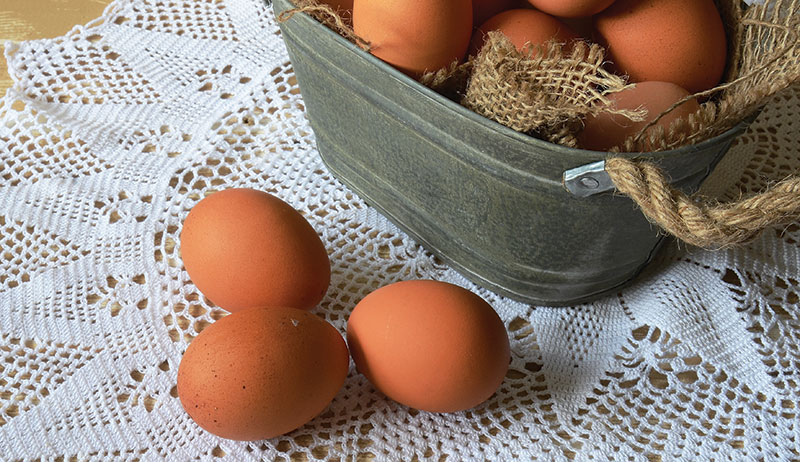
These are good layers, averaging four to five medium-sized, light brown or creamy colored eggs per week. Production peaks in the colder months, making them an ideal breed for those looking for some winter eggs without the use of artificial heating or lighting.
While they are good winter layers, the breed does not lay during the summer months.
Meat Production and Table Birds
The Salmon Faverolles is a good table bird for those looking to raise their own meat. They grow slowly, reaching market weight at about the age of six to eight months.
While this may seem like a long time, the taste is reported to outshine other breeds and is considered to be worth the wait.
Frequently Asked Questions About Salmon Faverolles
Q: Can they free-range safely?
A: No, they need protection from predators and should be kept in a secure, covered area. Their gentle nature makes them vulnerable if allowed to roam freely.
Q: Do Salmon Faverolles require special housing?
A: Yes, because of their feathered feet and legs, they need a dry, covered run at all times to prevent mud and moisture-related issues.
Q: How do I care for their unique toes?
A: Salmon Faverolles have a fifth toenail that requires routine trimming to prevent injury or discomfort.
Q: Are there any special considerations for their eyesight?
A: Yes, their beards and muffs can limit their vision. Provide low perches and nesting boxes to ensure they can move safely.
Q: How can I make my birds friendly?
A: Regular handling of chicks and adults is essential. Daily interaction helps them become affectionate, docile companions.
Q: How many eggs do Salmon Faverolles lay?
A: They typically lay four to five medium-sized eggs per week, with production peaking in the colder months. They may stop laying in the summer if temperatures are high.
Q: Can Salmon Faverolles be raised for meat?
A: Yes, they are a good dual-purpose breed. They grow slowly, reaching market weight around six to eight months, and are known for flavorful meat.
Q: How long do Salmon Faverolles live?
A: The average lifespan is about five years, shorter than some other heritage breeds, though proper care can help them live comfortably throughout their life.
Q: Do Salmon Faverolles get along in mixed flocks?
A: Yes, but they do best with other docile breeds like Orpingtons, Cochins, and Dorkings. Avoid housing them with aggressive birds, as they can be easily bullied.
Final Word on Salmon Faverolles
Salmon Faverolles are the ideal addition to any backyard flock. Their sweet, docile personalities make them excellent pets for families, while their hardiness and winter egg-laying abilities add practical value. With proper care, protection, and handling, these beautiful, friendly birds can provide both entertainment and sustenance, making them a beloved breed for hobby farmers and backyard chicken enthusiasts alike.
This article about Faverolles chickens was written for Chickens and Hobby Farms magazines. Click here to subscribe.