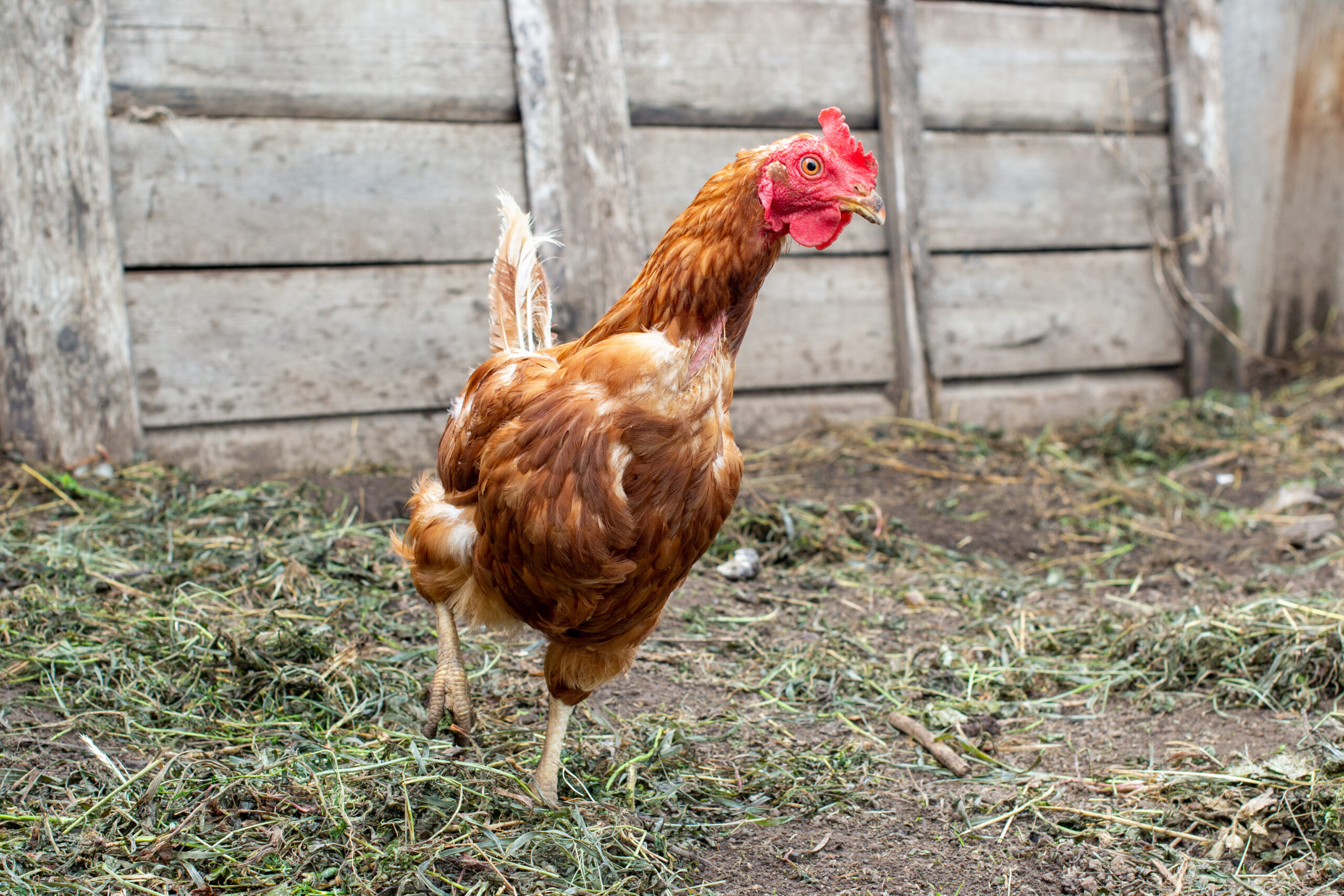
Feather loss in chickens can appear in backyard flocks for several different reasons, besides the annual fall molt. Whether your flock is suffering from this condition due to lice, behavior problems, or another cause, learn how you can prevent and cure feather loss in chickens.
Molting and Natural Feather Loss in Chickens
Molting feather loss in chickens is usually easy to recognize by the large amount of chicken feathers scattered in the coop and run. Most chickens molt annually in the fall, but even when molting other times of the year, a molting chicken is easy to spot.
Another way to tell if a chicken is molting is if they have new feathers growing in. These little feathers may not be visible to the eye at first, but if you lightly brush the back feathers up, you will see new feathers poking through.
Feather loss in chickens is no big deal if the cause is molting, but if caused by a dietary deficiency or behavior problem, it’s time to act.
So, why does non-molting feather loss in chickens appear, and how do you keep it from happening? Here are several suggestions and solutions to fix the feather loss in your flock.
Feather Loss in Chickens from Rooster Breeding
In flocks where a rooster(s) is present, hens will often display feather loss near the comb, where the rooster holds onto the hen’s head feathers to keep from sliding off her back during breeding. Hens that are frequently bred will also have feather loss on their backs, necks, and shoulders. If at any time, the hen’s back is ripped open, be sure to isolate the hen until she heals and her feathers grow back.
To prevent feather loss in chickens due to overbreeding, maintain a good hen-to-rooster ratio (about one rooster for every ten hens). Limit the number of roosters per flock to prevent breeding aggression.
In flocks where there is only one rooster, put a hen saver on the rooster’s favorite hens to prevent significant feather loss. ( found from hatchery websites, farm supply stores, and Etsy.) Not all hens or roosters respond well to hen savers (some roosters will try to spur the hen saver and cause injuries to the hen wearing the protective clothing), so be sure to observe your flock to make sure everyone responds well to your hens’ new look.
Feather Loss in Chickens from Feather Pulling
Another cause of feather loss in chickens is feather pulling. While feather pulling is a sign of cannibalism, that is not the only reason some chickens pull feathers.
Other reasons feather pulling may occur include boredom, stress, and nutritional deficiency. Chickens that feather-pick are often sly, so you may have to do some detective work to catch the culprit. If feather picking occurs during the day, discovering the problem chicken is usually easier than chickens that feather pick at night.
However, if you suspect one of your chickens has a feather-picking bedtime ritual, here are a few steps you can take to stop the problem.
Separate the feather-picking hen at night to prevent further feather loss.
Say no to artificial light in the coop. A dark coop at night will make it harder for a chicken to see her targets and help reduce stress in the flock.
Relocate the feather pecker. Sometimes, a simple rearranging of the chickens on the perch after the hens fly up to roost for the night can stop a feather picker from pulling feathers.
Feather Loss in Chickens Due to Boredom and Stress
Stressed and bored chickens can be prone to feather picking, for lack of anything better to do. Often in backyard chicken flocks, these two emotions (boredom and stress) are intertwined.
Preventing stress and boredom can be challenging, so if you aren’t sure how to prevent them in your flock, here are a few suggestions.
- Provide a spacious coop and run
- Avoid overcrowding the coop and run
- Avoid free-ranging (supervised free range time instead to cut down on predator attacks)
- House aggressive breeds separately from docile chickens
- Remove flock bullies
- Prevent predator attacks (While most chickens who were attacked by a predator are too traumatized to engage in feather pulling, predators are one of the largest stress factors in backyard flocks.)
- Provide chicken-safe, mental stimulation, such as treat balls, chicken swings, etc.
Feather Loss in Chickens Caused by Protein Deficiency
Protein deficiencies can be a common reason for feather loss in chickens, especially in high-production breeds. A lack of protein in the diet can cause chickens’ feathers to become brittle and fall out, but it can also contribute to feather pulling.
If not provided with enough protein, some hens will start to pick and eat feathers, including already dropped feathers off the coop floor.
Supplementing your flock’s diet with additional chicken-safe protein is an excellent way to help your flock rebuild its depletion. Add healthy protein sources to your flock’s diet, such as black soldier fly larvae, broccoli, pumpkin seeds, and cooked scrambled eggs.
Feather Loss in Chickens from Lice and Mites
Feather loss in chickens can also be caused by a lice or mite infestation in the coop. Mites and lice can cause chickens to preen excessively, and the bugs can also chew the feathers, resulting in feather loss, especially around the vent and under the wings.
To check your flock for lice, carefully part the feathers around the vent area. If tiny, straw-colored bugs are visible or clusters of white eggs are seen around the base of the feathers, treat your chickens with a natural, poultry-safe lice treatment.
Mites are best detected by running a piece of white paper on the underside of the perch first thing in the morning, just after the chickens exit the roost for the day.
Treat mites by mixing half and half apple cider vinegar with water. Spray chickens with this mixture, making sure to stay clear of their eyes.
Feather loss in chickens can occur for many reasons. Paying close attention to your flock’s behaviors and feeding a healthy diet supplemented with healthy, nutrient-rich treats will help reduce the chances of feather loss in your flock.
This article about feather loss in chickens was written for Hobby Farms and Chickens magazines. Click here to subscribe.