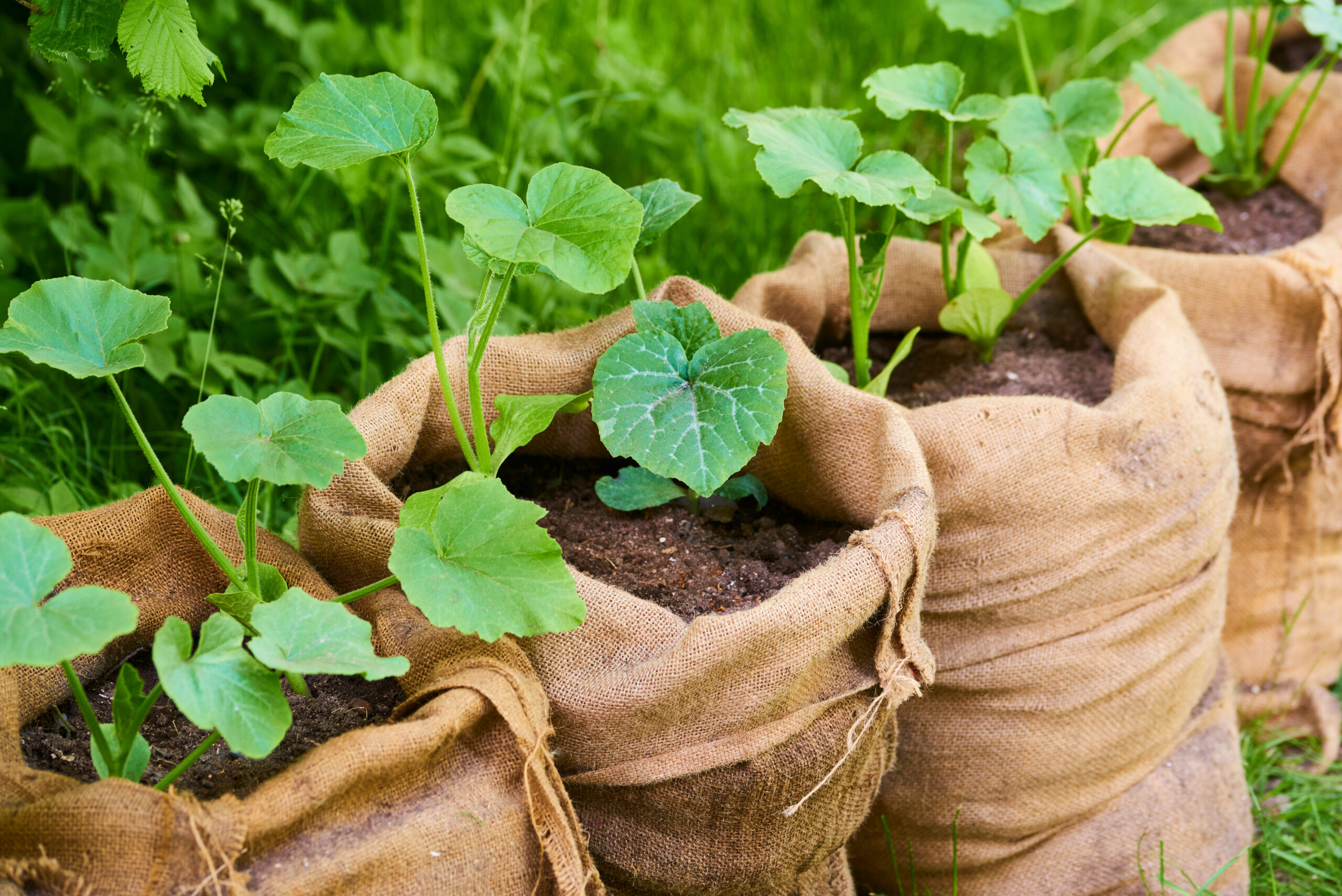
Grow bag gardening was originally popular in the 1970s for use in greenhouse gardening and has seen a resurgence of popularity over the past several years. Grow bags are a great option for those with limited space and those with acreage alike.
Grow bags are soft-sided containers that come in various sizes, ranging from wide and shallow to deep and narrow. They allow you to grow plants in spaces that you may not otherwise be able to. Because of their portability and versatility, they’ve become quite trendy for urban and rural gardeners.
Grow Bag Gardening: Pros and Cons Explained
A favorite vegetable to grow in bags is potatoes. Growing in bags makes planting potatoes easy and harvesting them (and root crops in general) since they can be flipped over and dumped out – some potato bags even come with a flap window for partial harvesting. It can be much easier to dump out a grow bag full of potatoes, rather than to dig them out of the ground. However, like everything, grow bag gardening has its pros and cons. Below is a helpful list to see if grow bag gardening is right for you.
1. Grow Bag Portability: Garden Anywhere, Anytime
Pro – Grow bags are not permanent and therefore can be moved around as needed such as finding a new space for fall gardening needs. They allow you to grow on top of a concrete, on driveways or even a balcony for apartment gardening.
Con – They can become heavy once filled with dirt (depending on size), which can be more difficult for some to move if they have lift restrictions. However, this can be remedied by putting the bag on a base with wheels. We put bags on a children’s wagon to more easily move them to different spots around our yard.
2. Better Drainage with Breathable Grow Bags
Pro – Grow bags are breathable so you’re less likely to overwater and experience root rot. They offer excellent drainage. Grow bags are typically made of felt, wool, burlap, other recycled materials or sometimes plastic.
Con – Because the bags are breathable, they dry out a lot faster than plants that are grown in the ground. Therefore, you must water them more often. Also, it’s common that the water spills off to the sides of the soil into the bag, not saturating the center of the grow bag as well. It requires you to be mindful when watering to make sure the center of the bag is getting watered well enough.
3. Compact Storage: Grow Bags Are Space Savers
Pro – When grow bags are empty, they flatten down. They are lightweight and store easily without taking up much space.
Con – Because of their soft sides, they can easily be chewed through by garden pests such as mice.
4. Are Grow Bags Reusable? Long-Term Use Tips
Pro – Gardening grow bags are reusable year after year. On a personal note, we have been using ours for six years already.
Con – It’s recommended to clean the bags with soapy water at the end of each season before storing them away to kill any harmful bacteria or fungus.
5. Air Pruning: Grow Bags for Healthier Roots
Pro – Mike Hogan, an extension educator with Ohio State University, explains that in typical clay and plastic pots, plants roots run into the pot’s sides and turn and begin to circle. With grow bags, when roots reach the side of the bags, they are exposed to air and stop growing. The roots are “air pruned” which forces the plants to grow new roots, which ultimately results in a healthier, more fibrous root system and happier plants.
Con – None, when it comes to root health.
Grow Bag Gardening: A Flexible and Accessible Option
Grow bag gardening offers an incredibly flexible and accessible way to grow food and flowers—especially for gardeners working with limited space or tough ground conditions. While they’re not a perfect solution for every scenario, their portability, breathability, and root-health benefits make them an appealing option for many. With a little planning—such as proper watering and end-of-season cleaning—grow bags can become a lasting part of your gardening setup. Whether you’re gardening on a patio, driveway, or homestead, they’re a tool worth trying at least once.
This article about grow bag gardening was written for Hobby Farms magazine. Click here to subscribe.