Herbs for ducks can play a useful role in supporting flock health, behavior, and overall nutrition. From fresh forage in the garden to dried herbs added to feed or water, many culinary herbs offer vitamins, minerals, and natural compounds that may support digestion, immune function, respiratory health, and stress reduction. Knowing which herbs ducks enjoy—and how to safely feed them—can help improve both enrichment and wellbeing for your webbed-footed flock.
Key Takeaways: Herbs for Ducks
- Herbs for ducks can support immunity, digestion, respiratory health, and stress reduction.
- Common duck-safe herbs include dandelion, lavender, lemon balm, peppermint, and marjoram.
- Fresh herbs can be fed directly, chopped into feed, or offered as enrichment in water or bedding areas.
- Some herbs (like peppermint and lavender) may help naturally deter pests in the coop or run.
- Herbal teas can be offered once cooled, but not all herbs (such as lavender) should be brewed.
- Avoid toxic plants like onions and garlic when selecting herbs for ducks.
Dandelion for Ducks: A Nutrient-Dense Wild Forage Herb
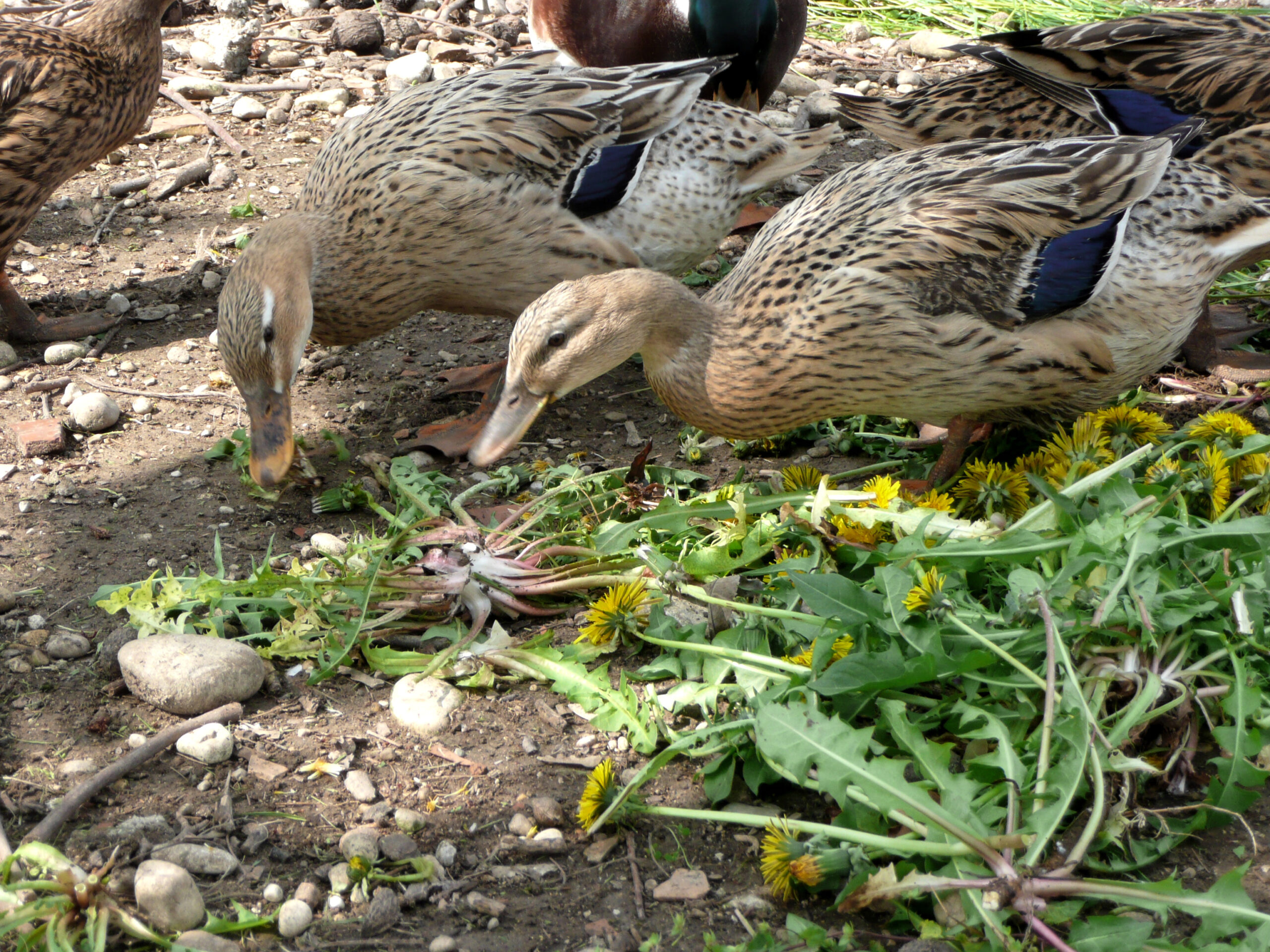
Ducks love dandelions. And this super herb isn’t just delicious; it’s also highly nutritious. The entire plant (roots, leaves, and flowers) is edible, and ducks love it all. In fact, ducks love to rip apart the entire plant if given the opportunity.
Dandelions are high in vitamins A, B, C, E, and K; and minerals calcium, iron, potassium, and zinc. These hardy perennials are also a natural electrolyte, making them the perfect snack on hot summer afternoons.
Thought to strengthen the immune system, dandelions also help fight off viruses and are an overall health tonic. Another plus to this super herb is that the roots aid in liver health.
Growing dandelions from seeds can be tricky, but they pop up in almost every yard and can be picked fresh if left untreated from pesticides, herbicides, and insecticides.
Dandelions can be served whole, chopped, or brewed into a tea. When brewing tea, allow the tea to cool to room temperature before serving.
Lavender for Ducks: Calming Herb and Natural Pest Support
This fragrant herb is another duck favorite. With its calming properties and therapeutic smell, lavender helps to calm ducks in times of stress. A natural insect repellent, lavender also helps repel flies, mosquitoes, and other harmful pests that can make ducks sick.
Supporting respiratory health, lavender is used to prevent respiratory problems in the flock. Hanging the flowers and leaves upside down in the coop just above the floor level where ducks can easily reach them to nibble on the fragrant plant is one of the best ways to use lavender for respiratory relief.
Another fun enrichment is to add lavender flowers to your ducks’ buckets and watch them “fish” for them. Serve leaves and flowers fresh or dried. Note: Lavender should not be brewed into a tea.
Lavender thrives in zones 5–9, but it can be slow to sprout when growing from seed. When growing from seed, start seeds indoors three to four weeks before the last frost date. For mature, potted plants, lavender can be planted directly into the ground or a pot after the danger of the last frost.
Lemon Balm for Ducks: Digestive Health and Stress Support Herb
A member of the mint family, lemon balm is another favorite on our herbs for ducks list. Ducks enjoy the taste of this sweet-smelling herb and happily eat it if given the opportunity. Lemon balm has a calming effect on stressed ducks and also helps support a healthy digestive system.
High in antioxidants, lemon balm works as an anti-inflammatory and is even believed to be anti-tumor. Feed fresh leaves or brew a handful of leaves into a tea. Cool to room temperature before serving.
Note: Although lemon balm has many health benefits, it should never be used for two weeks prior to a duck having surgery, as it works as a sedative and can dangerously increase the effects of anesthesia.
Lemon balm grows best when started as small plants in late spring after all chances of frost are past. Fast to mature, this hardy perennial grows best in zones 4-9. Thrives in full sun to partial shade.
Peppermint for Ducks: Cooling Herb for Summer Health and Egg Quality
High on the list of favorite herbs for ducks, peppermint has many health benefits. Believed to have cooling properties, this perennial helps to keep a duck’s body temperature from overheating through the hot summer months.
A wonderful insect, snake, and rodent repellent, peppermint can be used in the duck coop year-round. Hanging peppermint with lavender in the coop is not only good for pest control, but it also works as a natural enrichment, as ducks love to bury their bills in the plants and nibble on the leaves.
Beneficial for laying ducks, studies have proven that adding peppermint to laying birds’ diets improves eggshell quality. Feed fresh leaves or brew a handful of fresh peppermint leaves into tea. Cool to room temperature before serving.
Peppermint grows best when started as small plants in late spring after all chances of frost are past. Fast to mature, this hardy perennial grows best in zones 3–9 but can survive in zones 2–10. Thrives in full sun to partial shade.
Marjoram for Ducks: Immune Support and Laying-Condition Herb
Thought to be a laying stimulant, marjoram is another favorite on the herbs for ducks list. Marjoram can be fed fresh or brewed from dried leaves into a tea in winter when plants are no longer producing.
Marjoram is believed to be antibacterial, antifungal, anti-inflammatory, and antiviral. This tender perennial supports the immune system and aids in digestive and respiratory health.
Delicate as it is potent, marjoram is considered to be a tender perennial in zones 9–10 and an annual in other growing zones. Plant started plants in a sunny location after all danger of frost has passed.
Herbs for Ducks FAQs: Feeding, Safety and Benefits
Can ducks eat herbs every day?
Yes. Most culinary herbs are safe for ducks to eat daily in moderation. Herbs should be offered as part of a balanced diet that includes complete waterfowl feed, fresh water, and access to forage. Variety is important—rotate herbs rather than relying on a single type.
What are the best herbs for ducks?
Some of the most beneficial herbs for ducks include dandelion, lavender, lemon balm, peppermint, and marjoram. Other commonly used herbs include oregano, parsley, fennel, and basil. These herbs may support immunity, digestion, respiratory health, and overall flock enrichment.
How should I feed herbs to my ducks?
Herbs can be fed fresh, chopped, or tossed whole for natural foraging. You can also mix chopped herbs into feed or scatter them in water for enrichment. Some herbs can be dried and brewed into a cooled tea before serving.
Do herbs improve egg production in ducks?
Certain herbs, such as peppermint and marjoram, are believed to support laying health and may help improve egg quality indirectly by supporting nutrition and reducing stress. However, herbs should be viewed as a supplement rather than a primary driver of egg production.
Are there any herbs I should avoid feeding ducks?
Yes. Avoid toxic or unsafe plants such as onions, garlic, and ornamental or unknown plants. Stick to well-known culinary herbs to ensure safety.
Can herbs be used for ducklings?
Yes, but herbs should be finely chopped or lightly crushed to prevent choking hazards. Ducklings should also always have access to grit to aid digestion when eating plant material.
Can I grow herbs specifically for ducks?
Absolutely. Many herbs for ducks are easy to grow in garden beds, containers, or even small coop-side planters. Fast-growing herbs like lemon balm, mint, and parsley are especially good choices for regular harvesting.
Conclusion: Adding Herbs for Ducks to a Balanced Flock Diet
The herbs for ducks covered in this article represent some of the most commonly used and widely accepted options for backyard flocks. While herbs should never replace a complete waterfowl diet, they can be a valuable supplement that supports nutrition, encourages natural foraging behavior, and adds variety to daily feeding routines. By incorporating safe culinary herbs into your flock’s environment and diet, you can help promote healthier, more active, and more enriched ducks over time.
This article about herbs for ducks was written for Chickens and Hobby Farms magazines. Click here to subscribe.