Key Takeaways
- Fall is a good time to plant bare-root pawpaws, while the trees are dormant.
- Buy seed-grown pawpaws. Every seedling is genetically different, so any two will pollinate each other and bear fruit.
- Young pawpaws like some shade for their first year or two, then full sun for the best crops.
- Flies and beetles pollinate pawpaws, not bees. A small paintbrush can fill the gap.
- A pawpaw patch feeds more than you: it’s the host plant zebra swallowtail caterpillars depend on.
Every fall our crew in Altamont, Tennessee, starts about 2 tons of pawpaw seed. The seedlings grow in shade houses and then a shaded greenhouse until they’re dug fresh and shipped. We grow over a million pawpaws a year, and the questions we hear most are the same two: how do I plant them, and why isn’t my tree fruiting?
Here’s what we tell our customers. You can also watch how we grow them.
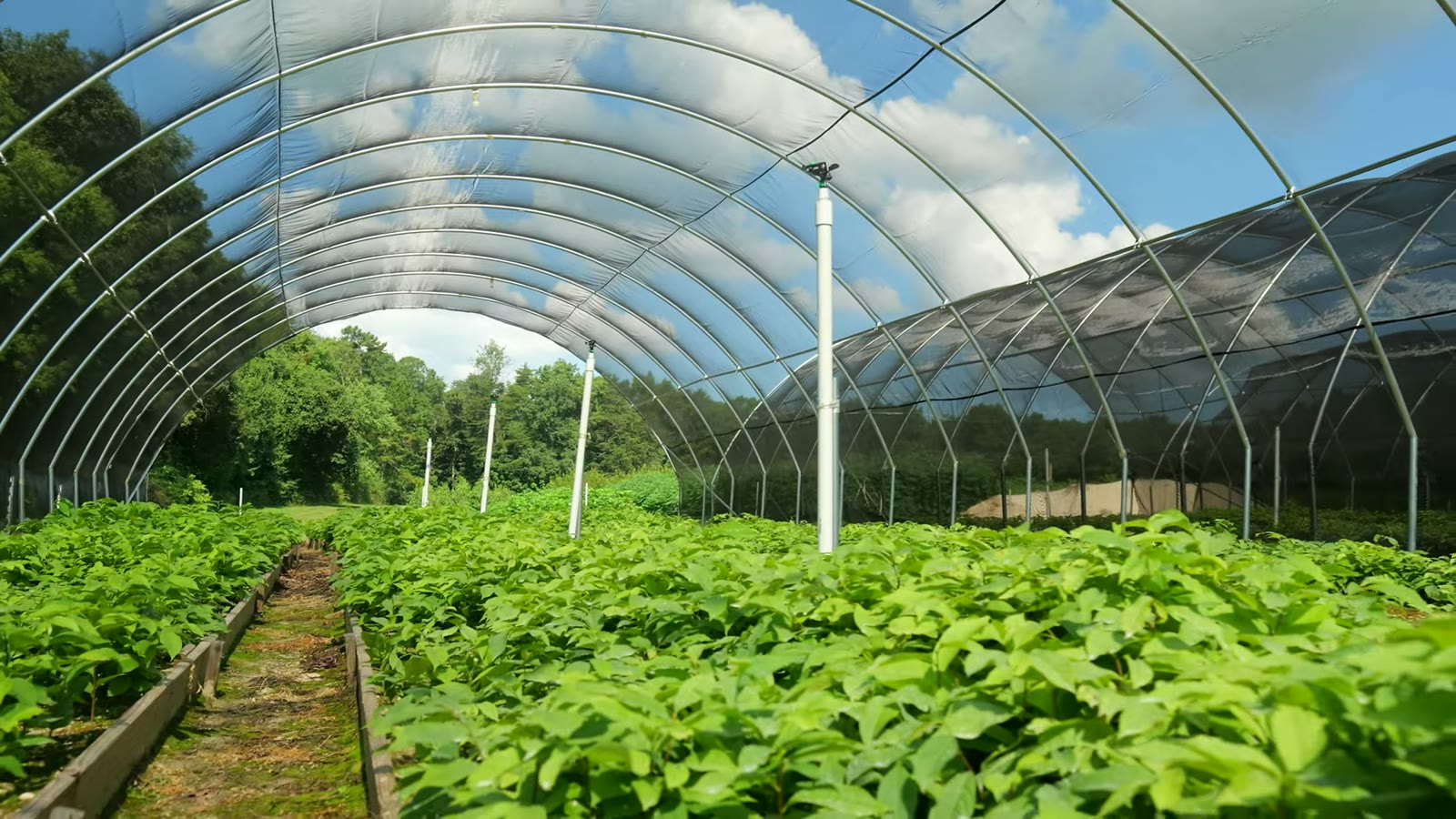
Pawpaw seedlings in one of our shade houses in Altamont, Tennessee. Photo: TN Nursery
Where Pawpaws Grow Best
Pawpaw (Asimina triloba) is native to the eastern United States and grows in USDA zones 5 through 8. In the wild it grows as an understory tree along creeks and river bottoms, so it wants rich, moist soil that still drains. Avoid spots where water stands after a rain.
If you’re new to the fruit, Hobby Farms has a good primer on growing your own pawpaws, including named varieties.
Why Fall Planting Works
Bare-root pawpaws ship while they’re dormant, and planting then lets the roots settle into cool, moist soil before the tree has to push out leaves. The one rule: don’t let the roots dry out between the box and the hole. In the colder end of the range, mulch well after planting to protect the roots over winter.
Plant at Least Two Trees
Pawpaw flowers can’t pollinate themselves, and a tree won’t set fruit with pollen from its own flowers. You need a second tree that’s genetically different. Two grafted trees of the same named variety won’t do it, because they’re the same plant.
Seed-grown trees solve this. Every seedling is genetically unique, so any two will pollinate each other. That’s why we sell our bare-root pawpaw trees in pairs. Plant them about 8 to 15 feet apart. A group of three or more gives you better pollination and a bigger harvest.
Planting Bare-Root Pawpaws, Step by Step
- Soak the roots in a bucket of water for an hour or two before planting.
- Dig a hole wider than the root spread and just as deep as the roots are long. Pawpaws have long, fleshy roots, so don’t bend or coil them to fit a small hole.
- Set the tree at the same depth it grew in the nursery. Look for the soil line on the stem.
- Backfill with the soil you dug out, firming it gently to remove air pockets.
- Water it in well, then mulch 2 to 3 inches deep, keeping the mulch a few inches off the trunk.
- Hold off on fertilizer until the tree has leafed out and started growing.
The two mistakes that set new pawpaws back most are letting the roots dry out before planting and putting a single tree in the ground and waiting for fruit.
The First Two Years
Young pawpaws are sensitive to strong sun. For the first summer or two, give them some shade: plant on the east side of a building or taller trees, or use a tree tube or a piece of shade cloth. Once they’re established, full sun gives the heaviest crops.
Don’t panic in spring. Pawpaws are among the last trees to leaf out, and plenty of people have dug up a perfectly healthy tree in May thinking it died over the winter. Keep the soil evenly moist through the first growing season, about an inch of water a week if it doesn’t rain, and keep grass and weeds pulled back from the base.
Why Your Pawpaw Flowers but Doesn’t Fruit
Pawpaw flowers are small, maroon and bell-shaped, and they open in spring before the leaves. They smell faintly of fermenting fruit, which draws flies and beetles, not honeybees. In a backyard with only a few trees, those pollinators don’t always show up, and the flowers drop without setting fruit.
If you have two trees blooming and no fruit, try hand-pollinating:
- Collect pollen from flowers whose anthers have turned brown and loose. Tap them over a small cup or brush the pollen straight off.
- Use a small artist’s paintbrush to dab that pollen onto the center (the stigma) of younger flowers on the other A receptive stigma looks green and glossy.
- Repeat every few days while the trees are in bloom.
For more growing questions, Kentucky State University’s pawpaw program keeps a helpful pawpaw questions page.
When to Expect Fruit
Most of our trees start bearing four to six years after planting, depending on the site and care. Fruit ripens from late August into October. A ripe pawpaw gives slightly when you squeeze it and smells sweet, and many drop from the tree on their own. They don’t keep long at room temperature, so eat them fresh or scoop out the pulp and freeze it for baking. This pawpaw pie is a good place to start.
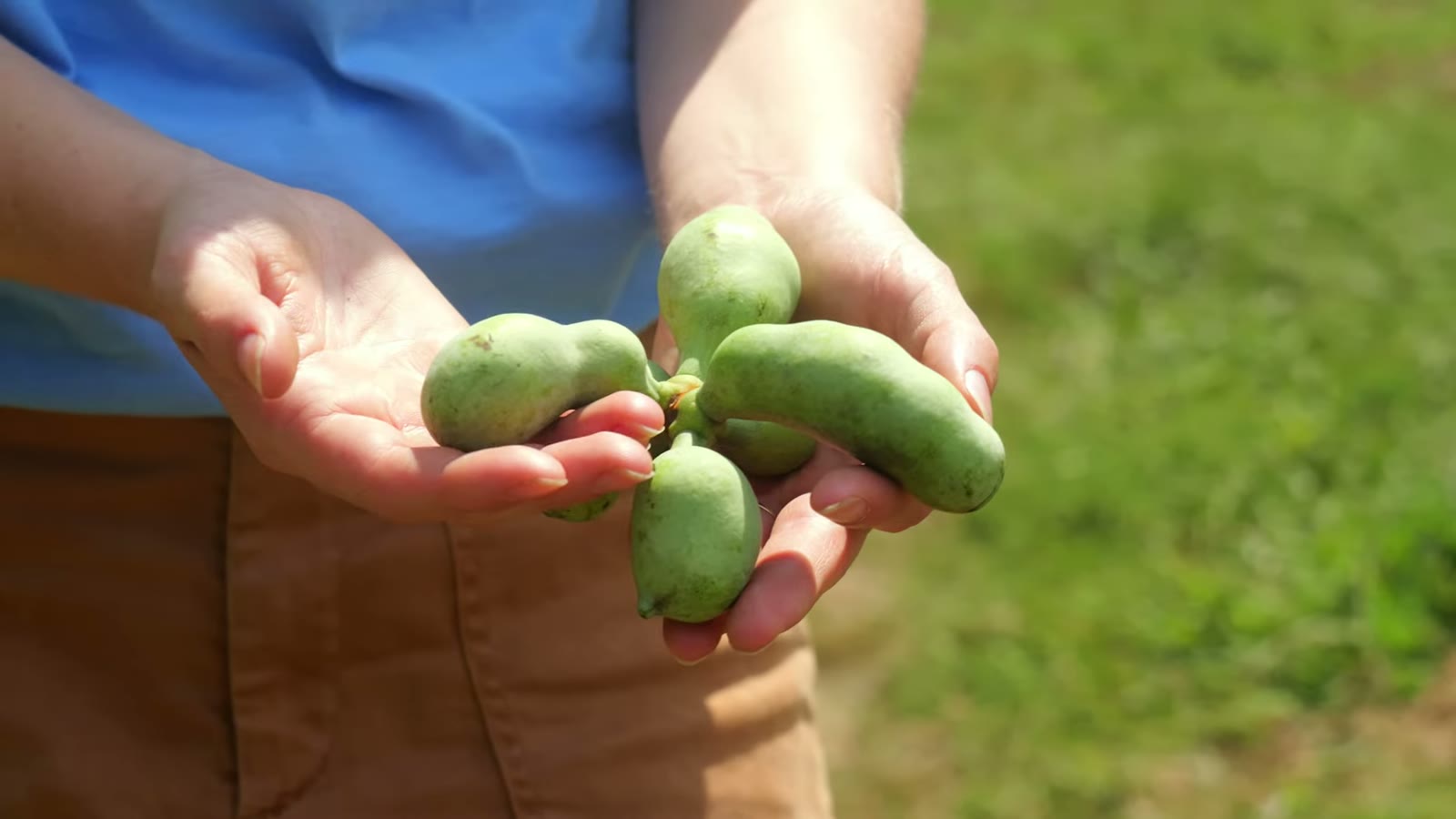
Young pawpaw fruit. Photo: TN Nursery
A Pawpaw Patch for the Farm and for Butterflies
Pawpaws are hard to find in stores because the fruit bruises easily and doesn’t ship well, which is exactly what makes them a draw at farmers markets and U-pick farms. Hobby Farms has looked at what pawpaws sell for.
A patch also does something no other tree in your yard can. Pawpaw and its close relatives are the only plants zebra swallowtail caterpillars eat. Plant pawpaws and you’re likely to see these black-and-white striped butterflies drifting through in spring and summer. The caterpillars feed on the leaves without harming the tree.
If you’re planting a patch, hedgerow or orchard row, our wholesale nursery sells pawpaw seedlings in bulk.
Quick Answers
Are pawpaw trees self-pollinating? No. Plant at least two genetically different trees.
Can pawpaws grow in full sun? Yes, once established. Young trees do better with some shade for their first year or two.
When should I plant bare-root pawpaws? While they’re dormant, in fall or early spring, as soon as you can after they arrive.
Tammy Sons is the CEO of TN Nursery, a third-generation, family-owned nursery in Altamont, Tennessee, that has been growing native trees and plants since 1959. It grows over a million pawpaw trees a year and ships to every state.