Fowl pox in chickens, turkeys, and other poultry can be a serious, life-threatening condition. Knowing how to recognize, treat, and prevent this condition is essential to protect your flock and start treatment quickly if a fowl pox epidemic breaks out in your coop.
Key Takeaways
- Fowl pox is a slow-spreading viral disease that affects chickens, turkeys, and other poultry.
- It appears in two forms: dry pox (skin lesions) and wet pox (internal lesions that can be fatal).
- The disease spreads through mosquito bites, direct contact, and contaminated scabs.
- Dry fowl pox is rarely deadly, but wet fowl pox can cause severe respiratory issues and death.
- There is no direct cure, but supportive care and isolation help infected birds recover.
- Prevention includes mosquito control, good coop management, and vaccination.
What is Fowl Pox?
A slow-spreading virus, fowl pox moves through the flock, affecting non-feathered areas of the bird (including combs and wattles) and/or the oral cavity, trachea, or larynx with lesions.
This disease can affect all types of birds, including poultry, waterfowl, pigeons, canaries and other pet birds, and wild birds. However, there are three different strains, including poultry fowl pox virus (FVP), pigeon pox virus (PPV), and canary pox virus (CPV).
The good news for backyard flock owners is that the strains are species-specific, meaning a chicken cannot get the canary or pigeon strain and vice versa.
Can Ducks and Geese Get Fowl Pox?
Yes, ducks and geese can get fowl pox, but it is more common in turkeys and chickens.
Dry Fowl Pox
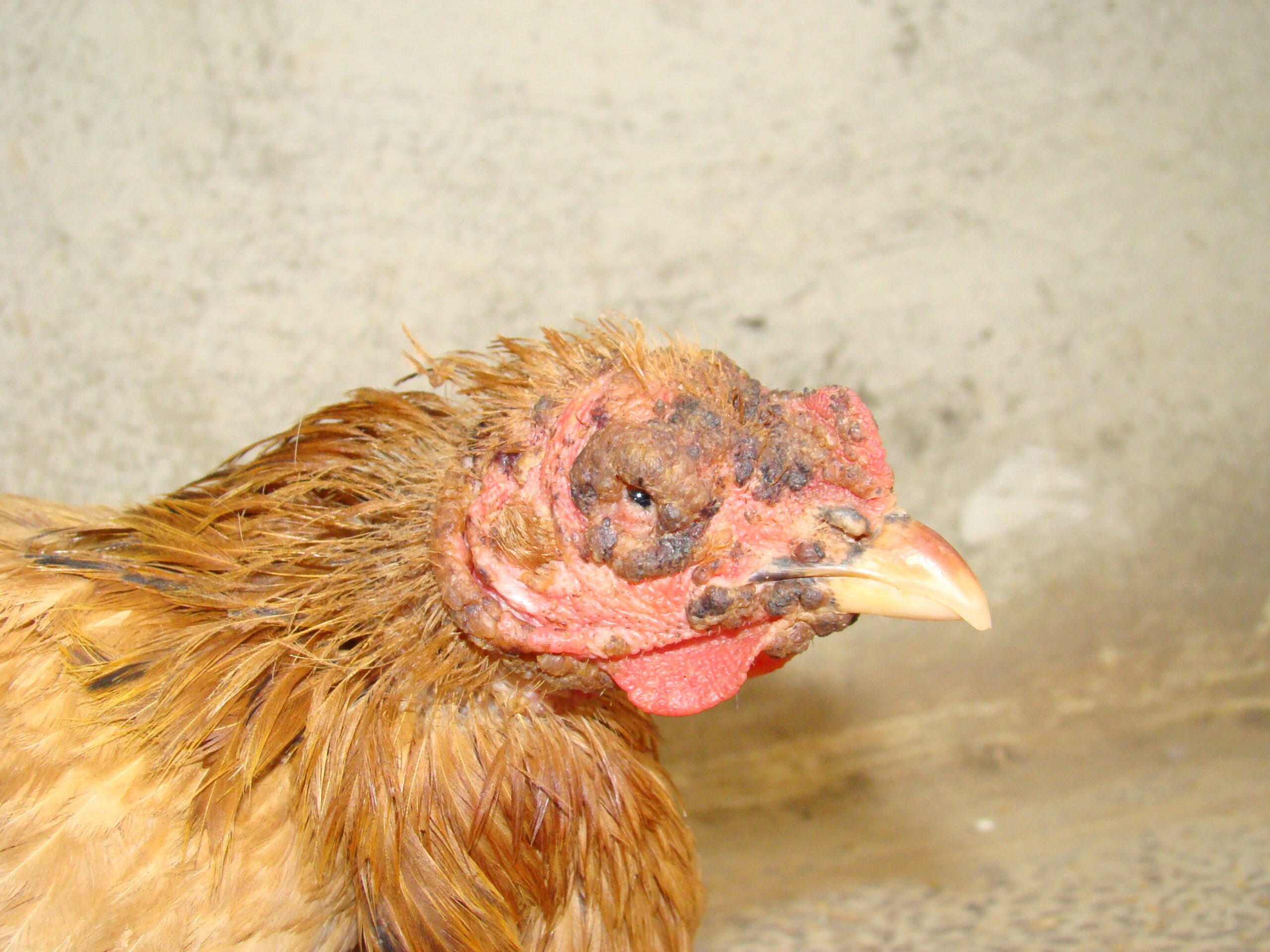
Cutaneous, also known as dry pox, is the most common variety found in backyard flocks. This condition is rarely fatal, as the dry lesions appear only on exposed skin such as the eyelids, wattles, combs, feet, and legs.
The lesions first appear as yellowish warts before turning into rough, dark brown scabs. The lesions last for two to four weeks before they dry up and fall off the infected area, leaving smooth scar tissue in their place.
The dried lesions contain the virus and are highly contagious to other members of the flock, so care should be taken to isolate any flock members with fowl pox away from the rest of the flock.
Wet Fowl Pox
Wet fowl pox, also called diphtheritic fowl pox, is the most likely to become deadly, with mortality rates as high as sixty percent (versus the 5% mortality rates of dry fowl pox).
This disease causes plaques to break out in a chicken’s inner mouth and throat. The lesions start as white nodules and merge together into raised lesions with yellow pockets. Lesions located in the upper respiratory and digestive tracts can cause difficulty in breathing and also cause the bird to consume less feed than normal.
Depending on the area where the lesion has grown and the severity of it, wet fowl pox can cause severe respiratory problems in chickens and other poultry.
How Does Fowl Pox Spread?
This is often transmitted to backyard flocks via mosquito bites. When a mosquito bites an infected hen, it can carry the disease for up to eight weeks in its saliva gland. This disease is then transmitted to any other chicken, turkey, or waterfowl that the mosquito bites within the eight-week period.
Another way it is spread in chickens is by introducing an infected bird into the flock. The disease is spread from chicken to chicken within the flock via scratch marks, peck marks, and dried lesions falling off the infected bird.
Clinical Signs of Fowl Pox in Chickens
Clinical signs of fowl pox in chickens include
- Coughing
- Eye discharge
- Scab or wart-like lesions on combs, wattles, faces, feet, legs, and eyes
- Sneezing
- Yellow canker lesions in the mouth
Treating Dry Fowl Pox
When treating dry fowl pox in chickens, turkeys, and other poultry, the infected bird(s) should be quarantined from the rest of the flock until all lesions are entirely healed and have fallen off. The disease is spread slowly, so be sure to inspect each flock member daily to ensure no new members have started showing symptoms.
Gently apply saline solution or iodine to the lesions daily to keep them clean and dry. Do not physically remove lesions. When the lesions have fallen off, clean and disinfect the entire isolation area to decrease the risk of spreading the disease to other flock members.
If lesions appear on the eye or eyelids, a trip to the vet is a good idea to help the bird fully recover. Fowl pox has been known to cause both temporary and permanent blindness, so it’s important to do whatever you can to save your bird’s vision.
Treating Wet Fowl Pox
If wet fowl pox has reared its head in your flock, a trip to the vet is in order to help increase the infected bird’s chance of survival. A qualified poultry vet can help provide respiratory support and administer vitamin A and antibiotics as needed to infected birds.
In cases where the prognosis is bleak, a vet can also aid in end-of-life decisions based on what is best for the bird.
Preventing Breakouts
Preventing fowl pox in chickens and turkeys is possible by reducing the amount of standing water near your flock’s coop and run. Never house chickens near an area that is easily flooded or close to a creek, pond, marsh, or other body of water.
Cover wired coop windows with window screens to prevent mosquitoes from entering the coop at night. Lock poultry into the coop before dark to decrease the risk of this disease, and place mosquito traps near the coop and run to prevent the unwanted bugs from visiting your flock.
Vaccines are also available to stop the spread of this contagious disease. For best results, vaccinate young chickens between 12 and 16 weeks of age and adults 1–2 months before mosquito season.
Frequently Asked Questions
Is fowl pox in chickens fatal?
Dry fowl pox in chickens is rarely fatal. However, the wet strain can be fatal and should be treated by a qualified veterinarian.
Is fowl pox contagious to humans?
No. This disease is only contagious among birds, and this particular strain only affects poultry, so you don’t have to worry about your family or your pet parrot becoming ill.
Are eggs safe to eat from chickens infected by fowl pox?
Yes. Eggs laid by hens with fowl pox are safe for human consumption. Since humans can’t get the disease, and the disease is not transmissible through the egg, eggs can be safely eaten. However, hens infected with this disease often show a decrease in egg production.
How long does fowl pox last?
Fowl pox lasts about two to four weeks for an infected bird. However, the disease is slow-spreading, so if multiple flock members are infected, the actual time the disease is in your flock could be much longer.
What should I do if my chicken is infected with fowl pox?
When dealing with an outbreak in chickens and other poultry, the best thing to do is isolate the infected bird(s) away from the rest of the flock. Monitor both sick and healthy flock members to ensure everyone is eating and drinking. Take the sick hens to a veterinarian if lesions appear on the eyes or mouth, or if an infected flock member is having difficulty breathing or has stopped eating.
Last, but not least, consider vaccinating your flock against future outbreaks to keep everyone healthy.
Final Thoughts
Fowl pox in chickens and turkeys is easy to recognize and can usually be treated. However, prevention through a vaccine is the best way to keep your flock safe against this contagious disease.
This article about fowl pox in poultry was written for Hobby Farms and Chickens magazines. Click here to subscribe.