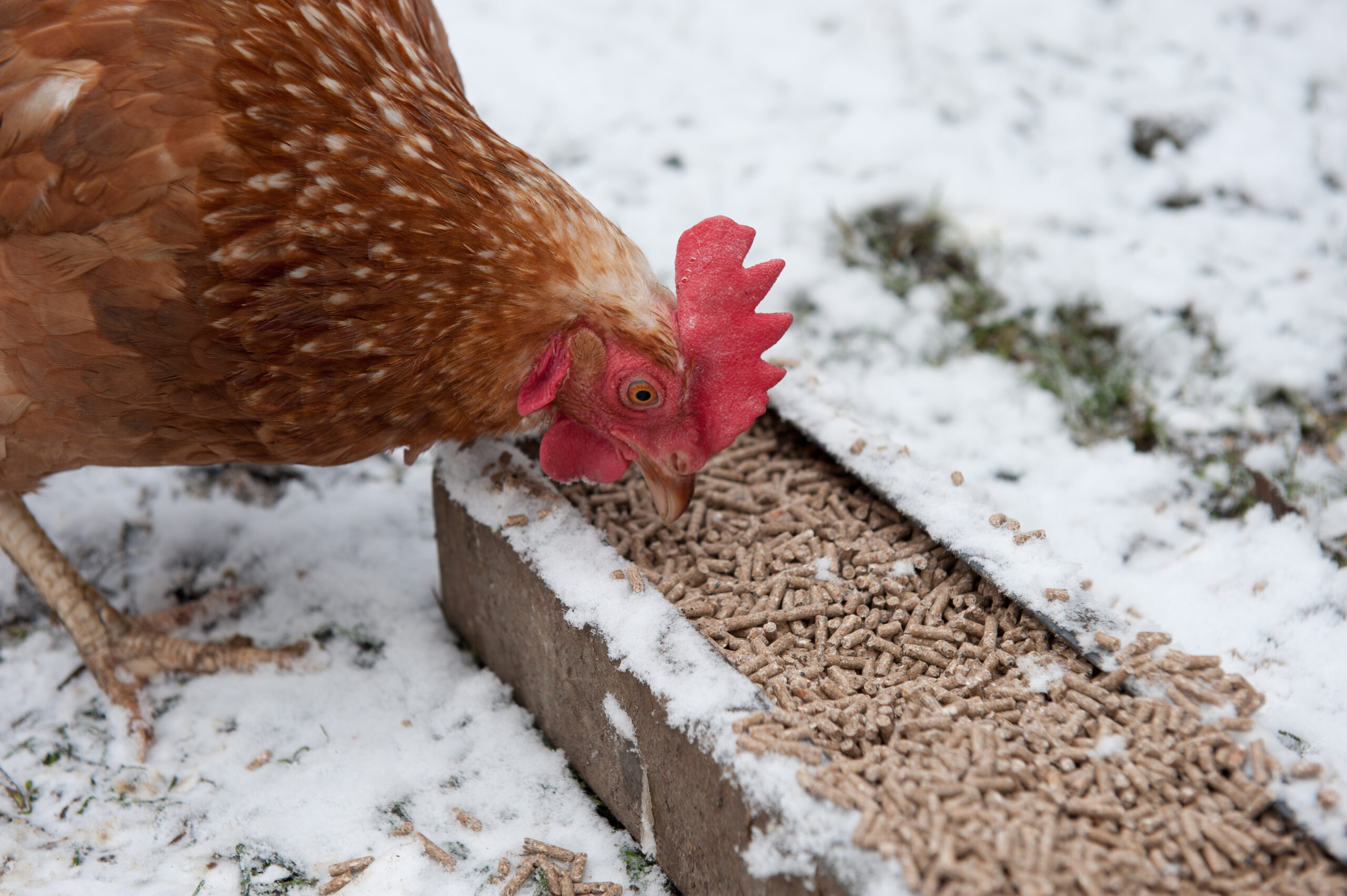
Nutrition for chickens is important year-round, but it is even more so in winter. During the cold and snowy months, chickens spend less time free-ranging and more time in the coop, so adding extra nutrients to your flock’s diet is vital to helping them stay healthy all season long.
Why Is Nutrition for Chickens in Winter Important?
Fewer daylight hours, colder weather, and more time in the coop all combine to alter your chickens’ daily routines as fall turns toward winter. This causes changes in your flock’s nutritional needs, particularly in colder regions, such as the Upper Midwest and New England states.
As chicken keepers, it’s important for us to understand how these changes affect our chickens’ dietary needs and to feed the flock accordingly.
Many treats offer an extra boost of nutrition for chickens, and if fed in moderation (no more than 10% of the diet), can help your flock stay healthier and live more enriched lives.
Increase Feed Rations for Winter Chickens
Daylight hours are fewer, and temperatures get colder as winter approaches, and hens naturally cut back on egg production and begin replacing feathers lost during molting. Chickens eat more feed in winter than they do in summer. Even though most hens aren’t laying during the colder months, they still need the extra nutrients to help them stay warm and replenish the nutrients they lost during the egg-laying season and fall molt.
Another reason for increased feed consumption is that during winter confinement, free-ranging and pastured flocks need extra feed to replace the bugs and greens they consume while foraging.
Nutrition for chickens in winter is especially important for layers, as good nutritional levels are necessary in spring when hens start laying again.
In terms of nutrition during this time, chickens still need the protein and balanced nutrition provided by a poultry ration formulated for them, but they can be expected to consume 25% more per day. Even flocks that receive artificial light to maintain day length and egg production will consume additional feed to keep warm.
Warm Foods That Help Chickens Stay Warm
Nutrition for chickens in winter often has the added benefit of helping your flock stay warm. Offering chickens nutrient-packed warming treats such as oatmeal, scrambled eggs (well-cooked only to prevent egg eating), or lukewarm cooked vegetables will help warm up your flock on a cold winter morning.
Feeding Tip: Sprinkling a little cayenne pepper on your layer feed, oatmeal, or scrambled eggs helps hens stay warm by increasing blood circulation and helping their bodies produce more heat.
Carbohydrates Help Chickens Generate Heat
Chickens love to eat scratch grains, but it’s generally recommended that they eat these in limited amounts. That’s because scratch dilutes the nutritional value of a balanced layer ration and is high in fat. In winter, however, the increased fat content of scratch can be beneficial for nutrition.
The increased carbohydrates in scratch grains—especially cracked corn—help chickens generate heat. Feeding a small portion of scratch just before dark each evening will allow the flock to get its nutritional needs from the layer ration by day and provide extra carbohydrates to keep it warm at night.
Feed Probiotics Year-Round
One of the most important nutrients for chickens year-round is probiotics. Probiotics help a chicken’s gut remain in tip-top condition and keep its immune system strong. In fact, adding probiotics to your flock’s diet is one of the best ways to prevent disease in the coop.
Researchers at PoultryDVM suggest that probiotics help your flock combat many different diseases and bacteria, including respiratory diseases, E. coli, Salmonella, and more, to keep both you and your flock healthy.
Winter Nutrition for Chickens: Food Essentials
Even in winter, chickens require free-choice grit, oyster shell, and water. Chickens need water to survive and quickly become dehydrated when water fountains freeze over. To help keep your flock hydrated, swap out frozen water fountains with unfrozen, fresh water several times daily.
When the ground is frozen, chickens can not access small stones or dirt to aid in digestion, so adding free-choice grit to the coop is essential to ensure their digestive tracts stay healthy.
While not needed as frequently as in the warmer months when egg production is underway, chickens still need access to clean, unfrozen oyster shell at all times. In mixed poultry flocks, this is critical, as ducks and other waterfowl tend to create a wet mess when consuming calcium. If the wet oyster shell freezes, the rest of the flock can’t access it.
Add Fresh Greens to the Menu for Chickens in Winter
Adding fresh greens is a good boost of nutrition for chickens in winter. Thawed frozen peas, sprouted grains, and herbs grown on a kitchen windowsill are all good ways to boost nutrition and add some natural sources of important vitamins and minerals to your flock’s diet.
Adding fresh greens can help keep your flock from becoming bored over winter and is also a good way to boost nutrition for chickens. Since our flocks often can’t forage for their own fresh greens in winter, adding homegrown sources such as sprouted grains is an easy and cost-effective way to provide fresh greens to your flock year-round.
Herbs for Winter Comfort in Older Hens
Herbs are beneficial to older hens suffering from arthritis, as many act as natural anti-inflammatories. Cayenne pepper, chamomile, cinnamon, ginger, oregano, and turmeric all contain natural anti-inflammatories to help your older hens stay more comfortable during the colder months.
High-Protein Treats for Feather Regrowth
As hens near the end of the molting season, increasing protein levels is a good way to help them get the nutrition they need to regrow their feathers and replenish proteins lost during the egg-laying season.
When choosing a protein source, stay clear of meat and cat food. Instead, offer your flock natural no-salt peanut butter mixed with shredded apple or dried black soldier larva for a healthy, protein-rich treat.
Encourage Exercise With Food
Winter weather often restricts a flock’s access to the outdoors, but it’s essential that they continue to exercise to help them generate heat and alleviate boredom. Bored chickens can develop bad habits, such as fighting, feather-picking and cannibalism, so you’ll need to provide alternative activities. In terms of nutrition, it’s also a good idea to supplement their winter diet with leftover, store-bought vegetables because their access to forage is often limited during this time of year.
There are many ways to encourage exercise and provide entertainment for your flock. See “Cooped-Up Calisthenics” on page 60 for some great boredom-busting activity ideas.
Winter Nutrition for Chickens: Tips from Poultry Experts
Here are some helpful hints for feeding your flock overwinter.
- A handful of scratch feed—a mix of cracked corn, oats and wheat—per 10 birds can be broadcast on the litter in the late afternoon. The scratch feed will keep the birds busy, and [the birds] will help turn over the litter.
—Richard J. Brzozowski, poultry specialist, University of Maine Cooperative Extension, “Winter Care of Your Laying Hens” - It is common for birds to experience their annual molt, the time when the shedding and growth of new feathers occurs, at the end of the fall. Adding vitamins will help provide the additional nutrients that birds need during molting and falling temperatures.
—Michigan State University Extension, “Preparing Your Chickens for Winter” - Many people also like to provide some plant material to their chickens overwinter. This may help keep the chickens active throughout the day. Leafy hay, root vegetables, squash, pumpkins, etc. can be used for this.
—Ron Kean, poultry specialist, University of Wisconsin Cooperative Extension, “Preparing for Winter” - Eating may be one of their few sources of entertainment during those cooped-up winter days, so feeding crumbles or mash instead of pellets, or snacking on leafy greens, may keep chickens occupied a little longer and prevent them from spending their free time picking on their coop-mates. … Interestingly, increased feed intake can prompt your birds to drink more as well, so a constant supply of fresh, clean water is essential.
—Andrew Larson, extension educator, University of Illinois Extension, “Winterizing Backyard Chickens”
Because foraging opportunities are limited, temperatures are colder and daylight hours are fewer, proper nutrition for chickens is especially important in winter. By being aware of their needs and making a few adjustments, you can easily help your birds thrive through the cold winter months and all season long.
This story about winter nutrition for chickens was written for Hobby Farms and Chickens magazines. Story by Lesa Wilke and Erin Snyder. Click here to subscribe.