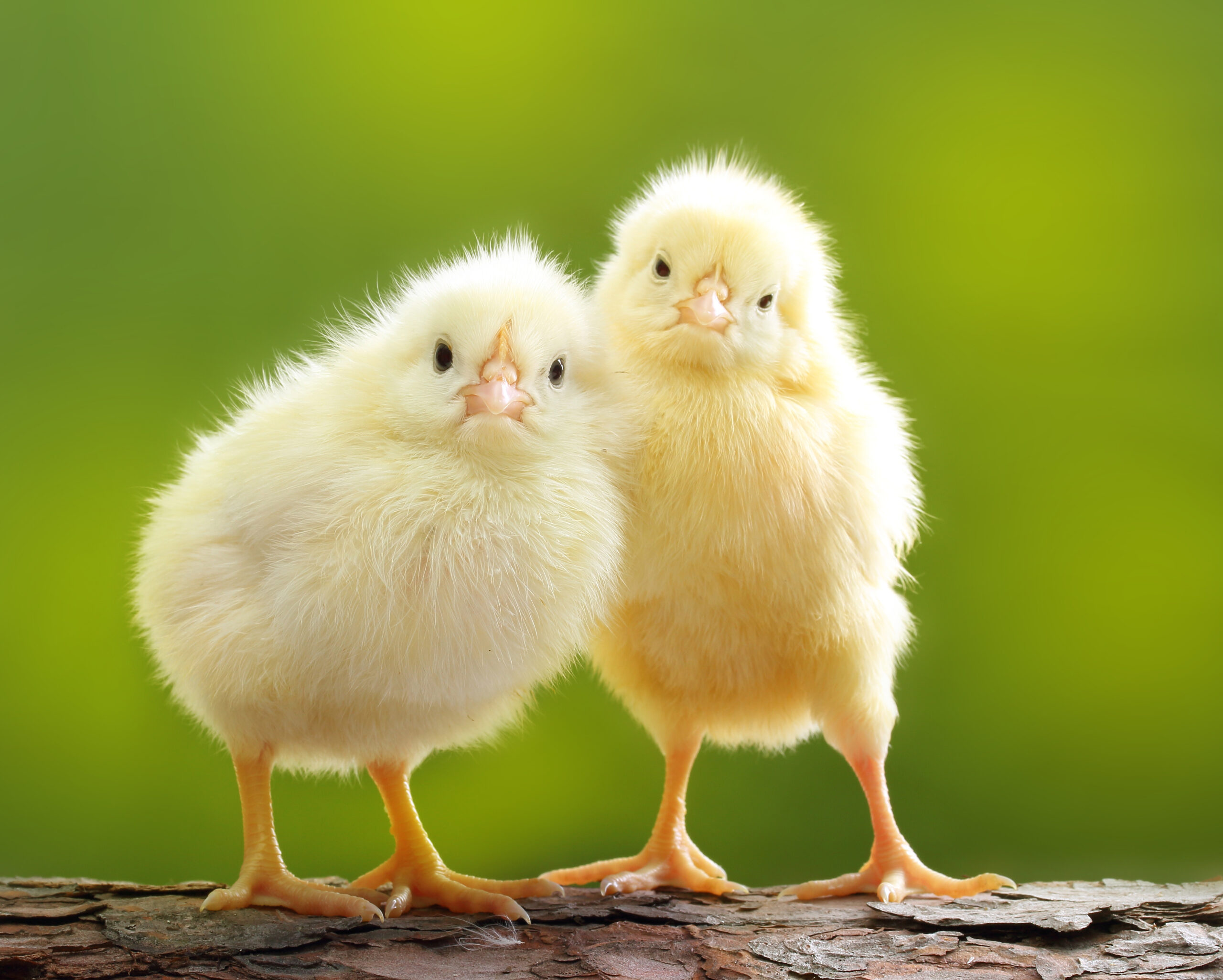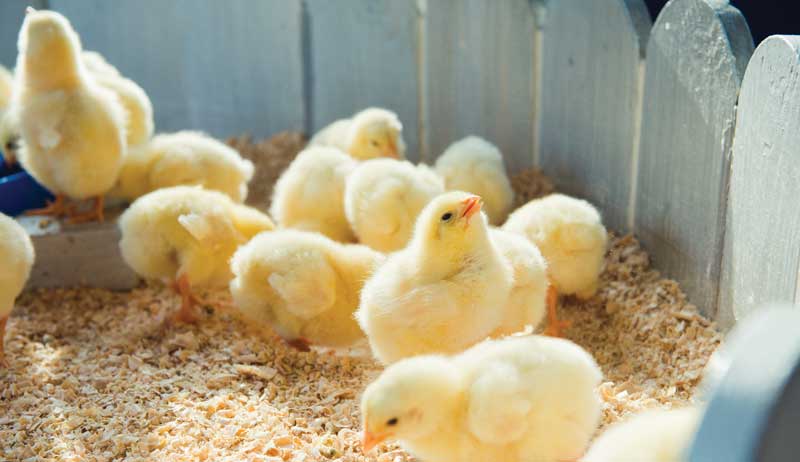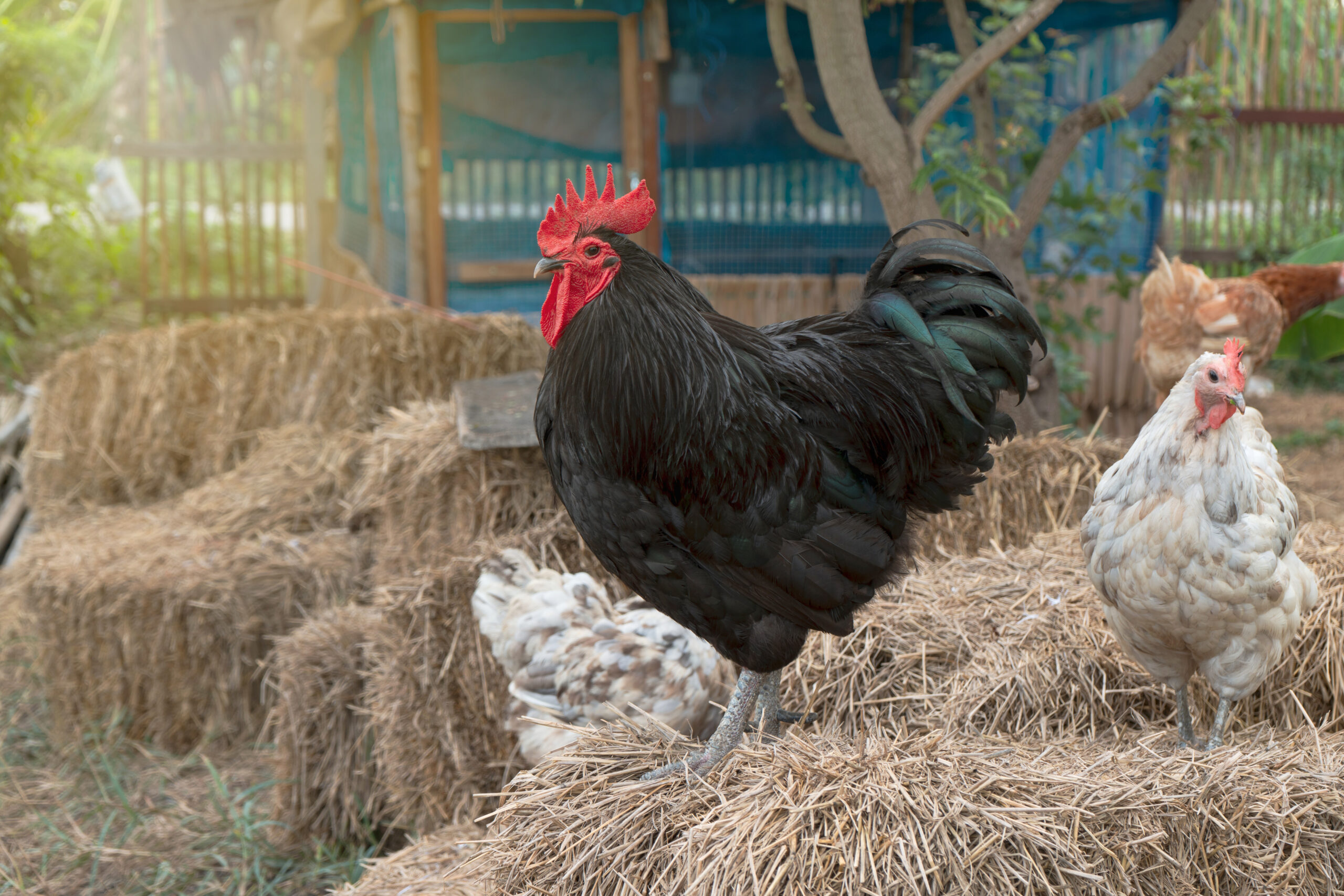
The best chicken breeds for confinement are calm, adaptable birds that tolerate life in coops and runs with minimal stress.
Best Chicken Breeds for Confinement
Choosing the right breed helps ensure healthy, content hens that thrive in limited space while remaining productive, manageable, and friendly. From gentle bantams to larger, slow-moving standard breeds, the following top ten picks are well-suited to confined living and make excellent choices for both novice and experienced chicken keepers.
#10 Japanese Bantam
This sweet bantam is well-suited to confinement thanks to its small size, ornamental appearance, and manageable activity level.
Easily excitable as chicks, the Japanese bantam requires daily handling for them to become tame. Once they have “calmed down,” these lively chickens make delightful pets and show birds.
While the breed is fairly hardy, they do need supplemental heat in winter to prevent frostbite. Japanese bantams also enjoy being outside in fair weather and require an attached run for them to stretch their legs.
Hens of this breed are poor layers, producing an average of two to three small white or tinted eggs.
#9: Belgium D’uccle
The Belgium d’Uccle is a true bantam that adapts well to confinement due to its gentle temperament and strong bond with human caretakers. These delightful chickens are sweet and friendly and enjoy interacting with their family. Even roosters of this breed are reported to be good-natured and friendly toward their handlers.
Due to the feathering on their feet and legs, the breed should only be allowed out in the run when the ground is completely dry. While they are generally considered to be hardy, like all bantams, they can be more prone to diseases than standard fowl.
Hens are fair layers, producing an average of three to five small white or tinted eggs weekly.
The breed’s most popular color pattern, Mille Fleur (meaning “thousand flowers”), earned its name from the white speckles on their feathers.
#8 Black Australorp
Black Australorps are one of the best chicken breeds for confinement because of their calm, docile nature and ability to tolerate limited space.
Australorps make exceptional pets if handled daily from a young age. The breed is prone to being shy, but that shouldn’t discourage pet owners from trying this sweet-tempered chicken. With frequent handling, Australorps mature into friendly hens and quickly become part of the family.
The Australorp comes in three colors: black, blue, and white, but black is the primary color found in the U.S.
Australorp hens are excellent egg layers, averaging four to six large light brown eggs weekly. Some Australorp hens also go broody and will hatch and raise chicks of their own.
#7 Cochin
Cochins thrive in confinement thanks to their slow-moving nature, gentle personality, and preference for staying close to home.
Cochin chickens are friendly, calm, and gentle. They love to interact with people and can often be found sitting on a family member’s lap.
Due to their large frame and gentle disposition, Cochins can not move as quickly as other breeds, so they can be picked off easily by predators. Therefore, the breed must have confinement and should not be allowed to free range.
As egg layers, Cochin hens are fair layers, producing an average of two to five medium-sized brown eggs weekly. While they may not be the best egg producers, Cochins make up in personality what they lack in egg production.
#6 Polish
Polish are well-suited to confinement because their large crest limits predator awareness and their gentle temperament keeps them calm in enclosed spaces. Sweet, gentle, and an excellent show bird, the Polish chicken has a lot to offer the poultry enthusiast.
When raised as pets, these chickens are calm, friendly, and love interacting with their owner. They are extremely social and require the company of another Polish chicken.
To keep these chickens calm, the crest should be trimmed as necessary to prevent the feathers from blocking the chickens’ vision.
Due to their fancy feathering, Polish need a little extra TLC to keep them healthy and external parasite-free. Routinely checking and treating for mites and lice is critical to keep these lovely chickens looking and feeling their best.
Polish hens are fair layers, averaging two to four medium-sized white eggs per week.
#5 Wyandotte
Wyandottes handle confinement well due to their calm disposition and tendency to wander if allowed to free range. With their striking feather patterns, it’s easy to see how the Wyandotte is highly favored among backyard flock owners and on the show table.
As pets, Wyandottes are friendly, intelligent, and docile. While some can be aloof, the breed is generally considered to be calm. Hens are prone to wandering, so confinement is needed to keep them close to home.
An interesting fact about Wyandotte chickens is that not all Wyandotte roosters carry the rose comb gene. Roosters lacking this gene will produce offspring with single combs.
Wyandotte hens are good brown egg producers, averaging four to six eggs weekly.
#4 Orpington
Orpingtons are ideal for confinement because of their friendly, relaxed personalities and strong tolerance for coop and run living.
Calm, curious, interactive, and dog-like, the Buff Orpington is often referred to as the “Golden Retriever of the chicken world.” These golden beauties are the perfect breed for novices and families with children.
Orpington hens are good egg layers, averaging four to six large brown eggs weekly. Hens are prone to broodiness and will happily hatch out chicks if given the opportunity.
Did you know? The Orpington was first bred in black. It wasn’t until eighteen years after the breed was first developed that the Buff variety was introduced.
#3 Silkie
Silkies excel in confinement thanks to their quiet, affectionate nature and limited ability to cope with wet or cold outdoor conditions. Silkies are the ideal hen for those looking for an interactive pet.
Due to their unique, fur-like feathers, Silkies should not be allowed outdoors when the weather is chilly or damp, or the run is damp and wet. In northern climates, the breed requires heat during the winter months to keep them snug and warm.
Silkie hens are fair egg layers, averaging two to four small white eggs weekly. Hens are exceptional broodies and will hatch and raise young from any breed.
#2 Brahma
Despite their large size, Brahmas adapt well to confinement because of their slow pace, gentle temperament, and easygoing nature.
Easy to tame, the breed is very trusting, making them easy to work with. Brahma chickens are calm, friendly, and gentle with kids. They get along well with other breeds and do well in mixed flocks, often working as the flock’s peacemaker.
Brahma chickens are slow maturing and take two years to reach maturity and potential size.
Hens are dependable layers, averaging three to six medium/large light brown eggs weekly.
#1 Delaware
Delawares do well in confinement because their high visibility and inquisitive nature make supervised, enclosed environments the safest option. These large, white chickens are easy for aerial predators to spot, so keeping them confined is necessary to avoid casualties.
Delaware hens are known for their inquisitive and quirky personality, though the breed can become grumpy if not given their own way. These clever hens can be intelligent to a fault and must be provided with mental and physical stimulation to prevent boredom.
In the henhouse, Delawares are assertive, but not bullies. The breed does well in mixed flocks.
As egg layers, hens are good producers, averaging four to six large/extra-large brown eggs weekly. Some hens of this breed are prone to broodiness, but not all hens will willingly hatch out chicks.
Best Chicken Breeds for Confinement: Final Thoughts
These ten sweet-tempered breeds stand out as some of the best chicken breeds for confinement, thanks to their calm personalities, manageable activity levels, and ability to thrive in coops and runs. Whether you’re raising chickens in a small backyard, urban setting, or predator-heavy area, these breeds offer a practical and rewarding option for poultry keepers seeking friendly, low-stress birds that adapt well to confined living.
FAQ: Chicken Breeds for Confinement
What are the best chicken breeds for confinement?
The best chicken breeds for confinement are calm, people-friendly birds that tolerate limited space, such as Orpingtons, Cochins, Australorps, Silkies, and Wyandottes.
Can chickens be raised without free ranging?
Yes. Many chicken breeds thrive in coops and attached runs as long as they have adequate space, enrichment, and daily care. Breeds selected for confinement tend to experience less stress without free ranging.
Are bantam chickens better for confinement than standard breeds?
Bantam chickens often do well in confinement due to their smaller size and lower space requirements, but many standard breeds with calm temperaments also adapt well to confined living.
How much space do confined chickens need?
Confined chickens generally need at least 3–4 square feet per bird inside the coop and 8–10 square feet per bird in an outdoor run to remain healthy and stress-free.
This article about the best chicken breeds for confinement was written for Hobby Farms and Chickens magazines. Click here to subscribe.