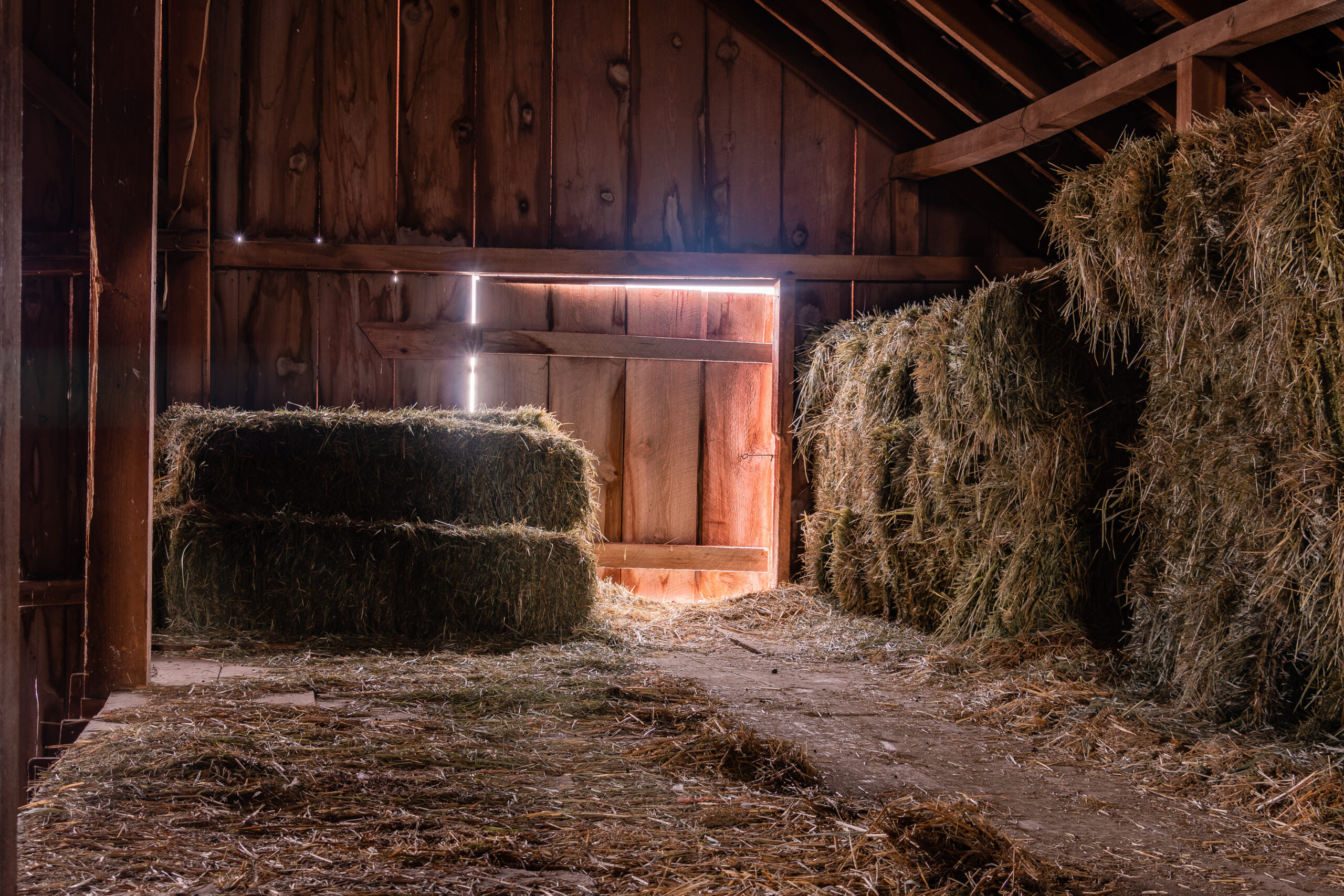
What to do with old hay is a common question, since it’s rare to find a farm that doesn’t occasionally have spoiled or leftover farm hay to dispose of. If you’re wondering what to do with old hay that’s no longer suitable for feed, there are several practical ways to put it to work around your property.
What to Do With Old Hay: How It Accumulates
When you’re feeding a herd of livestock—regardless of breed or numbers—forage is a huge piece of the puzzle for many farms. And when you measure your hay consumption in terms of tonnage, it should come as no surprise that there will be a certain percentage of that forage that is just unfeedable. Maybe some minor mildew or mold prevented use for feeding, or perhaps you have some that’s a couple of seasons old and starting to lose its nutritional value. It’s just part of farming with livestock.
On the upside, there are some surprisingly useful purposes for this otherwise useless material. Let’s take a quick look at some ways to put old, unfeedable hay to good use on your property. Note: Straw is often the go-to option for many of these tasks. Using hay works, too, with the caveat that you might be more likely to reintroduce weeds if they’re present in the forage. With that said, here are some options:
1. Ground Insulation
During the winter, a good layer of snow can help insulate the ground and keep it from freezing hard. Snow also protects buried water lines, well pipes, and septic tanks. But what about cold winters with little or no snow cover? Old hay can work wonders here. A fluffy layer on top of bare ground can help protect vulnerable areas and water lines from cold temperatures. Using old hay or straw is also common around new construction sites, where the ground is still rough and barren with no vegetation.
2. Seeding and Erosion
Landscapers have long utilized straw when putting in a new lawn as a method to halt erosion and hold grass seeds in place until germination. Hay can work as well. Any place like this, where you’re trying to keep grass seeds protected, might benefit from a layer of hay. And it can be used to aid in erosion control regardless of whether you’re trying to grow seeds there or not.
3. Composting
If you have a compost pile, old faded hay can supply you with some much-needed “brown” (carbon) material. Animal manure—from chickens, cows, rabbits—is great, as are many kitchen waste items like banana peels, coffee grounds, and vegetable scraps, but these are all examples of “green” (nitrogen) composting sources. Old hay can be mixed into your compost pile and helps achieve a proper balance of carbon and nitrogen.
4. Landscaping and Garden Mulch
Hay can be used as mulch in orchards and gardens. A thin layer can keep the soil around the bases of plants moist during hot days, and slowly add nutrients back in, feeding your garden as it decomposes. It can be used in between garden rows, as well as at the bases of young trees, as long as it doesn’t touch the trunks.
What to Do With Old Hay: FAQs
What can you do with old hay that is no longer good for feed?
Old hay that isn’t suitable for livestock can still be useful around your property. Common uses include composting, mulching garden beds, controlling erosion, and insulating the ground in winter. Even lower-quality farm hay can serve a purpose when repurposed correctly.
Can you compost old hay?
Yes, it is an excellent addition to a compost pile. It acts as a “brown” material, adding carbon to balance nitrogen-rich “green” materials like manure and kitchen scraps. Be sure to mix it well to maintain airflow and proper decomposition.
Is moldy hay safe to use in the garden?
Moldy hay should not be fed to livestock, but it can still be used in compost or as mulch in non-sensitive areas. However, avoid using heavily it directly around delicate plants, as it may introduce unwanted fungi.
Will hay grow weeds if used as mulch?
Hay can contain seeds, so it may introduce weeds when used as mulch. This is why straw is often preferred. If you use hay, apply it in thin layers and monitor for any unwanted growth.
What is the difference between hay and straw for landscaping?
Hay is made from grasses or legumes and often contains seeds and nutrients, while straw is the leftover stalks from harvested grains and typically has fewer seeds. Hay can add nutrients to soil as it breaks down, but straw is usually better for weed control.
This article was written for Hobby Farms and Chickens magazine. Click here to subscribe.