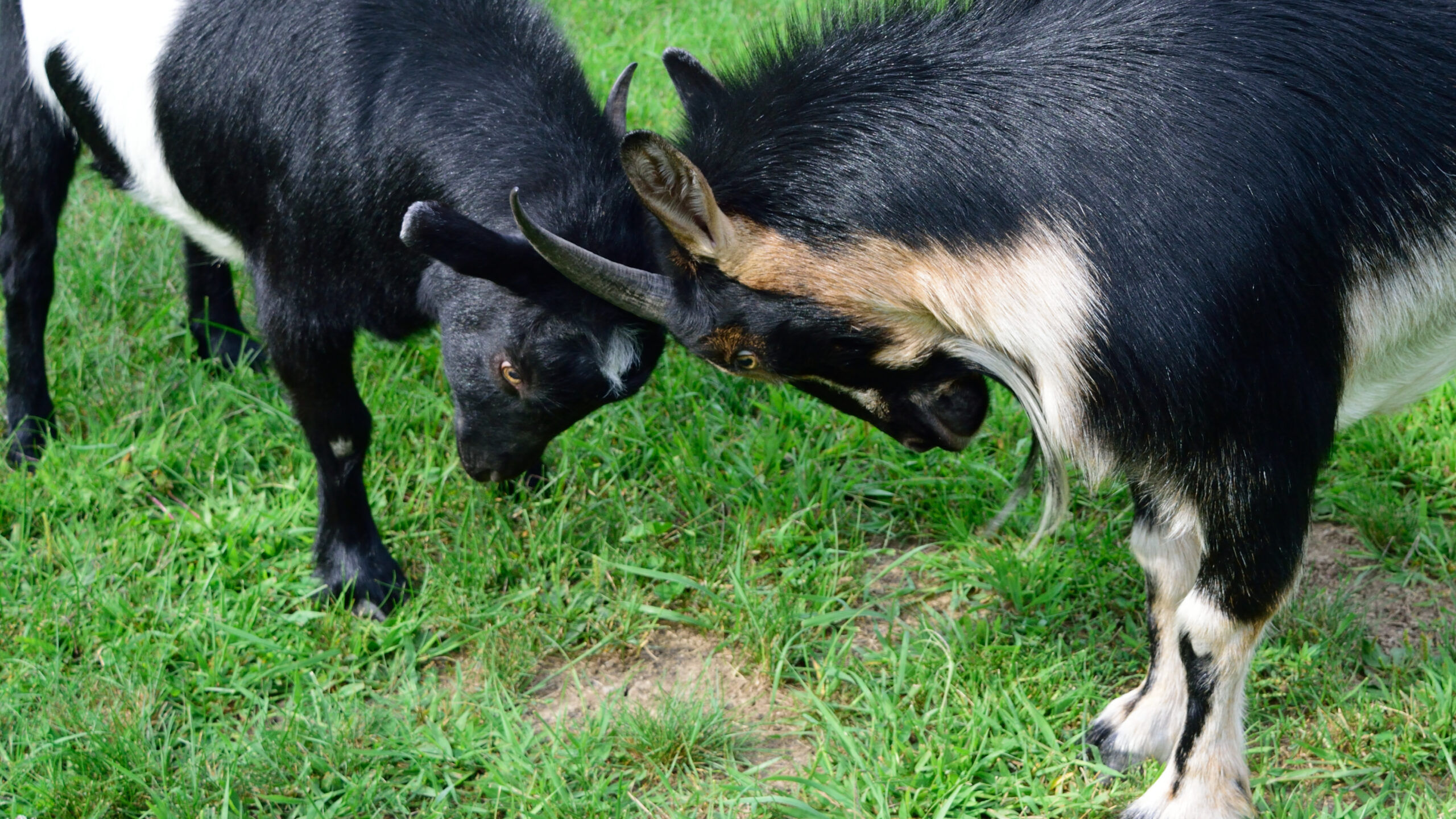
Why do goats headbutt? It’s an interesting question, especially when you contrast goats with another, similarly related species: deer. Whitetail deer are so common throughout North America, and you may be familiar with some of their behaviors. Wild deer wrestle with their antlers, but only the males, and primarily during breeding season. And yet domesticated goats—a species not terribly distant from deer—love to push and headbutt all the time. And it’s all types of goats that participate in the headbutting behavior—males, females, wethers, young, old. So why do goats, in particular, love to headbutt? What are they trying to achieve?
1. Headbutting is Fun for Goats
Because it’s fun! Across the board, this could be the most common reason. Goats of all ages and sexes simply enjoy headbutting as a rambunctious, lively game. Happy goats just being let out into the pasture often visually display some of their exuberance by playfully headbutting each other. They square off, make eye contact, and then—in some form of mutual, silent communication—raise up on the hind legs, curve their bodies and necks, and then come back down with varying levels of actual head contact, sometimes rough, but often very gently indeed. Young goats may play this way, older goats may, too.
2. Goats Headbutt to Establish Social Hierarchy
Because they’re social animals. Goats are intelligent mammals—very intelligent—and this leads to some interesting herd dynamics and social structures in their groups. Just as chickens or horses may “work out differences” when it comes to pecking order for the best spot at the food source, goats may headbutt each other to establish hierarchy among themselves. This type of headbutting may be more at ground level, and more of a pushing/shoving nature, often regarding such simple questions as “who gets first dibs at the food?!”
3. Introducing a New Goat Triggers Headbutting
Because there is a new member of the herd. Similarly, if you introduce a new goat into an existing herd, there is bound to be some headbutting—possibly quite a bit—as the new hierarchy is determined. You can help keep the melee to a minimum by introducing multiple new goats at once (not just a single outsider), by letting the new and existing goats share a fence first so they get to know each other ahead of time, and by making sure there is plenty of room and food in different places so everybody gets a share.
4. Breeding Season Increases Headbutting Behavior
Because it’s breeding season. The peak of the goat breeding season is in the late fall. Bucks may certainly headbutt more during this time, and you may even find that the females behave more unusually as well.
How to Stay Safe Around Headbutting Goats
Handlers, be careful! In light of all this, it’s important for handlers to study the safety aspects of working around goats.
· Avoid petting the head too much. Your goat may find a head scratch/pet nice, but it could cause them to try headbutting at your hand.
· Try not to use body language in a manner that your goats might think resembles head-butting—or they may try to join in.
· Study your goats’ behaviors so that you can learn to predict when they’re considering a headbutt.
Final Thoughts: Why Do Goats Headbutt?
Goats headbutt for a variety of reasons, from simple playfulness to establishing social hierarchy, adjusting to new herd members, and breeding season behaviors. Understanding why goats headbutt can help handlers predict their movements, manage herd dynamics, and ensure both human and goat safety. Whether you’re raising goats for pets, milk, or breeding, observing headbutting behavior is a key part of understanding goat communication and social structure. By paying attention to why goats headbutt, you can better meet their physical and social needs while keeping interactions safe and enjoyable.
This article about why do goats headbutt was written for Hobby Farms magazine. Click here to subscribe.