Winter garden cleanup doesn’t necessarily mean cutting back every faded flower, removing every dead plant or raking up every fallen leaf. While clearing away certain garden debris can help prevent disease and prepare beds for spring, leaving some plants and natural materials in place benefits birds, native bees and other wildlife. Knowing what to remove and what to leave can help you find a balance between a tidy garden and a healthier winter habitat.
Winter Garden Cleanup: Key Takeaways
- Winter garden cleanup helps remove diseased vegetable plants and other debris that could cause problems in spring.
- Leaving some dried flowers and perennial stems provides food and shelter for overwintering birds and beneficial insects.
- Fallen leaves can insulate soil, provide wildlife habitat and contribute organic matter as they decompose.
- A combination of selective cleanup and leaving natural materials in place benefits both the garden and local wildlife.
Why Garden Cleanup Matters
It’s easy to make a case for performing an annual garden cleanout each fall. Your garden landscape will generally look nicer if some of the most wilted and faded plant material is removed. Maybe you also want to rake leaves and get the ground cleared so that it looks tidy now and is ready for mowing next season. From a strictly aesthetic standpoint, completely cleaning the garden is often popular. Plus, the more garden beds you clear out now, the less work you’ll have facing you in the spring—things are just ready to go. Tidiness and reduced spring labor are probably the main reasons for performing a thorough fall garden cleanup.
Removing diseased plant material is particularly important. Some fungal pathogens and other disease-causing organisms can survive winter in infected leaves, stems and other garden debris, potentially creating problems when the growing season returns.
Why You Should Leave Some Plants in Place
But there are also some reasons you might consider leaving at least some portions of your winter garden in place during the winter months. Sunflowers are an excellent example. Even though the flowerheads might be wilted from freezing temperatures, the stalks themselves usually remain strong and upright. If you grow a bed of sunflowers and didn’t harvest all the seeds, leaving the old plants intact can be beneficial to birds who overwinter in your area. Chickadees in particular will return over and over to old sunflowers to retrieve the seeds, and species like goldfinch love them.
Leaving dried flower stalks such as coneflowers, black-eyed Susans, dill and sedum can provide food and shelter for wildlife. Some native bees, including mason bees, use hollow or pithy plant stems for nesting or overwintering. Rather than cutting everything down in fall, consider leaving some stems standing until spring.
Raking leaves certainly makes the lawn look tidy, but some leaf litter can help insulate the ground from cold temperatures. Leaf litter is also helpful to native beneficial insects who might use the leaves for winter shelter. And leaves can be a source of nitrogen. Mowing fallen leaves can help break them up into smaller pieces that will decompose easier.
What to Remove During Winter Garden Cleanup
You might want to take a middle-of-the-road approach. You might choose to completely clear out certain garden beds that are particularly “messy” and not very helpful to wildlife. For example, finished tomato vines often look untidy and unattractive, with brown stems and a few old, mushy tomatoes scattered about. And since all of this is probably of minimal benefit to insects and wildlife, you might as well clean them all up. Plus, leaving the vines might actually spread plant disease or attract unwanted garden visitors like mice and voles.
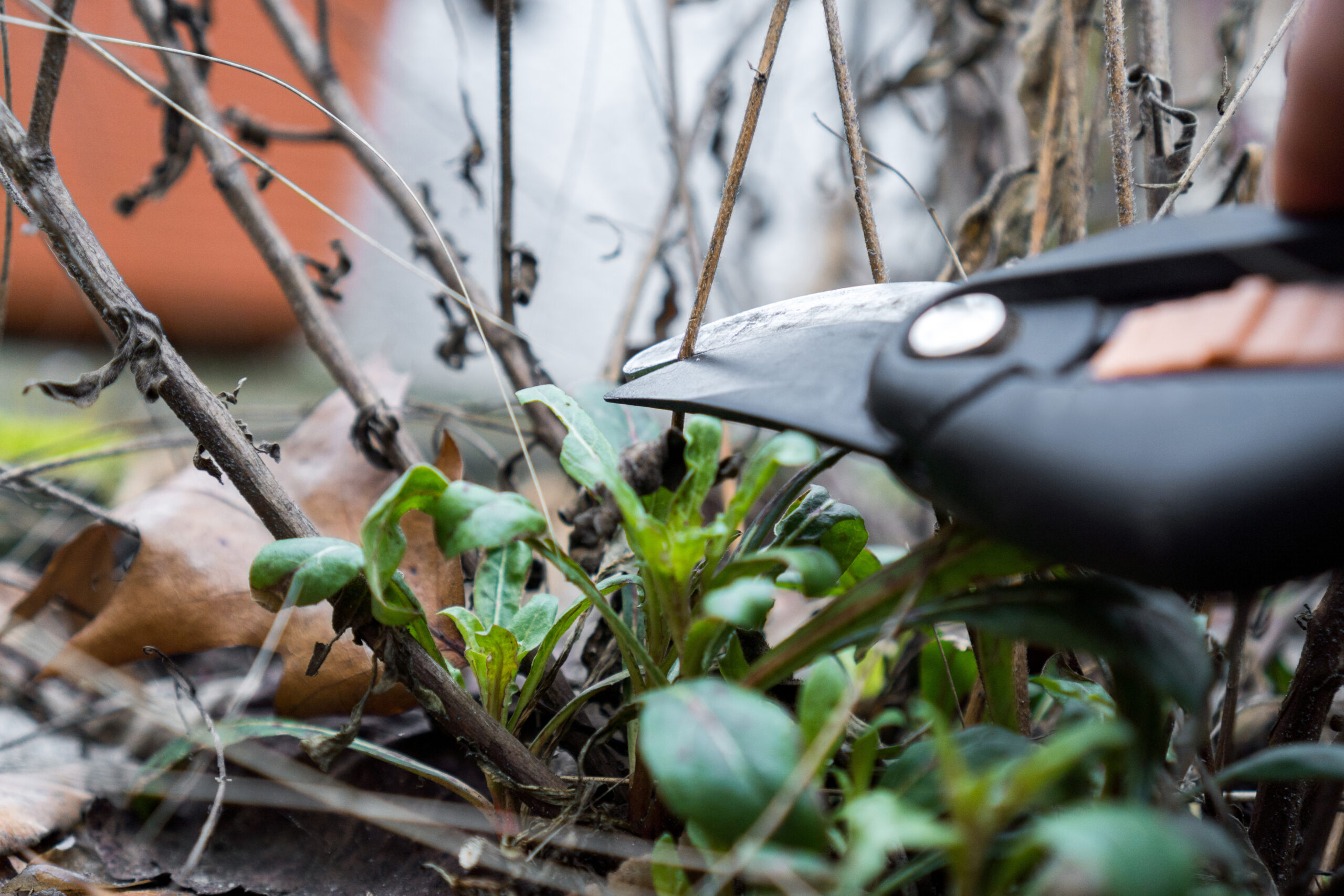
There are other examples of garden debris you’re probably best off just cleaning up—pepper plants, old apples on the ground, your pea and bean trellises, dead squash vines and those old cucumbers on the ground that you didn’t have time to harvest. Most vegetable plants should likely be removed. Healthy vegetable plants can sometimes be composted, but diseased plants should be discarded appropriately rather than added to a home compost pile that may not get hot enough to destroy pathogens. And certain perennials like herbaceous peonies, should be cut back to almost the crown to prevent disease. Tree peonies should not be cut back in the same way. But the dried stalks of certain plants and chopped leaf litter can be beneficial when left overwinter.
Frequently Asked Questions About Winter Garden Cleanup
Should I remove all dead plants from my garden in winter?
No. Remove diseased vegetable plants and other debris that could harbor pests or plant pathogens, but consider leaving healthy perennial stems, dried flowers and some leaf litter. These materials can provide food and winter shelter for birds and beneficial insects.
What if the leaves on my lawn are really thick?
A thick layer of leaves can smother grass, restrict sunlight and contribute to lawn damage. Rake or mulch excessive leaf litter, but consider leaving a thinner layer beneath trees, shrubs and in garden beds where it can provide insulation and habitat.
When should I finish winter garden cleanup?
There’s no need to complete every cleanup task in fall. Remove diseased plants and problematic vegetable debris before winter, but consider leaving healthy perennial stems and dried flowerheads until spring. Waiting until temperatures warm consistently can give overwintering insects time to emerge.
Winter garden cleanup doesn’t have to mean making every garden bed look spotless. Removing diseased plants and unwanted vegetable debris is worthwhile, but leaving some flowers, stems and leaves in place can benefit birds, native bees and other wildlife. A little less fall cleanup can make a difference to the garden ecosystem while still leaving plenty of time to prepare for spring planting.
This article about winter garden cleanup was written for Hobby Farms magazine. Click here to subscribe.