The Cayuga Duck is one of the few domestic duck breeds to originate in the U.S. It’s a true American classic!
What Is a Cayuga Duck?
The Cayuga duck is known for shimmering beetle-green colored feathers, a calm temperament and unique black eggs. It is prized ornamentally and practically. Cayugas are excellent layers and produce flavorful meat. They are the only ducks to lay black eggs and make a fun addition to backyard flocks.
Cayuga Duck History: An American Mystery
The Cayuga’s origin is a mystery, as no one knows how they were first developed. A New York miller is credited with introducing the breed after he captured a pair of wild ducks, but the rest of the origin of the breed is unknown.
The Cayuga duck, however, is considered a descendant of the Mallard, as drakes sport a curly tail feather — a physical characteristic only seen in Mallards and their descendants.
The Cayuga duck began to gain popularity when Mr. John S. Clark introduced the breed to the Finger Lakes region of Cayuga County, New York, in 1840. The breed grew in popularity and went on to become the primary duck raised for meat in the U. S. during the second half of the nineteenth century.
It wasn’t until the arrival of the Pekin from China in 1873 that the breed’s popularity decreased.
Today, the Cayuga duck is listed as “Watch” by The Livestock Conservancy, meaning it is a heritage breed that is recovering but still needs support from backyard keepers and breeders.
Unique Egg Production
Cayuga duck females are unique, as they are the only ducks to lay black eggs. In late winter or early spring, when a Cayuga begins to lay, she will lay three to four black eggs. After those initial black eggs, the shell will fade to charcoal gray, then to a pale green or blue before fading to white. This is one of the reasons many backyard duck enthusiasts choose the Cayuga duck.
Egg production: 100–200 large eggs annually
Laying season: Spring and summer (not year-round)
Potential owners should bear in mind that this breed is a seasonal layer and will not produce eggs during the fall or winter months.
Cayuga Duck Meat: Flavorful but Unique
Even though Cayugas are usually kept for egg production and as family pets, they still make a good table bird and serve their original purpose well.
Ducks can be harvested by the age of eight weeks. But for optimal results, butchering should be held off until the ducklings reach twelve weeks of age.
The meat of the Cayuga duck has a good, strong, beefy, flavor. Like all ducks, the Cayuga’s meat is greasier than a chicken or turkey.
Meat flavor: Rich, beefy, and slightly greasy (like most duck)
Processing challenge: Black feathers may require skinning the carcass
The black feathers can make cleaning the carcass more difficult, often requiring the processor to skin the duck. This trait can be a disadvantage, and the breed may not be the best choice if you are raising duck meat as a source of income.
Adobe Stock/knelson20
Striking Plumage and Appearance
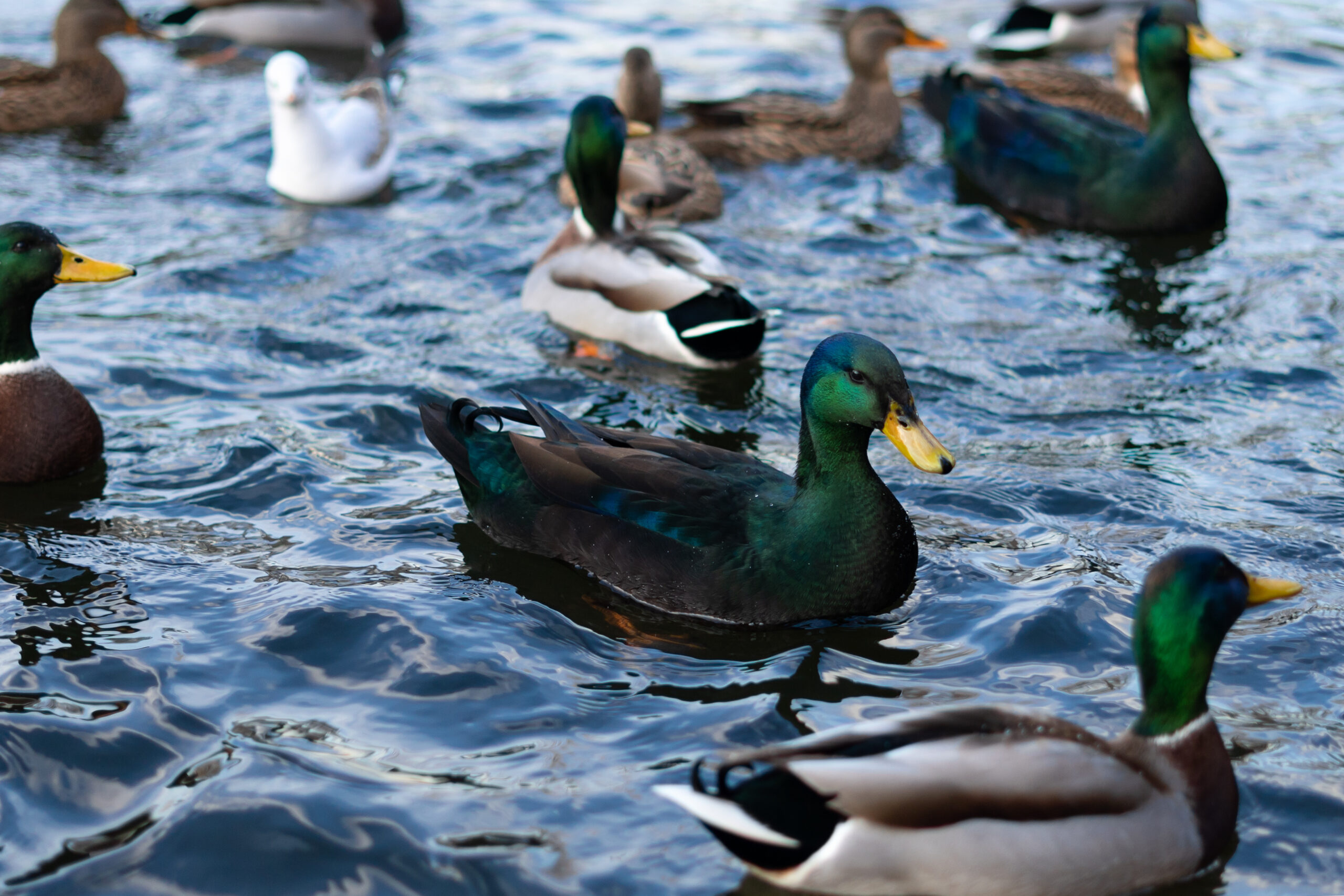
The Cayuga duck has luxurious black feathers with a beetle-green sheen. Depending on how sunlight reflects off the feather pigments, the beetle-green sheen can turn to hues of blue and purple.
While the drakes sport black feathers their entire lives, female Cayugas’ black feathering is slowly replaced with white feathers as the duck ages. If a duck lives long enough, its entire head and body will be covered mostly in white feathers. Both drakes and females sport black feet, legs, and bills.
Bill, feet, and legs: Black
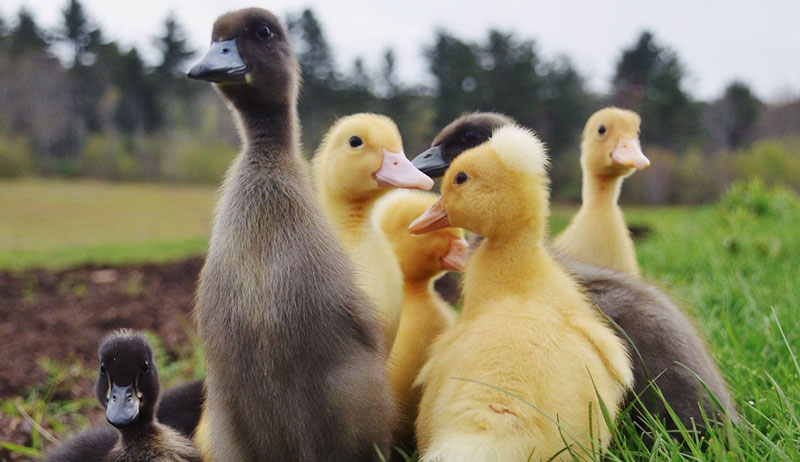
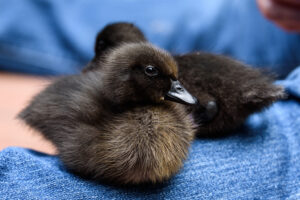
Ducklings: Covered in black down, some with yellow chest markings
Cayuga ducklings are covered in black down, with some ducklings having a yellow stripe down their chest. Like their parents, the ducklings also have black feet, legs, and bills.
Size and Lifespan
Classified as a medium weight, the Cayuga tips the scales evenly between five and ten pounds. With drakes averaging eight pounds and females seven pounds.
Drakes: ~8 pounds
Females: ~7 pounds
Lifespan: 5–9 years, up to 12 years with excellent care
The Cayuga Duck has an average lifespan of five to nine years. However, if properly cared for and raised as pets, these black beauties can live an average of eight to twelve years.
Cayuga Duck Health and Care
The Cayuga duck can be prone to external parasites, such as lice and mites, if kept in unsanitary conditions or if not provided with adequate bathing water. Providing them with access to clean swimming water via a kiddie pool or stock tank several times a week should help prevent external parasites from taking up residence on your feathered friends.
Like all ducks, Cayugas can be prone to Botulism, so care should be taken to prevent them from coming into contact with contaminated feed or water.
If fed a well-balanced diet and kept safe from predators, the Cayuga duck should not pose a problem for the novice and is relatively healthy.
Cayuga Duck Temperament
The Cayuga duck has a calm and friendly disposition, making it a good choice for those looking for a friendly pet duck. The breed is known for being independent and does not like to be held for long periods.
Intelligent and quick to learn, the Cayuga duck is capable of learning their name and can be taught to respond to simple commands. These intelligent duckies are problem solvers and can cause mischief if not provided with proper mental and physical stimulation.
Fun Facts About the Cayuga DuckDue to their calm temperament, the Cayuga duck can be used in herding trials in the placement of Indian Runners. The Cayuga duck is one of the quietest of the domestic duck breeds, with the females’ quack still being louder than the drakes’. Did you know? Cayuga ducks are more prone to biting and nibbling toes than other domestic duck breeds. |
Final Thoughts: Why Choose the Cayuga Duck?
From black eggs to beetle-green plumage, the Cayuga duck is a true American original. Whether you’re seeking a quiet pet, an eye-catching flock member, or a dual-purpose breed for both eggs and meat, the Cayuga duck delivers on all fronts. With their gentle nature and unique appearance, Cayugas are a delightful and practical choice for any backyard poultry keeper.
🦆 Cayuga Duck FAQ |
This article was written for Hobby Farms and Chickens magazines. Click here to subscribe.