Lasagna gardening, also known as “sheet composting,” is a simple, no-dig method for turning grassy or weedy spaces into productive garden beds. By layering cardboard or newspaper with organic materials such as leaves, compost, and grass clippings, this method suppresses weeds while building nutrient-rich soil. Over time, the layers decompose, creating fertile ground ready for planting without the need for tilling or strenuous digging.
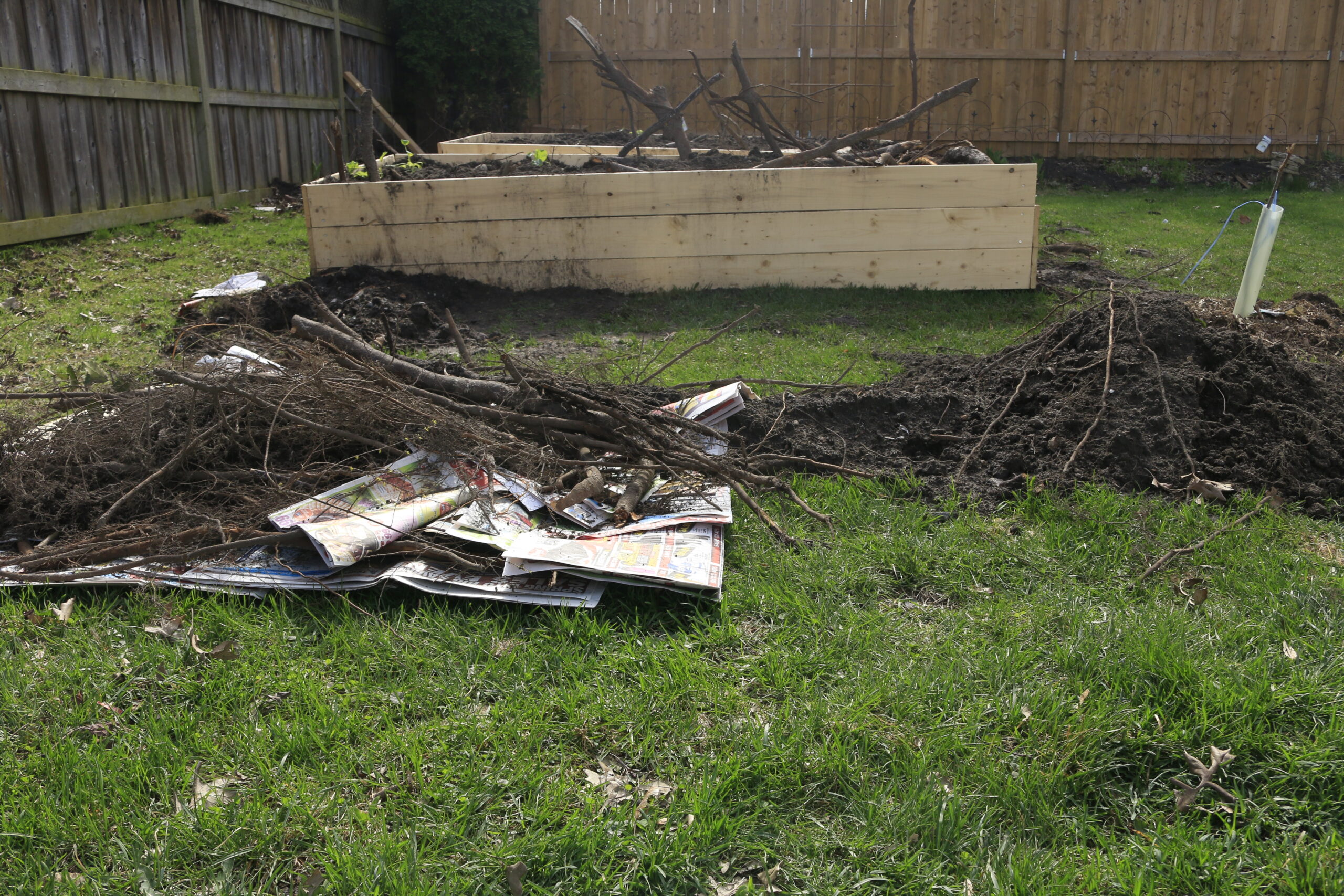
As a child, I remember watching my mom start a new garden. She was adding a vegetable garden space on top of the hill at my grandparents’ house. She began by laying down cardboard. She placed flattened pieces of cardboard and newspaper on top of the lawn in the shape she wanted her new garden to be. She explained that this would snuff out the grass and eventually the paper would break down. She laid wooden logs around the edges of the cardboard. Then she added some old mulch and old leaves and shoveled dirt over that in a thick layer. That’s it, it was that simple! Mom didn’t have a name for the method back then but it’s what I now know as the “lasagna gardening” method.
No-Dig Methods for the Win
Lasagna gardening, also sometimes referred to as “sheet composting,” is a cost-effective, no-dig way to turn a weedy or grassy space into a garden. Because you aren’t tilling soil and removing the grass and weeds by hand, it’s much easier on the body.
The idea is that you snuff out the growth below the paper layer, then add organic materials that will eventually break down, top with soil (if you want), and you’re ready to go. The paper will eventually decompose, as well as the organic matter, offering nutrients to the soil below.
Ideally, you’d prep your garden in the fall using fall garden clean-up, such as fallen leaves and twigs, in your layering. By spring, the garden will be ready for planting. If you want to speed up the process, garden soil can be added in a thick final layer and planted directly into.
Materials Needed for Lasagna Gardening
To create a productive no-dig garden, gather the following supplies:
Cardboard or Newspaper – Forms the base layer and suppresses weeds. Avoid glossy or coated paper.
Brown Organic Materials – Shredded leaves, straw, twigs, sawdust, or mulch provide carbon and structure.
Green Organic Materials – Grass clippings, compost, coffee grounds, or kitchen scraps supply nitrogen.
Optional Garden Soil or Compost – Helps plants establish quickly if you want to plant immediately.
Watering Can or Hose – To moisten layers and aid decomposition.
Step-by-Step Guide to Lasagna Gardening
Choose the Location
Select a flat or gently sloped area with good sunlight. Mow any tall grass if necessary.Outline Your Garden
Plan the size and shape of your garden. If desired, line the edges with logs, rocks, or garden bed frames to contain layers.Lay the Base Layer
Cover the ground with cardboard or multiple layers of newspaper. Overlap the edges to prevent weeds from sneaking through. Remove any tape or glossy sections.Add Brown Organic Materials
Layer shredded leaves, straw, sawdust, twigs, or mulch on top of the paper. These materials provide carbon and structure to the bed.Add Green Organic Materials
Spread grass clippings, compost, food scraps, or coffee grounds. These materials supply nitrogen, essential for plant growth.Repeat Layers as Needed
Alternate brown and green layers until the bed reaches the desired height, typically 12–18 inches. Only one base layer of cardboard or paper is needed.Water the Layers
Lightly water each layer as you build the bed to help materials settle and start the decomposition process.Optional Final Layer of Soil
Add garden soil or compost on top if you want to plant immediately. Otherwise, allow the layers to break down naturally over the fall and winter.Planting
Once the bed has settled, you can plant directly into the top layer. Root crops, vegetables, and annual flowers all thrive in lasagna gardens.
Tips for a Successful Lasagna Garden
Layer Wisely – Alternate brown and green materials for a balanced decomposition process.
Moisture Matters – Keep layers slightly damp, but avoid waterlogging.
Start in the Fall – Build beds in the fall to allow materials to break down before spring planting.
Select the Right Plants – Most vegetables, herbs, and annual flowers thrive in lasagna gardens. Root crops like carrots do especially well in thick, well-decomposed beds.
Avoid Shiny Paper – Glossy sections or tape can slow decomposition and inhibit plant growth.
Be Patient – Layers need time to decompose. Allowing the bed to settle before planting produces the best results.
Final Thoughts
Lasagna gardening is a simple, sustainable, and highly effective way to create a productive garden without the physical strain of digging or tilling. By layering organic materials, this method improves soil fertility, suppresses weeds, and encourages healthy plant growth. Whether you’re a beginner or an experienced gardener, lasagna gardening offers a low-maintenance, environmentally friendly approach that can transform any grassy or weedy space into a thriving garden. With patience, proper layering, and a little planning, you can enjoy bountiful harvests and vibrant plants year after year.
This article about lasagna gardening was written for Hobby Farms magazine. Click here to subscribe.