The American Buff goose is not as common as other types of geese, but this delightful breed is a good addition to small farms and backyard flocks.
History of the Breed
The American Buff goose has a mostly unknown history, as no one knows what breeds were used to create them. Like many other types of domestic geese, however, they are derived from the European wild greylag goose.
First bred in Missouri, the breed was developed in the 1930s and 1940s by breeder Oscar Grow. After development, it quickly became approved by the American Poultry Association (APA) and was added to the Standard of Perfection in 1947.
Today, American Buff geese are one of the more rare types of geese and are listed as “watch” (meaning there are fewer than five thousand breeding American Buff geese in the U.S.) by the American Livestock Breeders’ Conservancy.
American Buff Goose Appearance and Characteristics
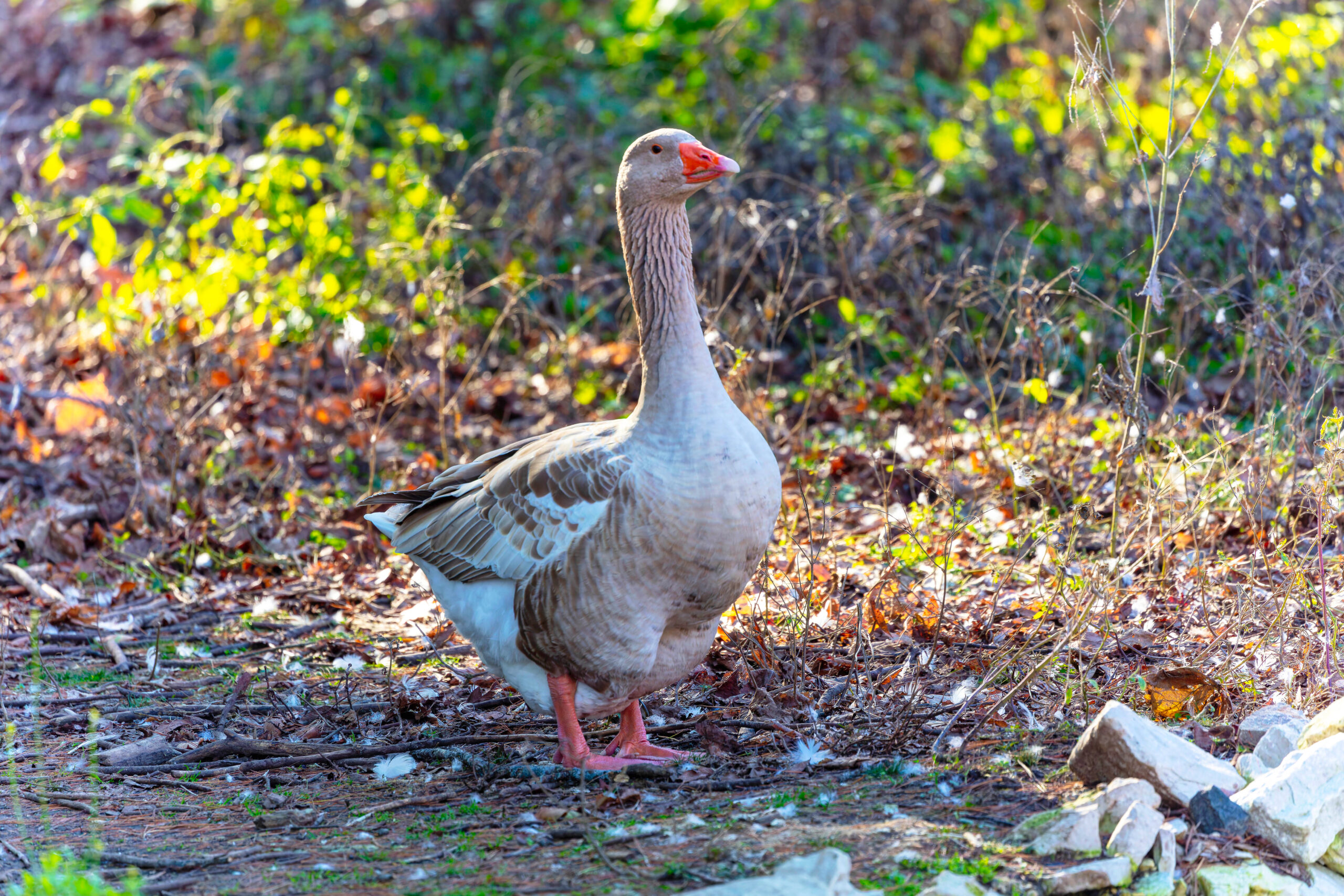
Buff geese are a unique color that is not found in wild geese or many other varieties of domestic geese. The back and sides are covered in apricot-fawn colored feathers edged in creamy white. Abdomens are covered in pure white feathers.
The bill, legs and feet of American Buff geese are orange to reddish orange. Legs should be firm and sturdy to support the goose’s bulky frame.
Overall, the breed has a typical appearance of a European goose with a medium-long neck, chunky body, and a slightly arched back. The two fatty lobes on the abdomen give the breed its distinctive saggy look.
Are American Buff Geese Friendly and Social?
American Buff geese are curious, calm, and friendly, making them preferable to other types of geese for family pets. The breed is not prone to aggression and is reported to bond closely to people.
Inquisitive and curious, Buff geese are prone to wandering and should be kept in fenced enclosures to keep them home and safe from predators. They are also prone to getting into mischief, and should be housed in a safe coop and run to ensure their safety.
Both ganders (males) and geese (females) are good guard geese.
In a mixed flock, American Buff geese prefer their own kind and can behave in a snobbish way when interacting with other breeds.
American Buff Goose Meat and Egg Production
American Buff geese were first bred as meat birds, but these days they are kept more as family pets than for meat or egg production. The medium-sized carcass has a similar taste to other types of geese.
Young geese can be butchered at weeks 9, 15, or 20, depending on the desired size.
Female geese are fair egg layers, producing ten to twenty-five large, white eggs annually. Females usually start to lay around the age of one to two years, but it can take as long as three years for egg laying to begin.
Egg laying season is short, often falling between Valentine’s Day and Flag Day. However, the eggs are quite large (about the size of three chicken eggs).
American Buff Goose Lifespan and Health
Like most types of geese, American Buff geese are fairly long-lived, with their average lifespan falling between fifteen and twenty years of age.
The breed is generally healthy and does not have any breed-specific health problems. Like all geese, they can be prone to external and internal parasites (including coccidiosis).
Domestic geese, including the American Buff goose, can also carry harmful bacteria that can be transmissible to humans, including Salmonella and E.coli. However, these conditions should be rare in a well-cared-for flock.
Like all types of geese, American Buffs can suffer from nutritional deficiencies, angel wing, and bumblefoot, and can suffer from health problems if kept in an overcrowded or unclean environment.
American Buff Goose Parenting and Broodiness
American Buff geese are excellent parents, with both the gander and goose playing an active role in raising goslings.
Females are excellent broodies and will happily hatch out and raise goslings from another female, including eggs/goslings from another breed.
After hatching, the gander takes on the primary care role, raising the goslings and looking out for danger. Ganders are very protective of their young and will not hesitate to fight to the death to protect their family. Therefore, it is important to provide a safe enclosure at all times, but especially when raising young to protect geese from falling prey to predators.
American Buff geese are so paternal that they are known to steal eggs and young from other geese.
Tips for Keeping Geese Happy & Healthy
1. Like other types of geese, American Buff geese can be loud and may not be the best choice for flocks with close neighbors. However, they are reported to be quieter than noisy breeds such as the Chinese.
2. Due to their bulky frames, the American Buff goose requires more feed than smaller types of geese.
3. American Buff geese require clean swimming water in a kiddie pool or other shallow water source several times a week to stay clean, healthy, and parasite-free.
American Buff Goose Breed Summary
While they may not be as popular as other types of geese, American Buff geese are a good choice for those looking to raise their own meat or for the waterfowl enthusiast who enjoys the company of a friendly goose.
This article about the American Buff Goose was written for Hobby Farms and Chickens magazines. Click here to subscribe.