Chicken coop design has a bigger impact on your flock than many new chicken keepers realize. A well-planned chicken coop protects hens from predators, improves ventilation, makes daily chores easier and creates a healthier environment for egg production. Whether you’re building your first coop or upgrading an older one, thoughtful design choices can save time, reduce maintenance and make caring for your flock more enjoyable.
Every chicken keeper’s ideal coop looks a little different, but the best designs share a few important features. Use these ideas as inspiration to build a chicken coop that works well for both you and your birds.
Key Takeaways
- A well-designed chicken coop protects your flock while making daily chores faster and easier.
- Plan for at least 3 to 4 square feet of indoor space per chicken, with more room in colder climates.
- Use hardware cloth instead of standard chicken wire for better predator protection.
- Include proper ventilation, comfortable roosts and accessible nesting boxes for healthier birds.
- Design the coop with easy egg collection and simple clean-out access to save time.
- Consider electricity or solar power for lighting, automatic doors and electric fencing if your setup allows.
Learn from Your Previous Chicken Coop
Sometimes a hobby farmer has experimented with keeping chickens on a very small scale and is now ready to upgrade. This is an excellent time to take the lessons you’ve learned from your first chicken coop and apply them to the new design.
Ask yourself these questions:
- Was the coop door just too short?
- Did the angle of the clean-out door make for aggravating or uncomfortable work conditions?
- Were the nest boxes inconveniently located?
- Did the whole structure lack adequate ventilation?
- Was it built in a poor location for drainage, wind or sun exposure?
All of this experience can be very beneficial in moving forward on your new coop design. Choose the right location, far enough away from the house to control odors but not too far away from a water source.
Include enough ventilation—a square foot per chicken or at least 1⁄5 the coop’s wall space—to prevent excess ammonia smells and other unwanted gases. Make the coop comfortable to work in.
Read more: An automatic chicken coop door provides flexibility for chicken keepers.
How Big Should a Chicken Coop Be?
All things being equal, a coop with more square footage is probably nicer! And if the goal is really to build your ideal coop, explore designs with larger footprints. Keep in mind that more square footage is more space to clean. But that may not be a large concern.
If you’re building a new coop because you’d like to increase the size of your flock, figure that each bird should generally have about 3 to 4 square feet of interior space. But bigger is always better (within reason).
Figure on even more square footage for regions with hard winters where the chickens might spend more time indoors.
Choose Hardware Cloth Over Chicken Wire
Experienced chicken owners probably already know this, but chicken wire—that familiar, flexible, hexagonal, woven wire—isn’t a very strong barrier. Determined predators can tear it down, so another method is needed.
Popular alternatives include hardware cloth, which is a similar idea but constructed out of a much stronger wire. You’ll find this in 1/2- or 1⁄4-inch sizes, either of which could function well for a chicken coop.
Those extra (and now unused!) rolls of chicken wire you have stashed away can be better put to use as a way to control the movement of—or confine —chickens within the safety of an already secure area.
You can isolate a broody hen or otherwise limit interactions between members of the flock, both inside the coop or outside in the run.
Add Enough Roost Space for Every Chicken
Regardless of whether your flock contains just hens or includes a rooster or two, you’ll want to make sure that your coop has enough roost space.

Paulette Johnson
A few dos and don’ts regarding roosts include:
- Do provide your hens with enough roosting space. Figure on 12 inches per bird.
- Don’t build the roosts over the nest boxes!
- Do provide wooden, somewhat rounded roosts that are at least 2 inches wide.
- Don’t use metal roosts (frostbite potential!).
- Do stagger the roosts to gain extra height and space.
Should Your Chicken Coop Have Electricity?
Of course, if you’re really serious about creating an ideal coop, consider adding electricity to it. You have a couple of different options here. While running a buried power line from the house or barn to the coop is certainly doable, this might be more effort or expense than you’re willing to invest even in an ideal coop.
Extension cords running across the top of the ground aren’t ideal or particularly safe. Happily, technology has made it easier (and less expensive) than ever to supply electrical conveniences to an “off the grid” coop—even if it’s only a couple hundred feet off the grid.
Modern small solar panels are capable of powering:
Lights
LED lights are energy-efficient, so they’re useful in a solar-powered coop setting. They’re also purportedly effective in cold weather, so that’s a plus, too.
Not only are lights useful for when you’re working in the coop after-hours, they may be a necessity if you’re trying to extend your hens’ laying season. (Egg production and hours of daylight go hand-in-hand.)
You might also want to install some outdoor lights for dawn or dusk work.
Electric Fencing
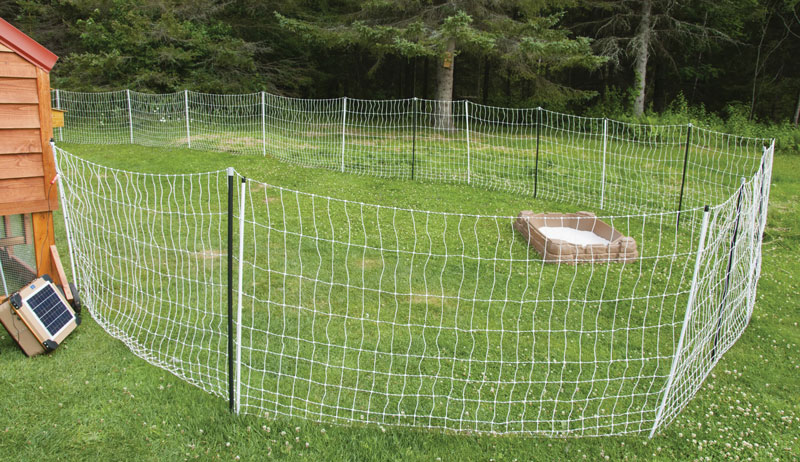
Solar-powered fence chargers are more than capable of providing power for a basic (and fairly large) chicken-safe electric fence run for daytime use.
Daniel Johnson
Electric fencing can also act as a helpful deterrent for keeping snooping predators away from the chicken coop.
Timers
Want your flock safely inside the coop at night, but don’t necessarily want to wake up early every morning to let them out? Install an electric timer on a chicken door to easily let the hens out each morning.
For all their benefits, there are some things that solar panels just won’t have enough electricity to power. A major one of these is heat, which uses up a consider amount of electricity. If you live in a region with considerably harsh and cold winters, you may need to consider heating your chicken’s water source. For that, you’ll probably want your coop connected to the grid.
Build Convenient Nest Boxes
Picture this: It’s a cold, wet, muddy spring day, and you’re on your way to the coop for the morning’s egg collection. Do you really want to juggle your egg basket and your muck boots while opening the door, trying to keep all your hens from getting out while you enter the coop to get the eggs?
No way!
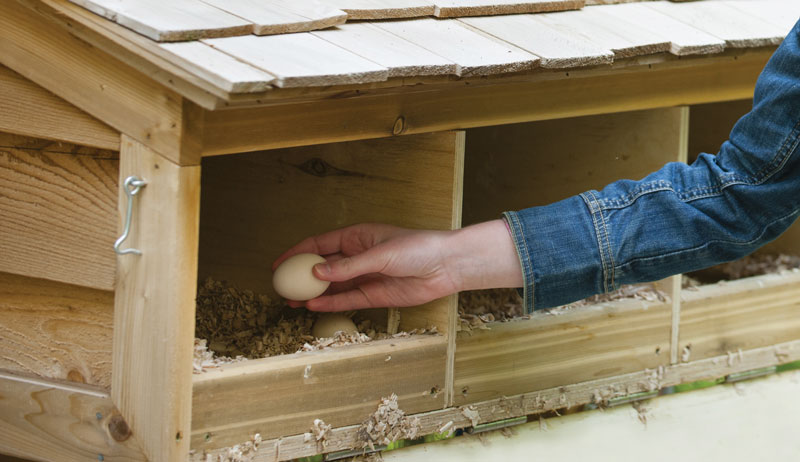
A much more convenient plan is to construct nesting boxes that can be accessed from the outside of the coop. A simple (yet weatherproof) access door is all that you’ll need to be able to collect eggs from the outside.
If you’d like more square footage inside the coop for the birds, you could build the nest boxes in their own section that juts out from the main body of the coop. But, again, this will need to be carefully weatherproofed.
Nest boxes are really the key to keeping your eggs clean and safe. They encourage the hens to nest in the designated location and not somewhere else—such as the coop floor! Nest boxes should be about 1 cubic foot of space—maybe a little taller.
And remember that not all the hens need a specific nest box. They’ll share, and you only need one nest box per three to four hens.
Read more: What should you do when a hen breaks an egg?
Make Your Chicken Coop Easy to Clean
Just as outside access makes it easy to collect eggs, outside access is also important for efficient coop clean-up. Poultry are … well, messy, and with dribbled bits of feed, loose feathers, used bedding and manure, cleaning out the coop regularly is a necessity.
Planning ahead during the construction process and designing the coop so that it is easy to clean saves time and effort later.
Figure on including an outside access door that will allow for at least basic daily clean-outs, and perhaps an additional, larger access door that provides admission for “ big-time, all-out, hose-it-down-and-remove-everything” cleaning days.
Some folks like to include a linoleum floor for easy clean up.
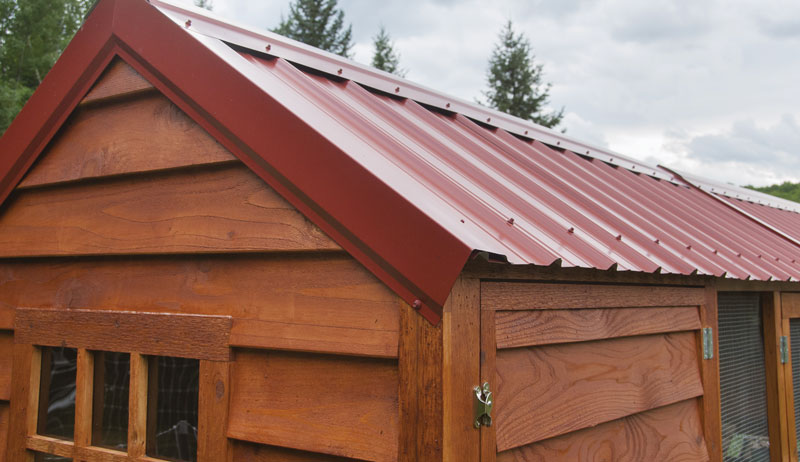
Choose the Right Chicken Coop Roof
Looking for a roof that won’t tax your carpentry skills? Figure on building a shed roof.
Daniel Johnson
Want something that can hold up to a higher snow load and offers some additional ventilation options? Consider a gable roof.
Either style can be effective, as can the choice of a metal roof versus shingles. Metal roofs last, look good and shed snow loads effectively. They can also be noisy during heavy rainfalls.
Shingles look good but might not be quite as durable in the long run.
Add Personal Touches to Your Chicken Coop
Make your coop designing and building process fun! Instead of a bare-bones design, splurge on your ideal coop in ways that won’t significantly add to the cost.
Attractive painting on the trim or siding doesn’t cost much except your time to do it, but it can significantly add to the long-term aesthetic appeal of your coop.
Even for a large chicken coop, the actual square footage of the walls isn’t too much. You could try siding it with cedar shakes or another type of siding that you find appealing. (How about a log-siding “cabin” coop?!). Add some decorative touches!
Most of all, enjoy the process.
Check Chicken Coop Permits Before You Build
Research ahead of time whether or not you’ll need to apply for a building permit before you begin constructing a chicken coop.
The answer is always dependent on your specific location and town/city ordinances. But it’s possible that the small footprint of your coop will be enough to keep it under the dimensions that require a permit.
Also, it might be possible that a coop without a true foundation will be exempt from the permitting process. On the other hand, if a permit is required, keep in mind that there may be certain parameters required regarding size, height, windows, placement on the property and more.
While you’re at it, make sure no specific ordinances exist about keeping chickens to begin with! This is probably more of a concern in a more urban-farming situation where there might be local concerns about noise from roosters or the size of the chicken flock.
Still further, you might discover local ordinances detailing storage of chicken feed sources, how to control chicken manure, etc.
Frequently Asked Questions
How big should a chicken coop be?
Most backyard flocks need about 3 to 4 square feet of indoor coop space per bird. If chickens spend long periods indoors during winter, providing additional space helps reduce stress and overcrowding.
What is the best material for protecting a chicken coop?
Hardware cloth is much stronger than traditional chicken wire and offers better protection against raccoons, foxes and other predators that can tear through lighter fencing.
Does a chicken coop need electricity?
Not necessarily. Many coops function well without power, but electricity or a small solar system can operate lights, automatic coop doors and electric fencing.
How many nesting boxes do I need?
One nesting box for every three to four hens is usually sufficient because chickens naturally share nesting spaces.
Should chicken coops have windows?
Yes. Windows and ventilation openings improve airflow, reduce moisture and help prevent ammonia buildup while still protecting chickens from drafts.
Final Thoughts on Building a Chicken Coop
A thoughtfully designed chicken coop is an investment that benefits both your flock and your daily routine. From choosing durable materials and providing enough space to planning easy access for egg collection and cleaning, every design decision adds up to a healthier, more efficient home for your chickens. Whether you’re building your very first coop or improving an existing one, focusing on safety, comfort and convenience will pay dividends for years to come.
Looking for more backyard chicken advice? Subscribe to Chickens magazine for trusted guidance on coop design, flock health, predator protection, seasonal care and practical homesteading tips that help you raise happier, healthier birds all year long.